Quick Answer: Procurement officers buying robots for government buildings should prioritize compliance-ready vendors, total cost of ownership, 24/7 reliability, and centralized monitoring over upfront price alone. Cleaning robots, surveillance robots, and AI receptionists help public agencies maintain transparency, extend coverage with tight staffing budgets, and ensure consistent service across high-traffic facilities.
Public buildings operate under pressures few other facilities face. Footfall is high and unpredictable, staffing budgets are tight and scrutinized, service hours are long, and every purchase must stand up to audit. For procurement officers, the procurement of robots for government offices is therefore not a technology experiment — it is an operational and accountability decision.
This guide provides a practical, compliance-friendly framework for evaluating government building service robots, justifying spend, and ensuring long-term uptime and support.
Why Government Buildings Need Service Robots Now
Government and public service facilities — from municipal headquarters and courts to passport offices, tax centers, public hospitals, and transport administrative blocks — share three structural challenges: 24/7 monitoring needs, tight staffing budgets, and a mandate for public-service transparency.
Manual models struggle to keep pace. Facility cleaning across large lobbies, corridors, and restrooms is difficult to sustain consistently across shifts. Night-time surveillance of perimeters, parking lots, and vacant floors stretches limited security personnel. Front desks face queues during peak hours, with thin support staff to manage visitor registration, directions, and multilingual queries.
Well-specified automation does not replace public staff. It extends coverage, standardizes service quality, and creates a digital record of performance. That is why cleaning automation, surveillance monitoring, and visitor management have emerged as the highest-impact starting points for public agencies, with lessons that are equally relevant for corporate campuses, universities, hospitals, airports, and retail public zones.
3 High-Impact Types of Robots for Government Buildings
When scoping robots for government buildings, start with defined operational outcomes rather than form factors. The three categories below deliver measurable coverage and accountability benefits in high-traffic public facilities.
1. Cleaning Robots for Government Buildings
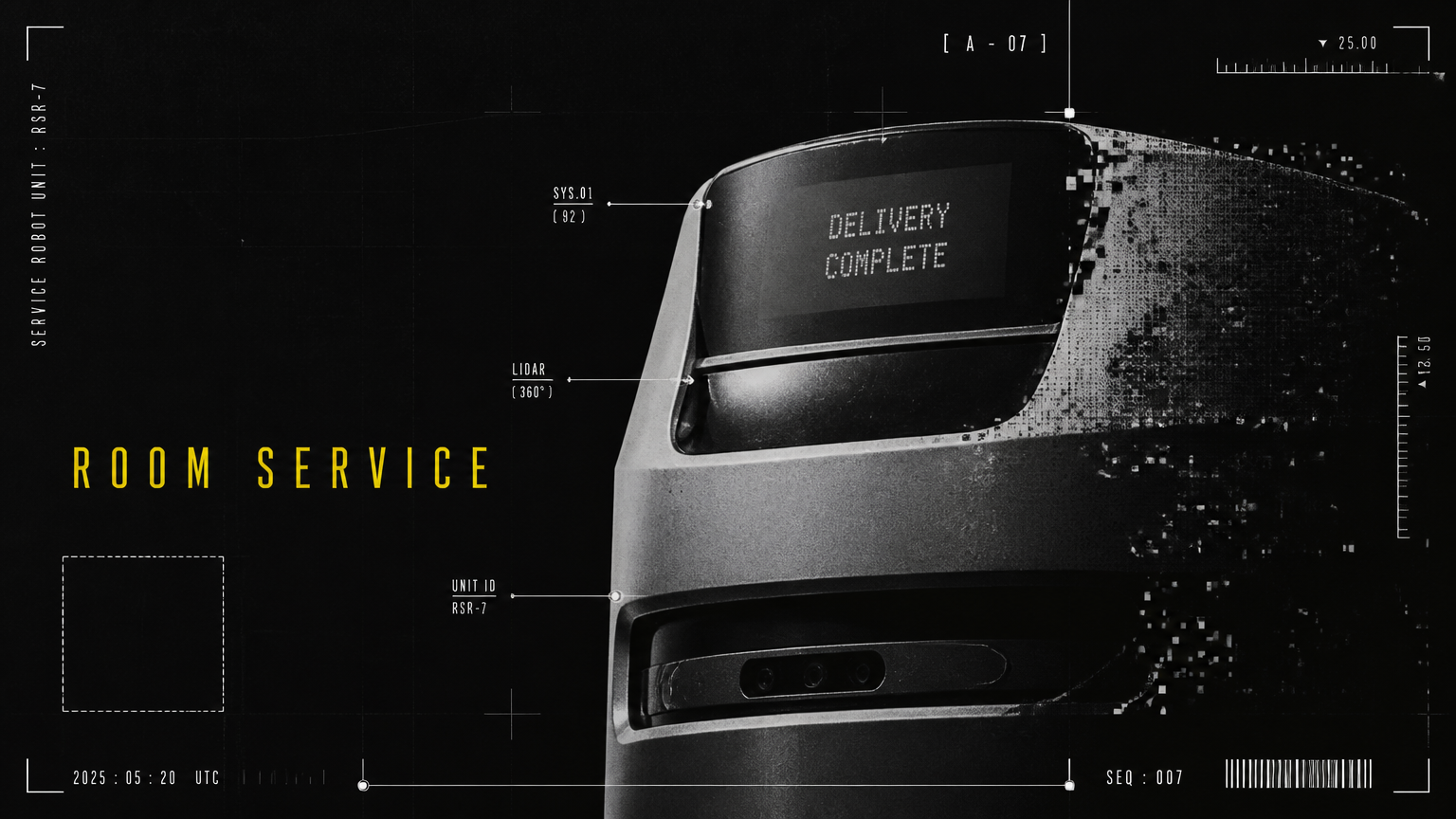
Cleaning robots for government buildings handle repetitive floor care across lobbies, waiting halls, corridors, and large office floors. Autonomous scrubbers and sweepers can run scheduled routes during off-peak hours and daytime maintenance passes, maintaining consistent hygiene without pulling housekeeping staff from restrooms, waste handling, and detail work.
For procurement, look for autonomous navigation in dynamic crowds, zone-wise scheduling, water-efficient scrubbing, and performance logs that show area covered, time, and frequency. This documentation is critical for proving service levels to facility heads and auditors.
2. Surveillance Robots for Public Buildings
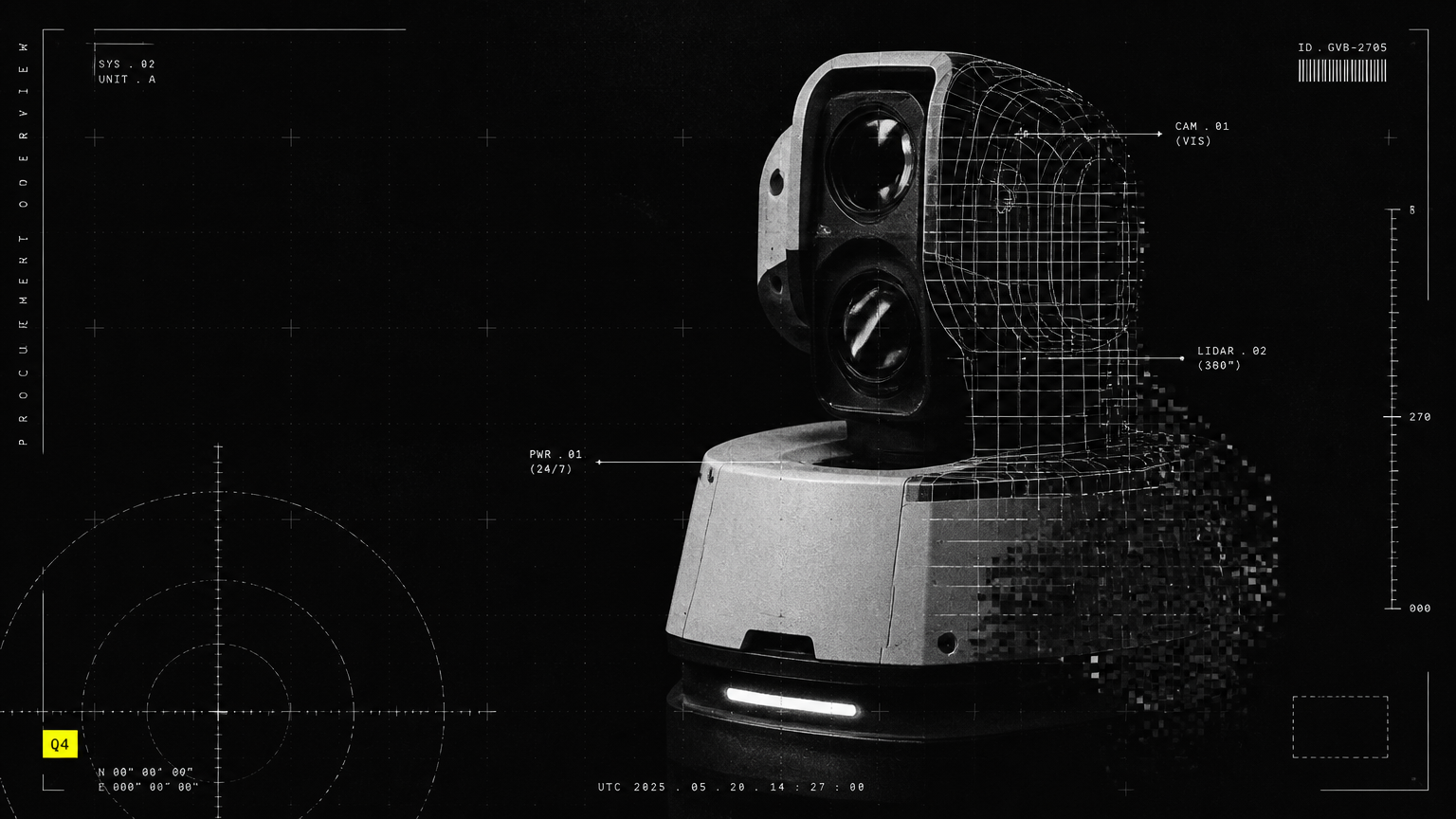
Surveillance robots for public buildings provide persistent, mobile monitoring for perimeters, basements, parking structures, and large campuses after hours. Equipped with cameras, sensors, and two-way communication, they conduct scheduled patrols, detect anomalies, and stream real-time video to a central control room.
Unlike fixed CCTV alone, mobile patrols deter intrusion, extend the reach of a small security team, and create time-stamped patrol records. For sprawling campuses and multi-block secretariats, this fills the gap between fixed cameras and physical guards.
3. AI Receptionist Robot for Government Office
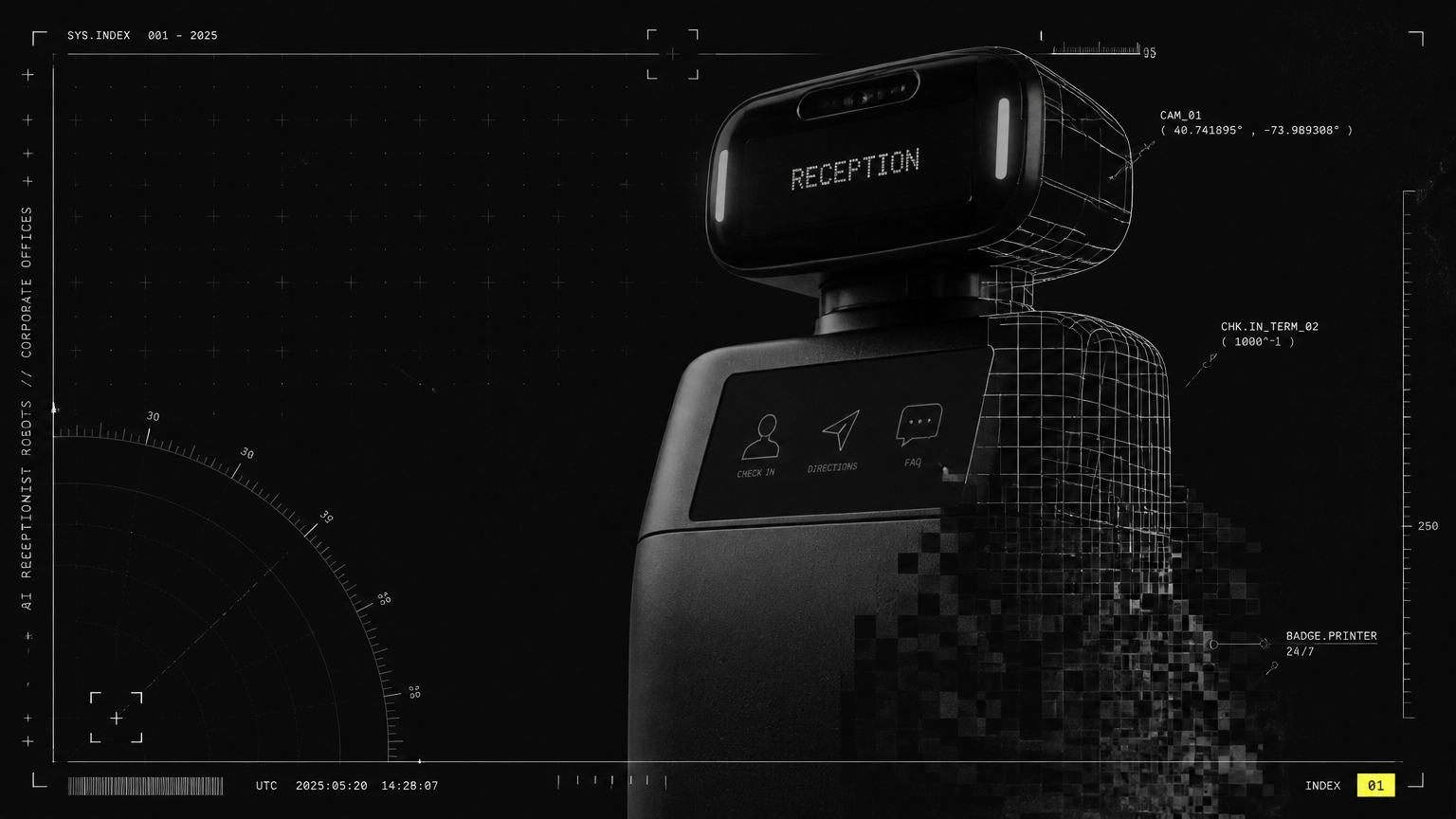
An AI receptionist robot for government office use manages visitor greeting, check-in, wayfinding, and frequently asked questions. In collectorates, municipal corporations, public service centers, and licensing offices, it reduces queues by guiding visitors to the right counter, displaying token information, supporting multiple languages, and collecting visitor feedback.
This improves citizen experience while freeing front-desk staff for complex cases and exception handling. Integration with visitor management systems and centralized dashboards ensures data consistency and transparency.
To clarify fit, use this side-by-side view during internal stakeholder discussions:
| Comparison Criterion | Cleaning Robots | Surveillance Robots | AI Receptionist Robots |
|---|---|---|---|
| Primary Function | Autonomous floor scrubbing and sweeping | Mobile patrol, detection, and live streaming | Visitor greeting, check-in, and guidance |
| Best-Fit Locations | Lobbies, waiting halls, corridors, office floors | Perimeters, parking, basements, campuses | Reception, helpdesks, service counters |
| Staffing Gap Addressed | Housekeeping shortages and shift coverage | Night and weekend security coverage | Peak-hour front-desk queues |
| Transparency Output | Area covered, route logs, cleaning frequency | Patrol logs, video records, alert history | Visitor counts, query logs, feedback data |
| Operating Hours | Scheduled day and night cycles | 24/7 patrol capability | Extended front-office hours |
| Success Metric | Hygiene consistency and audit-ready reports | Incident deterrence and response time | Reduced wait time and improved citizen satisfaction |
Government Robot Procurement Process: A Compliance-Friendly Evaluation Framework
A structured government robot procurement process protects the buyer on compliance, security, and lifecycle cost. Use the following seven-point checklist in your RFP and technical evaluation.
1. Regulatory Compliance and Documentation Readiness
Prioritize vendors who can support public tender requirements with complete documentation: company registration, GST compliance, product certifications, test reports, warranty terms, and service SLAs. Vendors backed by established corporate structures simplify due diligence. Allbotix, for example, is backed by publicly listed Nanta Tech Limited, which provides procurement teams with added financial transparency compared to early-stage assemblers.
Request clear bills of material, country-of-origin declarations, and lifecycle documentation for spares and consumables.
2. Data Security and Fleet-Management Transparency
Government deployments must ensure that operational data stays controlled and auditable. Evaluate:
- Where video, visitor, and mapping data is stored and who can access it
- Role-based access for facility managers, security heads, and auditors
- Encrypted communication between robots and dashboards
- Exportable logs for patrols, cleaning cycles, and visitor interactions
Proprietary AI fleet-management software with real-time monitoring and predictive maintenance is a key differentiator here. It allows centralized oversight of an entire fleet across buildings and districts, rather than managing isolated machines with no accountability trail.
3. Made-in-India Manufacturing and IP Ownership
Made-in-India manufacturing matters for supply continuity, spares availability, and alignment with public procurement preferences. Go beyond assembly claims and ask: does the vendor own design, firmware, and source code?
Allbotix engineers its fleet in-house with full IP ownership of design, firmware, source code, and trademarks, rather than assembling off-the-shelf parts. Manufacturing is scaled in India via its partnership with Aimtron Technologies. This model supports long-term spares, customization for specific building layouts, and faster service response.
4. Uptime Guarantees and Measured Reliability
For public buildings, downtime is service disruption. Do not accept vague reliability claims. Ask for measured uptime, fleet deployment history, and how uptime is monitored.
Reference points to request in bids include fleet scale, client base, and monitored uptime. Allbotix has developed 525+ robots, serves 180+ happy clients, and tracks 99.8% uptime through its fleet software layer. Whether you cite these benchmarks or require equivalents, insist that uptime is contractually defined and dashboard-verified.
5. Warranty, AMC, and 24/7 Support
Clarify warranty duration, what is included, response times, and Annual Maintenance Contract terms. For 24/7 public facilities, standard business-hours support is insufficient.
Evaluate vendors offering 24/7 Premium Support with defined escalation paths, on-site service coverage, operator training, and preventive maintenance schedules. Machines engineered to a client's specific precision, ambition, and scale also reduce retrofit issues during installation.
6. Customization for Building Realities
Government buildings vary widely — heritage structures with narrow corridors, modern complexes with glass facades, and sprawling campuses with mixed indoor-outdoor zones. Off-the-shelf robots often fail on ramps, thresholds, crowd density, or multilingual needs.
Require site surveys, pilot mapping, and customization for navigation, language, branding, and workflow integration. A vendor with breadth across receptionist, cleaning, serving, AMR, cobot, humanoid, and quadruped form factors can standardize on one support ecosystem as needs expand, rather than forcing procurement to manage multiple disparate suppliers.
7. Pilot, Training, and Handover
Insist on a defined pilot with success criteria: coverage area, patrol completion rate, visitor throughput, and operator feedback. Include SOPs, training for facility and security staff, and handover of dashboards and manuals. This de-risks scale-up across additional floors or buildings.
Budget Justification: Total Cost of Ownership for Robots for Government Buildings
Procurement officers must defend automation spend within tight staffing budgets. The strongest justification shifts the conversation from purchase price to total cost of ownership (TCO), coverage continuity, and accountability.
Staffing gaps are the most immediate lever. With recruitment freezes and attrition, overtime and contract labor costs rise while service consistency falls. Robots close this gap by delivering scheduled, repeatable coverage for cleaning, patrols, and reception — with 15–30% throughput improvements documented in broader automation studies.
Accountability is the second lever. Fleet-management dashboards provide proof of work: when cleaning was done, which patrols were completed, how many visitors were assisted. This transparency supports internal audits, citizen grievance redressal, and performance reviews of facility contracts.
Use this framework to evaluate bids on lifecycle value:
| Evaluation Criterion | Upfront Price Only Approach | Total Cost of Ownership Approach |
|---|---|---|
| Cost Considered | Purchase price per unit | Purchase + installation + training + AMC + consumables + energy over 3-5 years |
| Staffing Impact | Not quantified | Overtime reduction, contract labor optimization, redeployment to high-value tasks |
| Reliability Cost | Unplanned downtime absorbed by staff | Contracted uptime, predictive maintenance, defined penalties and support SLAs |
| Transparency Value | No performance record | Dashboard logs for cleaning, patrols, and visitor service for audits |
| Scalability | Re-bid for each new need | Standardized fleet, shared spares, and centralized software across buildings |
| Risk | Vendor exit leaves unsupported hardware | In-house IP, Made-in-India spares, and long-term service ecosystem |
When building your note for finance, include: baseline staffing and overtime cost, current service gaps and complaint volumes, 3-year TCO with AMC, expected coverage hours gained, and audit benefits from centralized reporting. Plan maintenance and scale from year one by budgeting for consumables, operator refresher training, and phased expansion to adjacent blocks.
Implementation Roadmap for Public Agencies
A low-risk rollout for government building service robots typically follows four stages:
Stage 1: Site assessment and use-case prioritization. Map high-footfall zones, night-risk areas, and reception bottlenecks. Select one building or wing for pilot.
Stage 2: Controlled pilot with KPIs. Deploy one to three units with dashboard access for facility, security, and administration heads. Measure coverage, response time, and citizen feedback over 30–60 days.
Stage 3: SOP integration and training. Codify charging, storage, cleaning schedules, patrol routes, escalation protocols, and data access roles. Train in-house operators and security staff.
Stage 4: Scale across facilities. Standardize on proven models and expand fleet software to monitor multiple sites centrally. This is where precision engineering and limitless innovation matter most — the ability to adapt the same platform to new layouts without re-procurement complexity.
This phased approach works equally well for corporate IT parks managing dense foot traffic, universities securing sprawling campuses, hospitals maintaining hygiene, and transit hubs handling peak crowds.
Partnering for Long-Term Service, Not Just Supply
Buying robots for government buildings is a long-term service relationship. The right partner combines hardware breadth with software oversight, in-house engineering with on-ground support, and compliance readiness with measurable uptime.
Allbotix engineers and deploys a broad, multi-vertical fleet of service and industrial robots — including AI receptionists, cleaning automation, serving robots, AMRs, cobots, and humanoids — paired with proprietary AI fleet-management software for real-time monitoring and predictive maintenance. Built in-house in India and supported with 24/7 Premium Support, the portfolio is designed to help public agencies maintain transparency, extend coverage, and ensure consistent service across high-traffic facilities.
Talk to Allbotix to scope a compliance-ready pilot for your government building — from cleaning robots for government buildings and surveillance patrols to AI receptionists — with centralized monitoring, Made-in-India manufacturing, and lifecycle support built in. Visit https://www.allbotix.ai/ to request a site assessment and TCO proposal.