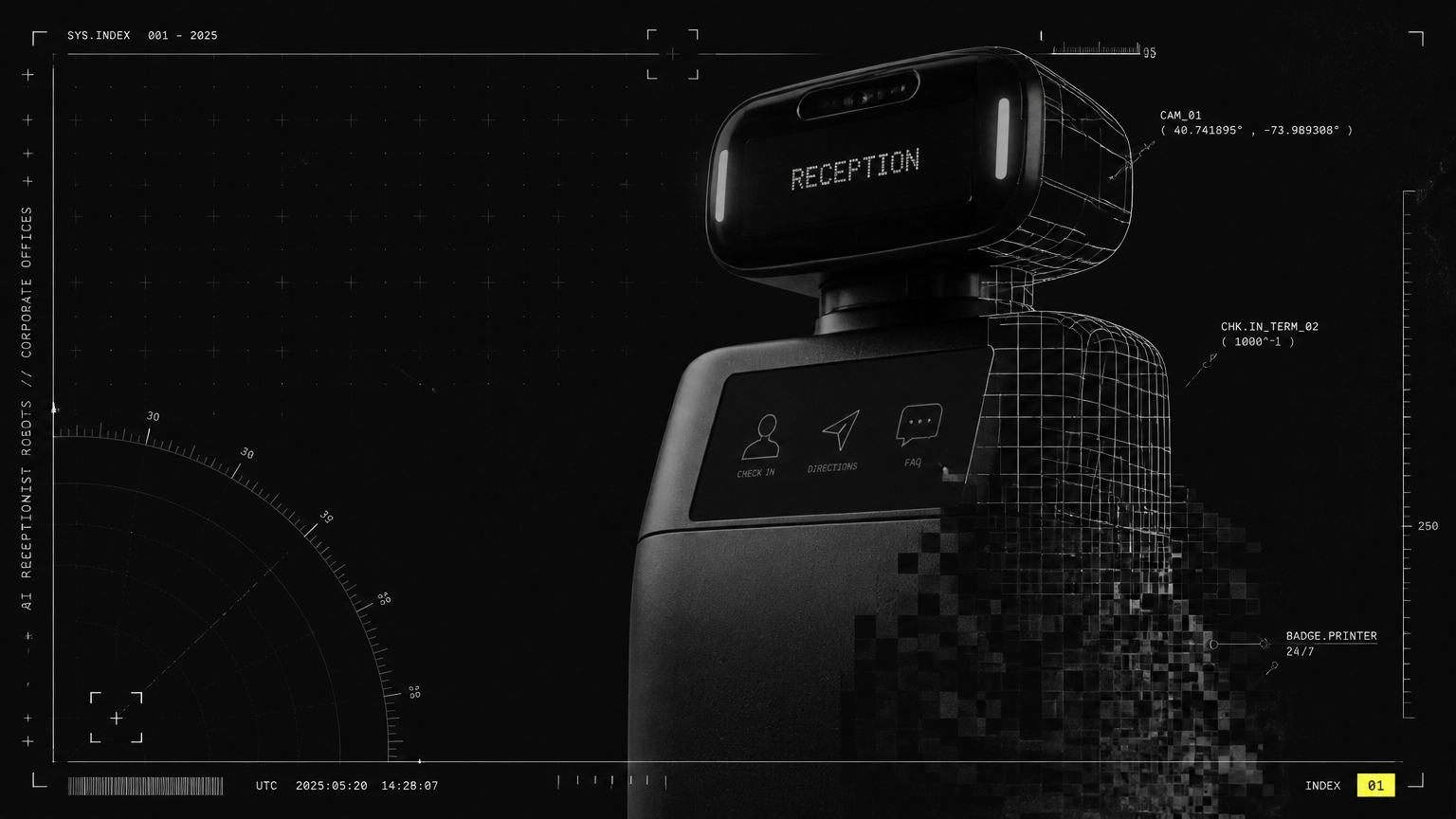
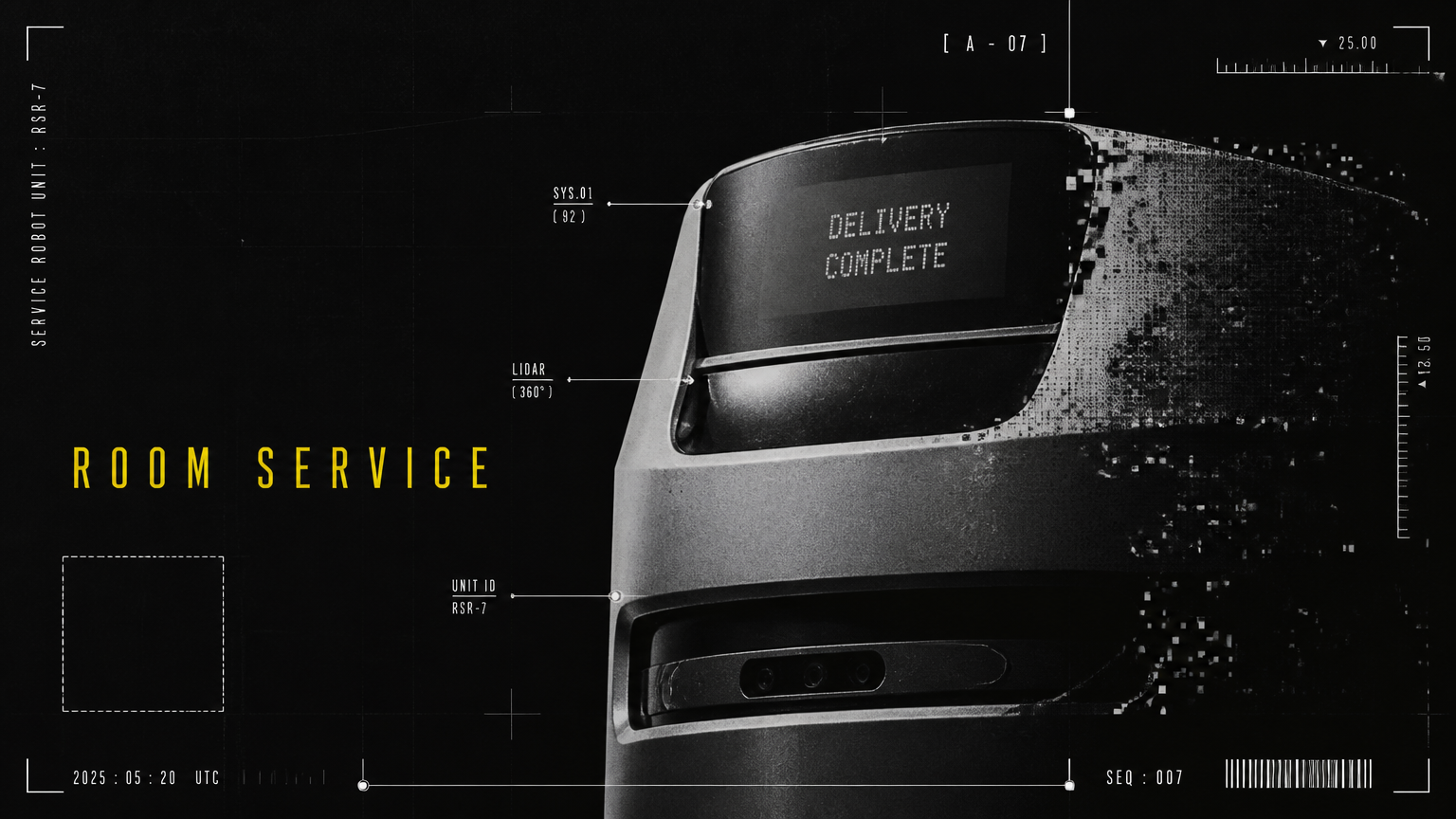
Hotel decision-makers ask one question about robot room service: do guests actually like it, or is it just a gimmick? The answer-first takeaway: guests accept it fast, rate it highly for speed, novelty, and contactless convenience, and complain only when deployment is poorly planned — not about the robot itself.
For hospitality leaders facing peak-time service gaps, inconsistent service quality, and labor-intensive workflows, robots work best as a precision layer that supports staff, not replaces hospitality.
Do Guests Actually Accept Robot Room Service?
Yes. Across hotels, resorts, and event spaces, guest sentiment skews strongly positive once they experience a live delivery.
First-time users report delight and curiosity — photos, videos, social shares. Repeat users report utility: fast, quiet, hygienic delivery to the door without waiting for an elevator-dependent staff run. Business travelers value 24/7 availability for late-night water, towels, or snacks. Families value the fun factor for kids. Contact-conscious guests value sealed-compartment, no-contact drop-off.
Acceptance climbs when hotels set expectations clearly: what the robot delivers, how to open the compartment, and that human help is one tap away. Confusion drops to near zero after one use.
What Guests Praise Most About Robot Room Service
The praise pattern is remarkably consistent:
1. Speed during peak hours: Robots don't get stuck in banquet service or checkout rush. They run dedicated delivery loops for small items while staff handles complex requests.
2. Novelty that boosts reviews: A friendly delivery robot arriving with a voice greeting turns a standard towel delivery into a memorable moment. Guests mention it by name in Google reviews and Instagram reels — free brand differentiation.
3. Hygiene and consistency: Sealed cabins, consistent routes, no missed knocks. For post-pandemic travelers, contactless delivery is still a plus.
4. 24/7 reliability: Night-shift staffing is expensive and thin. Robots cover 11pm - 6am amenity runs without overtime, fatigue, or delays.
5. Privacy: Many guests prefer not opening the door to a stranger for a toothbrush or extra coffee. Enter PIN, take item, done.
That reliability is why uptime matters. Allbotix fleets run on proprietary AI fleet-management software with real-time monitoring and predictive maintenance, engineered for 99.8% uptime across 525+ robots developed and 180+ happy clients.
What Guests Complain About — And How Top Hotels Fix It
Complaints are rarely anti-robot. They are anti-friction:
Can't navigate to my room: Usually Wi-Fi dead zones, unmapped renovation areas, or elevator integration gaps. Fix: full site mapping, elevator API integration, and in-house engineering — not off-the-shelf assembly — so routes are tuned to your property's precision, ambition, and scale.
Too slow or stuck in lobby: Happens when one robot is overloaded during events. Fix: multi-robot fleet orchestration with automatic dispatch to the nearest available unit.
No human backup: Guests get frustrated if they can't reach staff when the robot arrives. Fix: auto-call to room phone + app notification + staff fallback in under 60 seconds, backed by 24/7 Premium Support.
Impersonal for luxury requests: Robots should not deliver anniversary champagne with a speech. Fix: segment tasks. Robots handle high-frequency, low-complexity runs — water, towels, amenities, pantry snacks. Humans handle emotional, high-touch moments.
Hotels that apply those fixes see complaints disappear and satisfaction scores rise.
Robot Room Service vs. Traditional Human-Only Service
| Criteria | Robot Room Service | Traditional Human-Only Service |
|---|---|---|
| Availability | 24/7, no breaks or shift gaps | Limited by staffing, costly at night |
| Peak-hour speed for small items | High, parallel deliveries | Drops during banquets, check-in/out rush |
| Consistency | Same route, same greeting every time | Varies by staff load and training |
| Guest experience impact | Novelty + shareability, boosts reviews | Familiar, depends on individual staff |
| Labor efficiency | Frees staff for upselling and complex service | Staff tied up in repetitive runs |
| Best use case | Amenities, towels, snacks, contactless drops | Complaint resolution, luxury service, personalization |
Smart properties don't choose one. They blend both: robots for throughput, humans for hospitality.
Does It Hurt Satisfaction or Brand Image?
No — when positioned correctly, it elevates brand image. Guests perceive robot-enabled hotels as modern, innovative, and efficient.
Three rules protect your brand:
1. Keep humans visible. Robots should reduce wait times, not reduce smiles. Reassign saved hours to lobby engagement, restaurant upsell, and rapid issue recovery.
2. Match robot to brand language. A luxury resort needs quiet operation, elegant wrap, and polite voice prompts. A business hotel needs speed and app integration. This is where precision engineering matters over generic hardware.
3. Communicate limitless innovation as service, not cost-cutting. Signage like "Your amenity is on its way via our service crew — human + robot" frames technology as guest benefit.
Properties that hide staff cuts behind robots lose trust. Properties that advertise faster, cleaner, always-on service win ratings.
How to Deploy Robot Room Service Without Friction
For hotel owners and GMs evaluating a pilot:
Start with one pain point: Late-night amenities, pool-towel runs, or MICE-floor pantry delivery. Measure delivery time and CSAT before expanding.
Integrate elevators, PMS, and phones: True autonomy requires elevator control, property-management triggers, and automatic guest notifications.
Train staff as robot captains: 30-minute training turns skeptics into advocates. Staff who dispatch and supervise robots report less walking and higher tips on high-value interactions.
Choose full-stack ownership: Look for in-house engineering with full IP ownership of design, firmware, and source code — not resold units you can't customize or service. Backing from a publicly listed parent like Nanta Tech Limited and Made-in-India manufacturing scaled via Aimtron Technologies partnership adds long-term service assurance.
Demand fleet software, not just hardware: Real-time location, battery health, predictive maintenance, and multi-robot coordination are what keep promises during 95% occupancy.
Beyond Hotels: Why Other Leaders Are Watching
The same delivery logic applies across high-footfall environments: Corporate IT campuses use pantry delivery robots to cut front-desk load, hospitals use them for non-clinical transport to support infection control, retail malls and airports use AI greeters and cleaning automation for flow management, and universities use them for sprawling campus logistics. Hospitality is the proving ground for guest acceptance — other verticals scale the efficiency.
Bring Precision Service to Your Property
Guests have spoken: robot room service delights when it's fast, reliable, and human-backed. If you're ready to close peak-time gaps without adding headcount, Allbotix engineers serving, cleaning, receptionist, and AMR fleets in-house and deploys them with proprietary fleet-management software tailored to your layout and brand.
Talk to Allbotix for a site assessment and pilot plan built around your occupancy, floor plan, and service goals.