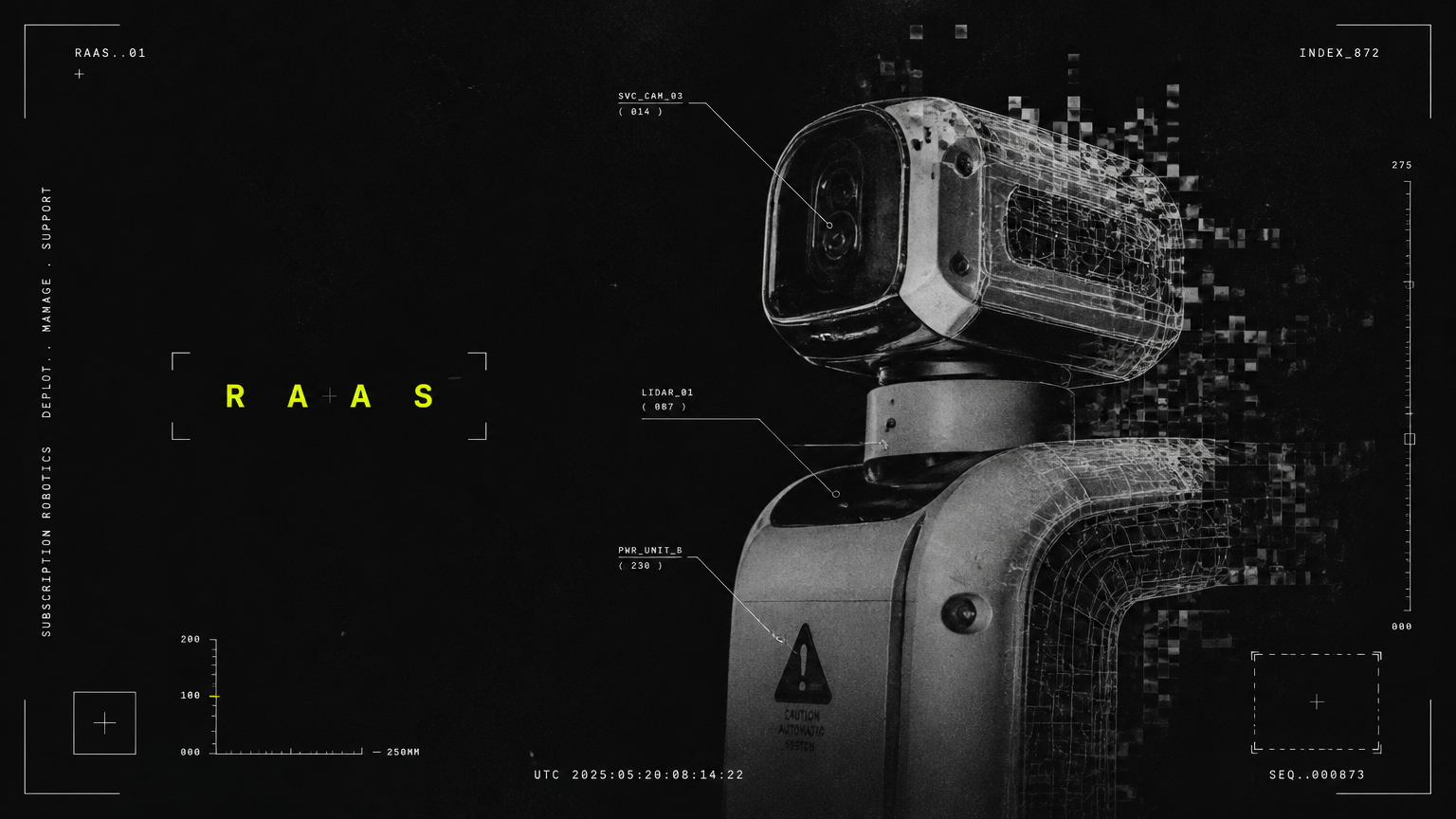
Quick Answer: Robot as a Service (RaaS) is a subscription-based model that lets organizations deploy service and industrial robots — from AI receptionists and cleaning robots to serving robots, AMRs and cobots — without heavy upfront investment, with hardware, fleet-management software, maintenance and support bundled into one plan. For high-footfall, staff-constrained environments like corporate campuses, hospitals, hotels, retail, campuses and warehouses, Allbotix RaaS makes it practical to scale automation with 24/7 support and continuous software-led optimization.
If you manage operations, facilities, or innovation for a corporate campus, hospital, hotel, mall, university, factory, warehouse, government building or airport, you have likely felt the same pressure: front-desk costs keep rising, foot traffic is dense and unpredictable, cleaning is never done, peak hours overwhelm staff, and hiring for repetitive roles is harder every quarter. Buying a robot outright can feel risky — high capex, uncertain maintenance, and fast-moving software.
That is exactly the problem the RaaS robotics model was designed to solve.
What Is Robot as a Service? How the RaaS Robotics Model Works
So, what is robot as a service in plain English? It is a robot subscription service for business where you pay a predictable monthly or quarterly fee to use robots, instead of purchasing them as capital assets.
Unlike a one-time hardware purchase, a true RaaS plan bundles everything needed to keep robots productive in the real world:
What's Inside a Robot Subscription Service for Business?
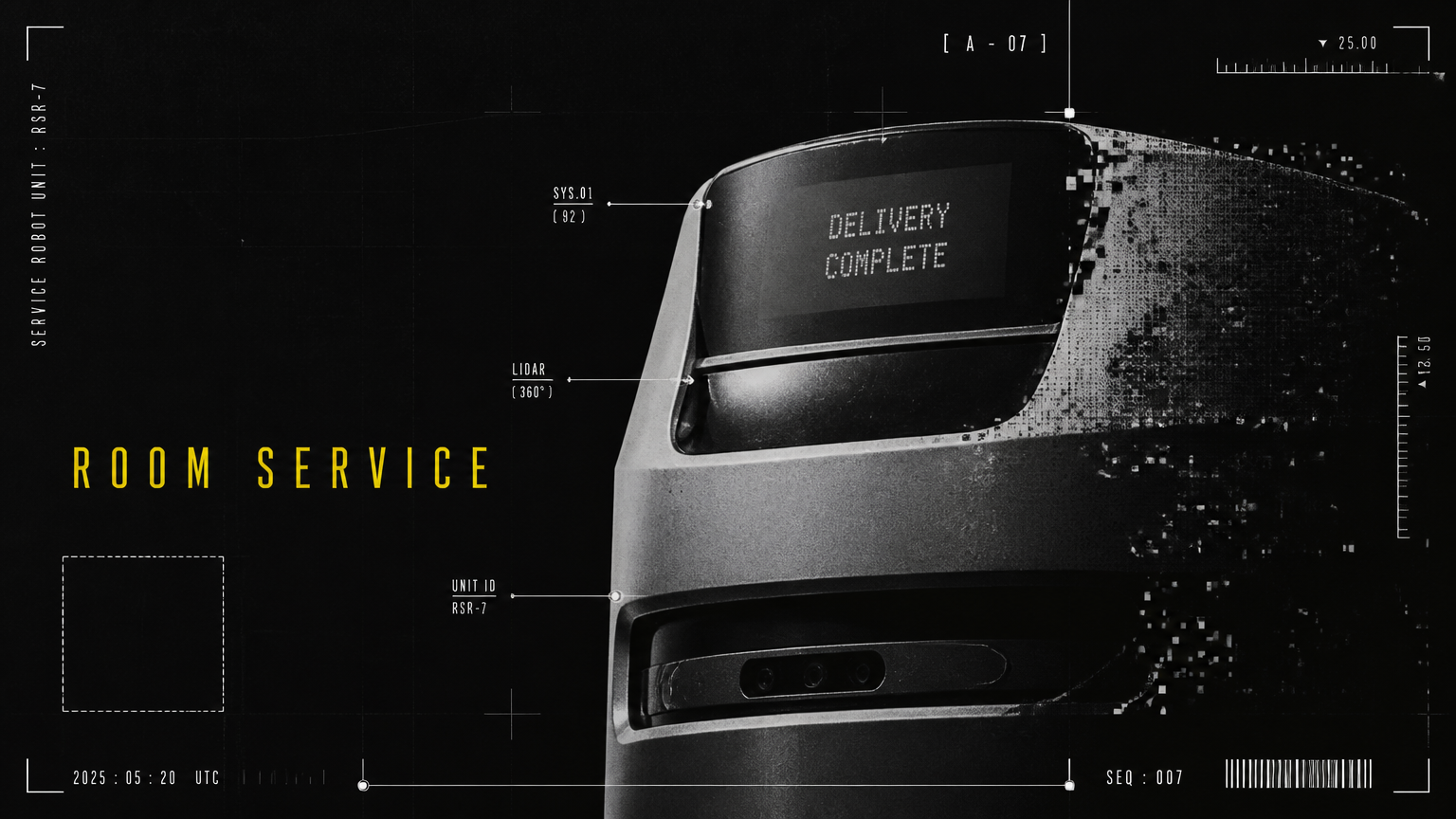
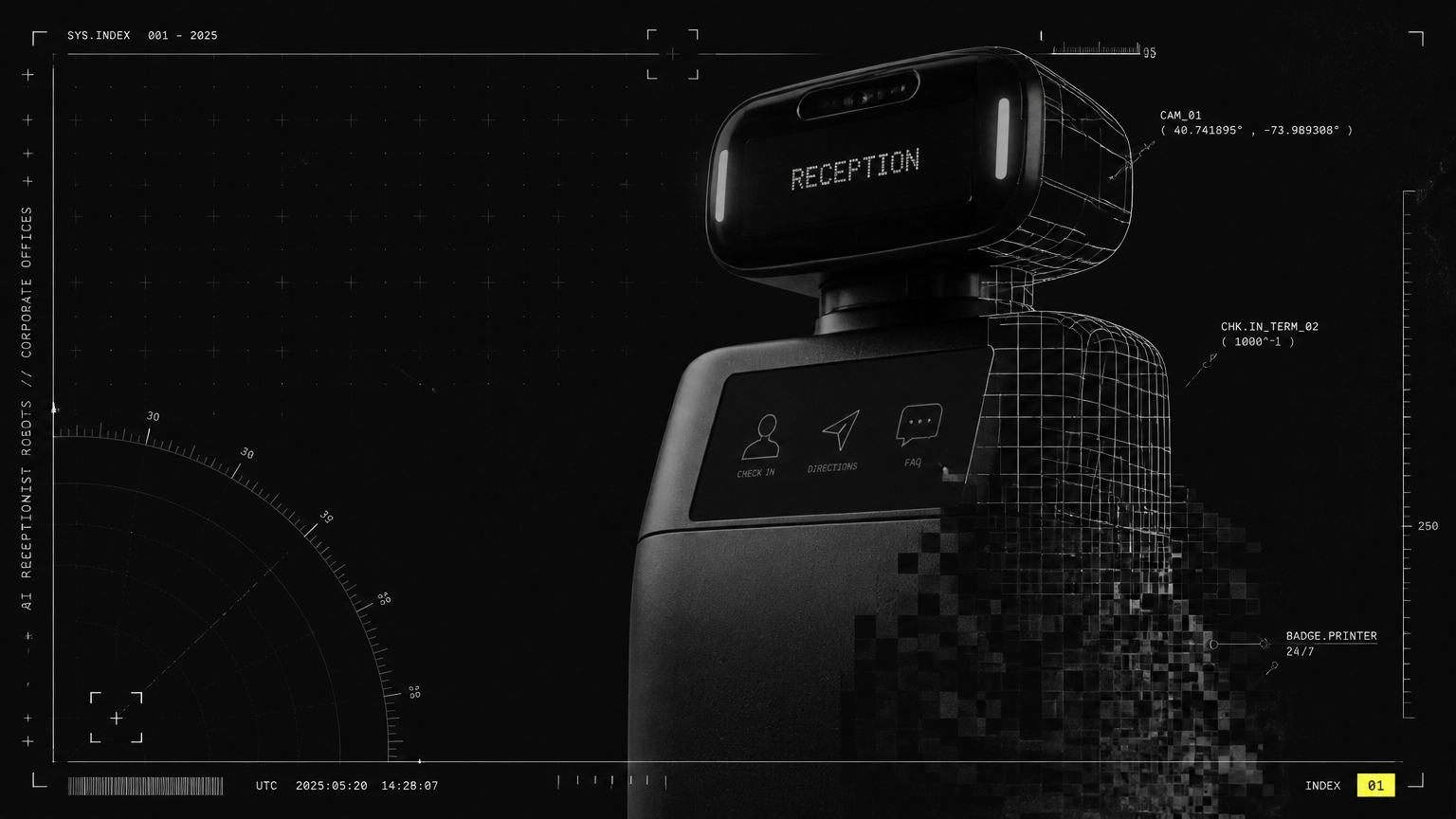
1. Hardware engineered for the job: AI receptionist robots for lobbies and front desks, cleaning robots for floors and large public areas, serving and delivery robots for hospitality and healthcare, Autonomous Mobile Robots (AMRs) for material movement, collaborative robots (cobots) for production support, and humanoid and quadruped platforms for engagement, surveillance and training.
2. Proprietary AI fleet-management software: This is the brain of the operation. Allbotix pairs its fleets with proprietary AI fleet-management software for real-time monitoring, task orchestration, route optimization and predictive maintenance. Instead of managing isolated machines, your team gets a dashboard view of the entire fleet — uptime, location, task status and alerts.
3. Deployment and integration: Site mapping, workflow design, safety configuration, Wi-Fi and systems integration, and staff training. For example, an AI receptionist is trained on your FAQs, visitor flows and brand voice, while a cleaning robot is mapped to your floor plans and schedules.
4. Maintenance, upgrades and 24/7 support: Preventive maintenance, spare parts, software updates and remote diagnostics are included. Allbotix backs deployments with 24/7 Premium Support and engineering focused on 99.8% uptime, so a sensor issue at 2 a.m. in a hospital or airport does not become downtime at 8 a.m.
In short, you subscribe to an outcome — a staffed front desk, a consistently clean floor, a served table, a moved pallet — not just a machine.
Robot as a Service Benefits: Why Operations Leaders Are Switching
The shift to subscription robotics is not just about financing. It changes how quickly and safely you can automate.
No heavy capex, faster approval: Traditional robotics projects stall in capex committees. Robot as a service benefits include converting a large upfront purchase into operating expenditure, making it easier to pilot in one lobby, one ward, or one warehouse aisle, then scale to five or fifty sites.
Built for labor shortages and 24/7 strain: Manufacturing faces a projected shortfall of 2M+ workers over the next decade, according to Deloitte and the Manufacturing Institute. Hospitals, hotels, airports and retail face the same reality in different forms — high turnover in repetitive roles. Well-deployed robots deliver 15–30% throughput increases and 20–40% capacity uplift by taking over non-clinical transport, pantry delivery, repetitive cleaning, and inventory movement, freeing people for high-value work.
Less downtime, more consistency: Automation with condition-based monitoring cuts unplanned downtime by 30–50%, with documented cases showing 26%+ reductions and around $630K in annual savings per plant. Automated quality checks and consistent robotic execution reduce scrap rates by 20–50%. With RaaS, predictive maintenance is part of the subscription, not an extra contract.
Software-led optimization, not depreciating hardware: A robot you buy today can feel outdated in 18 months. Under RaaS, navigation, AI interaction, and fleet analytics improve continuously via software updates. Average robot payback time has dropped from about 5.3 years in 2019 to about 1.3 years in 2024, with well-run deployments seeing 10:1 to 30:1 ROI within 18 months — and subscription models shorten time-to-value further by removing installation and maintenance delays.
Scale across sites without scaling headcount: Once one corporate tower, retail store or hospital wing is mapped and optimized, the playbook replicates. That cross-industry versatility is critical, and it is where Allbotix focuses: one partner spanning receptionist, humanoid, cleaning, serving, AMR and cobot form factors, rather than a single-vertical vendor.
Robot as a Service vs Buying a Robot: Which Path Fits Your Business?
The question of robot as a service vs buying a robot comes down to cost structure, risk, and how fast your needs change.
| Criterion | Robot as a Service (Subscription) | Buying a Robot (Capex Purchase) |
|---|---|---|
| Upfront Investment | Low monthly fee, no heavy capex, easier OpEx approval | High upfront cost for hardware, integration and spares |
| Hardware + Software Bundle | Robots + proprietary AI fleet-management software included | Hardware and software often licensed separately |
| Installation & Training | Included: site mapping, workflow setup, staff onboarding | Typically charged separately or handled in-house |
| Maintenance & Repairs | Included with preventive and predictive maintenance | Owner responsible, separate AMC contracts required |
| Upgrades & Optimization | Continuous software updates and performance tuning | Upgrades paid per release, risk of obsolescence |
| Support & Uptime SLA | 24/7 Premium Support with uptime SLA (Allbotix: 99.8% uptime) | Limited warranty, support varies by integrator |
| Scalability | Add or redeploy robots across sites quickly | Each expansion requires new capex cycle |
| Technology Risk | Borne by provider, built for precision and scale | Borne by buyer, including downtime risk |
| Best For | High-footfall, staff-constrained, multi-site operations | Organizations with in-house robotics teams and fixed workflows |
For most facility and operations leaders without a dedicated robotics team, subscription wins on speed, risk and total cost of ownership.
Is RaaS Right for You? Fit Checklist by Vertical
RaaS works best where work is repetitive, visible, time-sensitive, or hard to staff. Here is how to assess fit across the nine environments Allbotix serves:
Corporate: IT Campuses, Co-working and Office Parks
Signals you are ready: Front-desk staffing cost for multiple shifts, dense foot traffic at check-in, recurring pantry and facility runs. AI receptionist robots handle visitor check-in, wayfinding and FAQs, while refreshment delivery robots and floor-cleaning automation keep common areas consistent without adding headcount.
Government & Public Services
Signals you are ready: 24/7 monitoring needs, tight staffing budgets, demand for transparency. Automated facility cleaning, surveillance robots and AI receptionists provide reliable public-facing service and audit-friendly logs without stretching teams.
Retail: Large-Format Stores, Showrooms and Malls
Signals you are ready: Customer flow peaks, high staff turnover, need for brand differentiation. Promotional robots and AI greeters engage shoppers, guide them to aisles, and collect feedback, while cleaning robots maintain large floors during operating hours.
Education: Universities, Training Centers and Large Campuses
Signals you are ready: Safety concerns, thin support staff, sprawling buildings. AI receptionist visitor management at main gates, AMR-based department transport for documents and lab materials, and large-scale cleaning robots for corridors and auditoriums reduce load on admin teams.
Healthcare: Hospitals, Clinics and Medical Centers
Signals you are ready: Infection-control pressure, non-clinical task load on nurses, round-the-clock strain. Serving and delivery robots move meals, pharmacy items and samples, while cleaning automation supports hygiene protocols. Staff stay focused on care, not corridors.
Hospitality: Hotels, Restaurants, Event Spaces and Resorts
Signals you are ready: Peak-time service gaps, inconsistent service quality, labor-intensive workflows. Serving robots support banquets and room service during rush hours, AI receptionists handle multilingual check-in queries, and cleaning robots turn over event halls faster.
Manufacturing & Production: Industrial Parks and Plants
Signals you are ready: Production inefficiency, workforce shortage, costly downtime. AMRs move components between lines, cobots assist with repetitive handling and machine tending, and humanoid platforms support factory training. Predictive maintenance keeps lines running.
Logistics & Warehousing: 3PL, Fulfillment and Distribution
Signals you are ready: Constant inventory movement, poor fleet visibility, pallet transport bottlenecks. AMRs handle pallet and tote movement with real-time fleet visibility, reducing forklift dependency and improving safety in high-throughput aisles.
Airports & Transit Hubs
Signals you are ready: High-density public infrastructure demands, 24/7 cleaning and guidance needs, multilingual passengers. AI receptionists provide directions and flight information, cleaning robots maintain concourses continuously, and surveillance support improves situational awareness.
If you checked two or more signals in your vertical — especially recurring cleaning, front-desk overload, or 24/7 coverage gaps — a pilot is usually justified.
Cleaning Robot as a Service: The Fastest Entry Point
For many leaders, cleaning robot as a service is the lowest-risk way to start. Cleaning is measurable, visible, and relentless: square feet cleaned per hour, water and chemical use, consistency across shifts, and audit scores.
Under a subscription, cleaning robots are mapped to your floor plans, scheduled around foot traffic, and monitored remotely. Performance data flows into the same fleet-management platform used for receptionist or AMR fleets, so you can expand from one use case to three without changing vendors. For malls, hospitals, airports, universities and corporate parks with thousands of square feet to maintain nightly, this turns a chronic staffing headache into a guaranteed service level.
How to Evaluate a RaaS Provider: 4 Questions That Matter
Not all subscription offers are equal. Some providers assemble off-the-shelf hardware and outsource support. Others engineer the full stack. Ask these four questions:
1. Do you engineer in-house or assemble? Look for full IP ownership of design, firmware, source code and trademarks. Allbotix builds in-house rather than assembling from off-the-shelf parts, with 525+ robots developed and 180+ happy clients across industries. That matters when you need a machine engineered to your precision, ambition and scale — not a generic import.
2. How broad is the fleet? If you start with cleaning but later need a receptionist, serving robot, AMR or cobot, can the same provider and software support it? Allbotix covers receptionist, humanoid, dog, cleaning, serving, AMR and cobot form factors under one brand with a unified software layer — a breadth few rivals match.
3. What uptime and support do you guarantee? Ask for a written SLA, response times, spare-parts coverage and remote diagnostics. Allbotix targets 99.8% uptime with 24/7 Premium Support and predictive maintenance built in, backed by real-time monitoring rather than break-fix visits.
4. Where is it built and who stands behind it? Made-in-India manufacturing credibility, scaled via the Aimtron Technologies partnership, plus backing from publicly listed Nanta Tech Limited, gives enterprise and government buyers confidence in supply continuity, service depth and long-term viability. Limitless innovation only matters when paired with precision engineering and accountable support.
Choose a partner that can pilot fast, measure clearly, and scale across your portfolio — not just deliver a demo.
Start With One High-Impact Workflow
Robot as a Service is not about replacing people. It is about solving front-desk costs, dense foot traffic, cleaning backlogs, service gaps, 24/7 monitoring needs and labor shortages without capex and maintenance risk — and proving value in weeks, not years.
Pick one repetitive, high-visibility workflow, define success in numbers, and run a focused pilot. Then expand what works.
To explore a robot subscription service for business tailored to your campus, hospital, hotel, store, plant, warehouse or transit hub — from AI receptionists and cleaning robot as a service to AMRs, cobots and humanoids — talk to Allbotix. Our team will map your site, recommend the right fleet mix, and deploy with proprietary fleet-management software and 24/7 support built in.