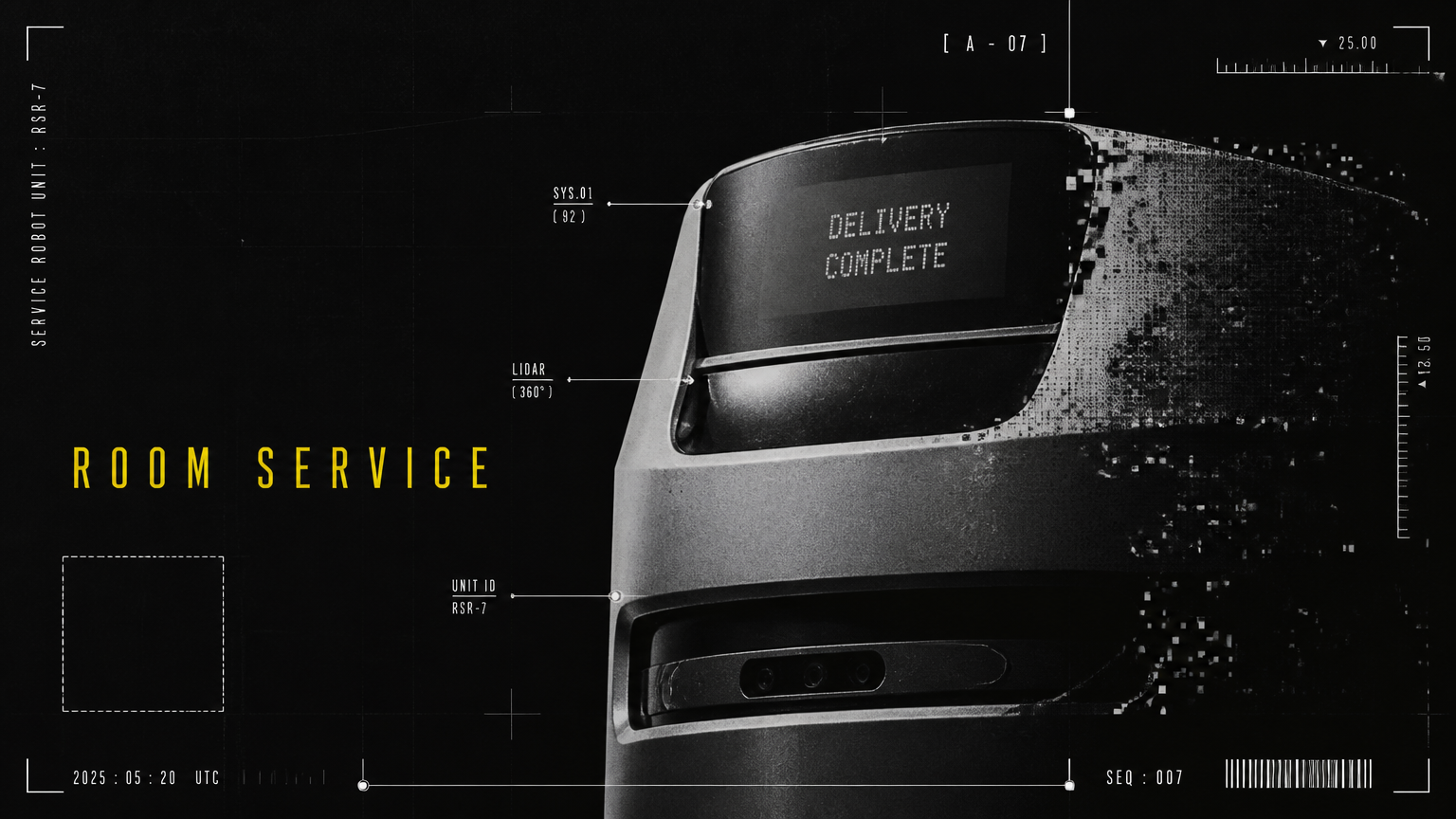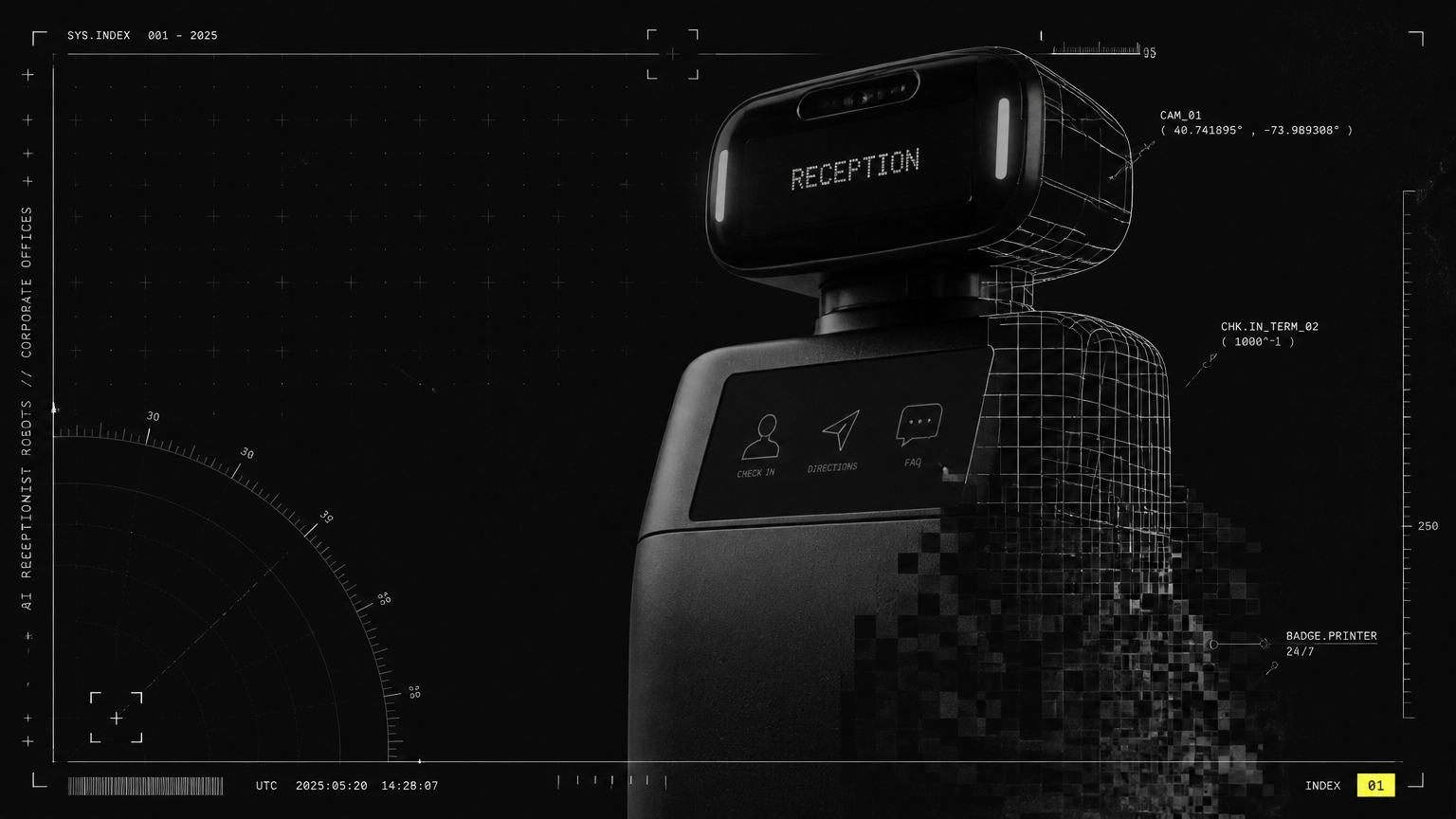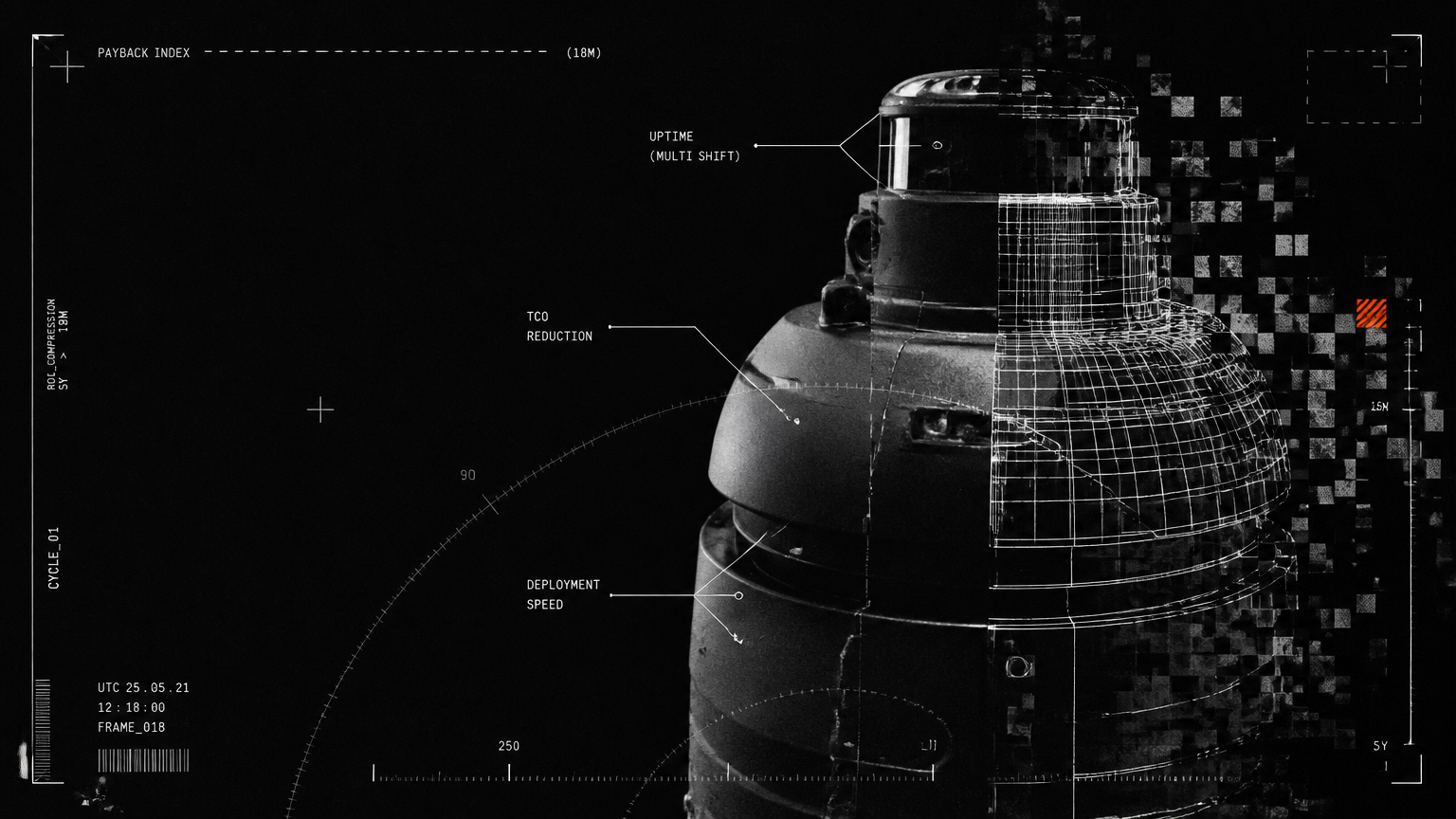
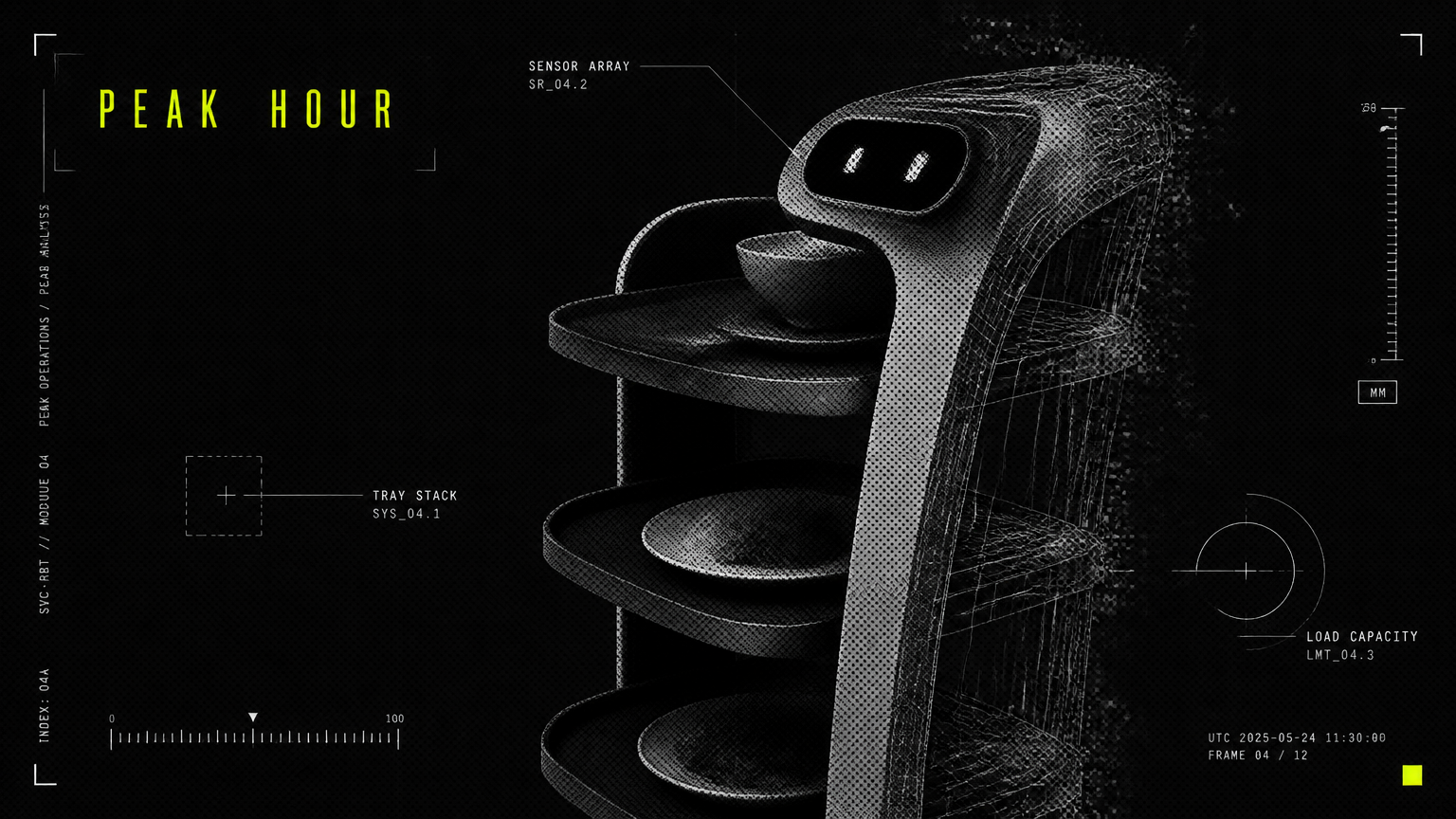
A restaurant serving robot handles repetitive food running, table delivery, and dish return during lunch and dinner rushes, so your skilled staff can focus on guests. For hospitality, corporate cafeteria, healthcare, and event operators, this means faster table turns, fewer temp-staff callouts, and consistent service even at 100% occupancy.
Why Peak Hours Break Traditional Staffing
The 12-2 PM and 7-10 PM rush creates the same failure pattern everywhere: order volume triples, kitchen output surges, but floor staff cannot scale instantly. In hospitality venues, hotels, restaurants, and resorts, this leads to peak-time service gaps and inconsistent service quality. Corporate IT campuses and co-working cafeterias face dense foot traffic in a 60-minute window. Healthcare cafeterias and hospitals add infection control and round-the-clock strain.
Temporary staff seems like the fix, but it adds onboarding time, variable quality, and higher hourly cost. One absence during a banquet, match-day event, or hospital visitor peak can stall the entire service line.
How a Restaurant Serving Robot Actually Works During the Rush
A modern restaurant serving robot is built for live, crowded floors — not demo rooms.
In a typical Allbotix deployment, the workflow is:
1. Dispatch from kitchen/pass: Staff load trays, select table numbers on the touchscreen, and send the robot. Multi-tray designs carry 4-8 dishes per trip. 2. Autonomous navigation: LiDAR + vision + proprietary AI fleet-management software maps tables, avoids guests, queues at narrow aisles, and coordinates with other robots in real time. 3. Guest interaction: The robot arrives, announces the table, and staff or guests unload. It then returns autonomously for the next run or for dish collection. 4. Continuous running: While human runners fatigue after 90 minutes, robots sustain 10-12 hour shifts with scheduled charging, monitored via real-time fleet dashboard with predictive maintenance.
This is precision engineering for throughput: 15–30% throughput increases are typical in well-run automation deployments, directly addressing labor shortage and cost pressure.
Can It Reduce Dependence on Temporary Staff?
Yes — by replacing temp trips, not temp talent.
A single restaurant serving robot can run 200-300 dishes per peak shift on fixed routes like kitchen-to-buffet, pass-to-table, and table-to-wash. That covers the work of 1.5-2 runners during rush without recruiting, training, or overtime.
Operators report three practical gains:
Lower temp roster: Keep your trained core team for greeting, upselling, special requests, and issue resolution. Use robots for repetitive running. Consistent quality: Robots don't forget Table 14, spill under pressure, or slow down in hour three. Automated execution improves consistency and reduces rework. Cost control: With average robot payback dropping to ~1.3 years across industries, peak-hour automation delivers faster ROI than repeated seasonal hiring.
For corporate cafeterias, healthcare food courts, and event spaces with predictable daily peaks, this stability is more valuable than adding headcount.
How Serving Robots Integrate With Existing Service Workflows
No remodel or POS overhaul is needed. Integration follows your current service model:
Dine-in restaurants and hotels: Robots act as food runners. Servers take orders and finish tableside service; robots bridge the long kitchen-to-table distance. Buffets and corporate cafeterias: Robots handle replenishment runs, pantry delivery, and used-tray collection, keeping lines moving for office parks and tech campuses. Healthcare and hospitals: Robots reduce non-clinical task load with contact-minimized meal delivery to wards and cafeterias, supporting infection control protocols. Events and banquets: Multiple robots run in fleet mode — assigned zones, synchronized dispatch, and centralized monitoring from one tablet.
Because Allbotix builds its fleet in-house with full IP ownership of design, firmware, and source code, routes, tray heights, voice prompts, and safety speeds are engineered to a client's specific scale and layout, not assembled from off-the-shelf parts.
Beyond Hospitality: Where Rush-Hour Automation Applies
Peak-hour pressure is not only an F&B problem. The same fleet logic serves:
Corporate and co-working: Refreshment delivery robots and floor-cleaning automation for dense foot traffic. Government & Public Services: Automated facility cleaning and AI receptionists to cover 24/7 monitoring needs on tight staffing budgets. Retail malls and showrooms: Promotional and serving robots for customer flow management plus AI greeters to offset high turnover. Education campuses: Large-scale cleaning robots and AMR-based transport for sprawling universities with thin support staff. Manufacturing, Logistics, and Airports: AMRs, cobots, and cleaning automation for inventory movement, fleet visibility, pallet transport, and high-density transit hub demands.
This cross-industry versatility is why operators standardize on one fleet partner instead of single-vertical vendors.
Peak-Hour Service Models Compared
| Criterion | Temp-Staff Heavy Model | Core Team Only | Restaurant Serving Robot + Human Team |
|---|---|---|---|
| Peak throughput | Variable, depends on availability | Bottlenecks at 70%+ occupancy | High and sustained, 200+ dishes per shift |
| Service consistency | Low, different temp quality daily | Good but slow under rush | High, standardized delivery every trip |
| Labor cost control | High overtime + agency fees | Burnout and overtime risk | Fixed asset, lower recurring temp spend |
| Onboarding time | Hours per shift | Zero, but capacity capped | One-time mapping + 30-min staff training |
| Hygiene and safety | High human contact | High human contact | Contact-minimized delivery, autonomous navigation |
| Multi-site scalability | Hard to replicate | Limited by hiring | Fleet software scales across locations |
Why Operators Choose a Precision-Engineered Fleet
Allbotix engineers and deploys a broad, multi-vertical fleet — AI receptionists, cleaning, serving, AMRs, cobots, and humanoids — paired with proprietary AI fleet-management software for real-time monitoring and predictive maintenance.
With 525+ robots developed, 180+ happy clients, and 99.8% uptime backed by publicly listed Nanta Tech Limited, deployments are supported by 24/7 Premium Support and Made-in-India manufacturing scaled via Aimtron Technologies partnership. That is limitless innovation backed by full in-house engineering, not resold hardware.
Serve Every Rush Without Extra Hiring Stress
If lunch and dinner peaks force you into costly temp staffing, Allbotix can help you deploy a restaurant serving robot fleet tuned to your floor plan, menu flow, and service style. Talk to Allbotix to map your peak-hour routes and pilot serving automation with 24/7 support.