Quick answer: Predictive maintenance uses AI, IoT sensors and real-time condition monitoring to detect equipment failures before they happen, cutting unplanned downtime by 30-50%. For robot fleets and facility equipment, it replaces reactive repairs with planned interventions, helping operations reach 99.8% uptime while lowering maintenance costs and non-clinical operational load. In short, predictive maintenance reduces downtime by fixing the right asset at the right time — not too early, not after failure.
For operations, facilities, and plant leaders, unplanned stoppages are the most expensive kind of downtime. A failed AMR in a warehouse aisle, a cleaning robot down during hospital night-shift turnover, an HVAC fault in a mall at peak hours, or a cobot fault on a production line all create the same ripple effect: overtime, service backlogs, safety risk, and lost throughput. This guide explains how predictive maintenance works, what ROI to expect, and how to apply it across diverse equipment and robot fleets without adding headcount.
Why Predictive Maintenance Reduces Downtime More Than Traditional Methods
To understand where the 30-50% unplanned downtime reduction comes from, it helps to look at how maintenance strategies have evolved. Most facilities still operate on a mix of reactive and preventive approaches. Predictive adds a data-driven layer on top.
| Criterion | Reactive Maintenance | Preventive Maintenance | Predictive Maintenance |
|---|---|---|---|
| Trigger for Action | Failure has already occurred | Fixed calendar or usage interval | Real-time asset condition and AI risk score |
| Monitoring Method | Manual inspection after breakdown | Scheduled checklists and servicing | IoT sensors + continuous monitoring + anomaly detection |
| Downtime Profile | High unplanned downtime, emergency repairs | Lower failures but higher planned downtime and over-servicing | Minimal unplanned downtime, short planned interventions |
| Maintenance Cost | Highest cost per repair, overtime and spares expediting | Predictable but often wasteful parts and labor | 25-30% lower maintenance costs by servicing only when needed |
| Asset Lifespan | Shortened due to run-to-failure stress | Extended, but limited by generic intervals | Maximized through early fault detection and precision servicing |
| Scalability for Fleets | Not scalable across sites | Staff-intensive to scale | Scales via predictive maintenance software for fleet management |
| Best Fit | Non-critical, low-cost assets | Regulated assets with known wear cycles | Critical production, facility, and mobile robot fleets |
This predictive vs preventive maintenance distinction matters for ROI. Preventive maintenance reduces failures compared to reactive, but it still causes unnecessary downtime because you service healthy machines. Predictive maintenance benefits come from precision: you intervene only when vibration, temperature, current draw, battery health, or navigation performance indicates emerging failure.
Industry studies consistently show automation and condition-based monitoring cut unplanned downtime 30-50%, with documented plant cases showing 26%+ reductions and ~$630K in annual savings per plant. For manufacturing facing a projected shortfall of 2M+ workers over the next decade, that uptime lift translates directly into 15-30% throughput increases and 20-40% capacity uplift without adding shifts.
How Predictive Maintenance with AI and IoT Works
Predictive maintenance with AI and IoT is not a single sensor or dashboard. It is a closed loop from edge data to action, typically delivered through fleet-management software.
1. IoT Sensors Capture Real Condition Data
Every critical asset — whether a plant motor, HVAC chiller, AMR drive wheel, or scrubber brush motor — emits health signals. Modern predictive systems collect:
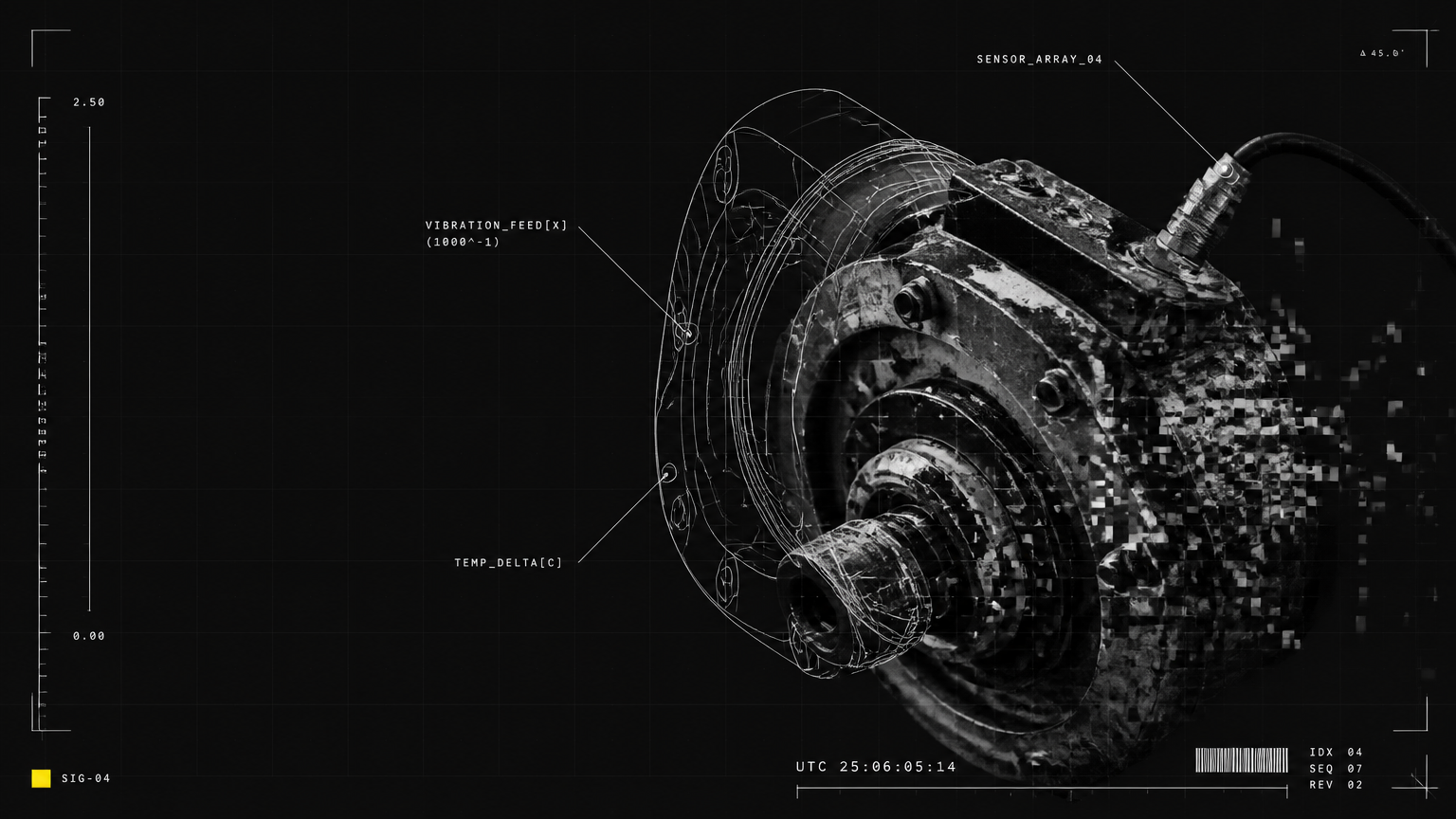
- Vibration and acoustics for bearings, motors, and gearboxes
- Temperature for motors, batteries, chargers, and HVAC coils
- Current and voltage draw for pumps, cobots, and traction systems
- Battery state-of-health, charge cycles, and thermal events for mobile robots
- Lidar, odometry, and navigation anomalies for AMRs and cleaning robots
- Run hours, load cycles, filter status, and water levels for facility equipment
For robots engineered in-house, these sensors are integrated at design stage rather than bolted on later. That integration is critical for accuracy, because firmware-level access provides cleaner data than aftermarket retrofits.
2. Real-Time Monitoring Creates a Live Health Baseline
Data streams to a cloud fleet-management platform where each asset gets a digital health profile. Instead of checking a robot once per month, operations teams see live status across a single site or multi-campus fleet: online, on-task, charging, idle, degraded, or fault-risk.
This 24/7 visibility is especially valuable for lean teams managing sprawling environments — corporate tech campuses, universities, hospitals, airports and transit hubs — where equipment is distributed and support staff is thin.
3. AI Anomaly Detection Predicts Failure Before It Happens
AI models learn what “normal” looks like for each asset type and site condition, then flag deviations:
- A gradual rise in AMR motor temperature + increased current draw = impending drive failure
- Increased vibration signature on a cleaning robot = worn bearing or unbalanced brush
- Declining battery capacity + longer charge times = battery end-of-life in 2-3 weeks
- Repeated localization losses in the same warehouse zone = map, lighting, or sensor issue, not random error
Unlike threshold alarms, machine-learning models reduce false positives by correlating multiple signals and historical failure patterns across the fleet.
4. Automated Alerts and Planned Interventions via Fleet-Management Software
When risk crosses a threshold, predictive maintenance software for fleet management automatically:
- Generates a health alert with severity, probable cause, and recommended action
- Schedules maintenance during a low-impact window (e.g., after mall hours, between production batches)
- Reserves the right spare part and assigns the task to on-site staff or premium support
- Reroutes work to healthy units — for example, reassigning cleaning zones from one robot to another to maintain coverage
- Logs the intervention to improve future predictions
The result: a 10-minute planned brush replacement at 6 a.m. instead of a 4-hour emergency outage at noon.
Predictive Maintenance Benefits That Drive Unplanned Downtime Reduction
The core predictive maintenance benefits extend well beyond fewer breakdowns:
Higher uptime and throughput: By converting unplanned stops into short planned tasks, plants and facilities sustain 98-99.8% availability. Well-run robotic fleets regularly achieve 99.8% uptime when hardware and software are co-engineered.
Lower maintenance and labor costs: Maintenance costs typically fall 25-30% because teams avoid emergency callouts, expedited spares, and unnecessary preventive swaps. More importantly, existing staff can manage larger fleets because monitoring is centralized and automated.
Longer asset life and fewer secondary failures: Catching a misaligned AMR wheel early prevents floor damage, motor burnout, and battery strain. Early HVAC fault detection prevents compressor failure, which can cost 10x more than the initial repair.
Safer, more consistent operations: In healthcare, hospitality, and food service, consistent robotic execution reduces variability and supports infection control and service quality. In industrial settings, automated quality checks reduce scrap rates 20-50%.
Faster payback: Average robot payback time has dropped from ~5.3 years in 2019 to ~1.3 years in 2024, with well-run deployments seeing 10:1 to 30:1 ROI within 18 months. Uptime is a major driver of that acceleration — every avoided hour of downtime protects revenue and labor productivity.
How Predictive Maintenance Reduces Downtime in Manufacturing Plants
Predictive maintenance for manufacturing plants delivers some of the clearest ROI because downtime cost per minute is so high and equipment interdependencies are tight.
In industrial parks and plants, predictive systems monitor:
- AMRs and pallet transport: Drive motors, batteries, safety lidar, and docking alignment. A predictive alert for wheel wear allows a swap during shift change, avoiding a stalled pallet in a main aisle that halts forklift traffic.
- Cobots and production assist robots: Joint torque, repeatability drift, and gripper force. Early drift detection triggers recalibration before defects or line stops occur.
- Plant utilities and HVAC: Compressors, pumps, and air handlers that support cleanrooms and production environments. Vibration and thermal trending prevents cascading failures.
Because Allbotix pairs industrial AMRs, collaborative robots, and humanoid training assistants with proprietary AI fleet management, plant leaders get real-time monitoring and predictive maintenance as part of the deployment — not as a separate integration project. In-house ownership of design, firmware, and source code means health models are tuned to the actual hardware, improving prediction accuracy and speeding root-cause resolution with 24/7 Premium Support.
A single-site pilot — for example, 3-5 AMRs on intralogistics — can establish baseline failure modes and validate unplanned downtime reduction in 60-90 days before scaling to multi-line or multi-plant fleets.
How Predictive Maintenance Reduces Downtime Across Robot Fleets and Facilities
Beyond the plant floor, the same approach protects uptime across high-traffic, service-intensive environments:
Corporate Campuses and Co-Working Parks
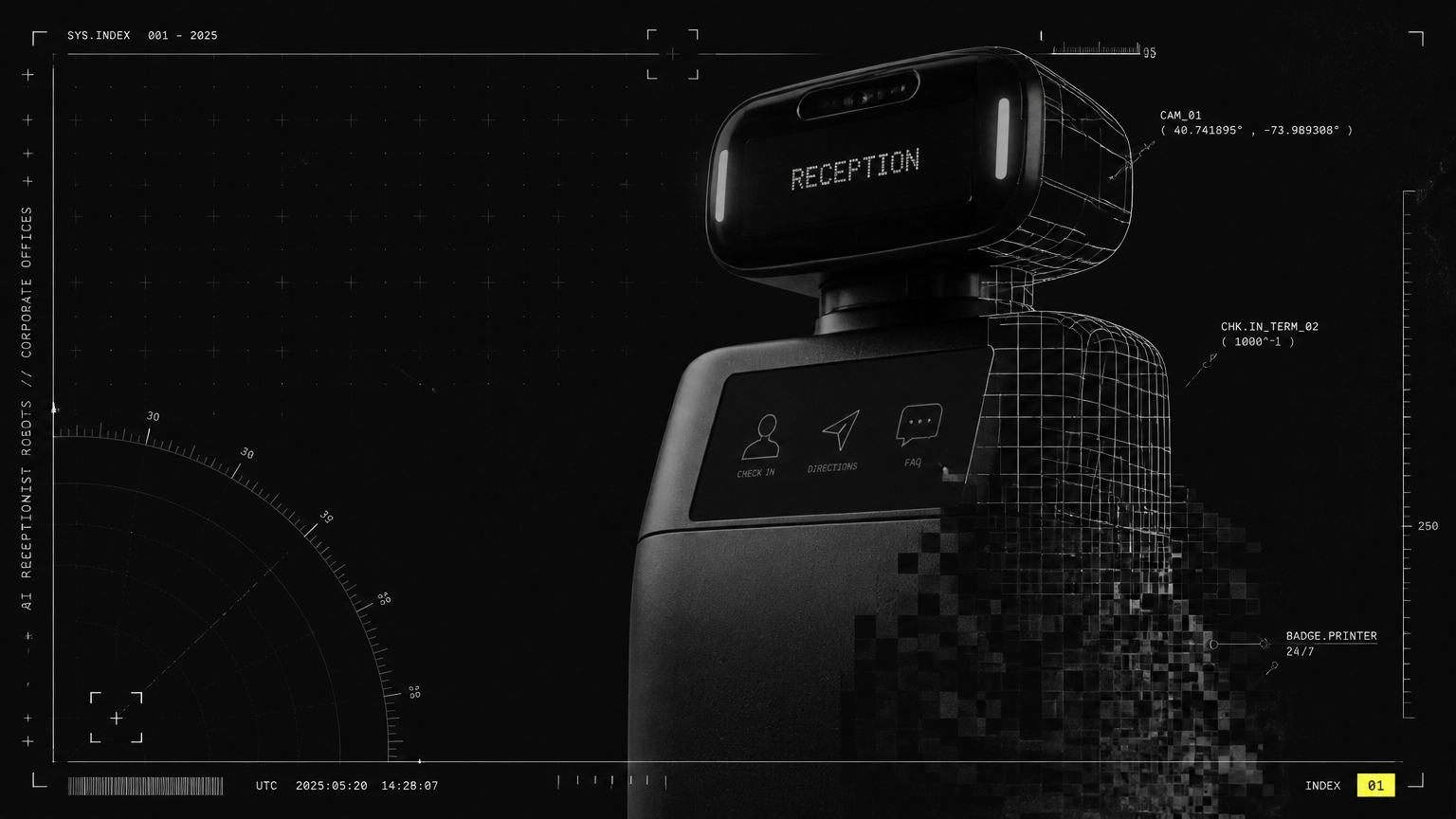
AI receptionist robots, pantry delivery robots, and floor-cleaning automation handle dense foot traffic and recurring facility needs. Predictive monitoring tracks interaction uptime, navigation load, and battery cycles, ensuring front-desk coverage during peak visitor hours without adding front-desk staff.
Healthcare Hospitals and Clinics
Cleaning and delivery robots reduce non-clinical task load and support infection control. Predictive alerts ensure night-shift cleaning coverage and daytime pharmacy or linen transport are never interrupted by an avoidable battery or brush failure — critical for round-the-clock strain.
Hospitality, Retail, and Malls
Serving robots, promotional robots, AI greeters, and floor scrubbers must perform during peaks. Health scoring allows managers to rotate units proactively and schedule servicing off-hours, preserving guest experience and brand differentiation despite high staff turnover.
Education, Government, and Transit Hubs
Universities, government buildings, airports, and stations need 24/7 monitoring with tight staffing budgets. Surveillance robots, large-scale cleaning robots, and visitor-management receptionists stay available through centralized dashboards, automated fault tickets, and transparent service logs that support public accountability.
Logistics and Warehousing
For 3PL and fulfillment operators, fleet visibility is everything. Predictive maintenance software for fleet management shows battery health, route efficiency, and error hotspots across dozens of AMRs, enabling operators to balance workloads, plan charging, and prevent pallet-transport bottlenecks.
What makes this scalable is the combination of diverse form factors — receptionist, humanoid, quadruped, cleaning, serving, AMR, and cobot — under one software layer. Instead of juggling separate tools for HVAC, cleaning equipment, and mobile robots, operations leaders manage health, alerts, and service history in one place. That breadth, backed by Made-in-India manufacturing scaled via the Aimtron Technologies partnership and full IP ownership, reflects Allbotix’s precision engineering approach: machines engineered to a client’s specific ambition and scale, not assembled off-the-shelf.
Implementing Predictive Maintenance Without Adding Staff
Many leaders assume predictive maintenance requires data scientists and extra technicians. A fleet-based model avoids that by embedding expertise in the platform and support structure:
Start with a focused pilot: Choose 1-2 high-impact pain points — for example, lobby cleaning + reception in a corporate tower, or AMR pallet movement in one warehouse zone. Instrument those assets first and define success as uptime lift and avoided work orders.
Use in-house engineered hardware + software: The fastest path to value is hardware and fleet software designed together. With 525+ robots developed and 180+ happy clients, Allbotix deployments come with real-time monitoring and predictive maintenance built in, plus 24/7 Premium Support to act on alerts when internal teams are off-shift.
Centralize monitoring, decentralize action: A central dashboard gives facilities heads multi-site visibility, while automated work orders give on-site teams simple, prescriptive tasks. No new analytics headcount required.
Scale from site to multi-campus: Once baselines are proven, replicate health models to new sites. Because the software learns across the fleet, each additional robot improves prediction accuracy for all — a network effect that single-site, hardware-only vendors cannot match.
Backed by publicly listed Nanta Tech Limited, this model gives enterprise, government, and education buyers added confidence to scale from pilot to portfolio.
Predictive maintenance is no longer an experimental upgrade. It is the operating standard for resilient, lean operations — delivering fewer surprises, lower costs, and measurably higher uptime.
Ready to cut unplanned downtime by up to 50%? Talk to Allbotix at https://www.allbotix.ai/ to pilot AI-powered robots with built-in predictive maintenance software for fleet management — engineered in-house for 99.8% uptime across your campuses, plants, and public spaces.