
Quick Answer: "Robotics supports public service staff by handling repetitive, round-the-clock tasks like reception, facility cleaning and monitoring, freeing human workers for complex, empathetic citizen service. Rather than replacing jobs, service robots act as tireless assistants that extend capacity under tight staffing budgets while improving consistency and transparency."
In short, robotics in public services is about augmentation, not automation for its own sake. For government leaders facing staff shortages, rising citizen expectations, and intense budget scrutiny, robotics in government services offers a practical way to extend team capacity, maintain service continuity, and deliver more consistent public experiences.
Public service teams are overstretched. Front desks in municipal offices, courts, hospitals, and transport hubs handle dense foot traffic with limited staff. Large public buildings require constant cleaning. Campuses and civic facilities need 24/7 monitoring. Hiring more people is not always possible, and burnout is real.
This is where robots in the public sector are proving most valuable — not as replacements for dedicated civil servants, but as reliable support that handles the repetitive, physically demanding, and round-the-clock work so people can focus on judgment, care, and community trust.
Why Robotics in Public Services Is About Augmentation, Not Replacement
The fear that robots will replace public workers is understandable, but it misunderstands how service robots are actually deployed. In successful deployments, no frontline role is eliminated. Instead, routine workload is redistributed.
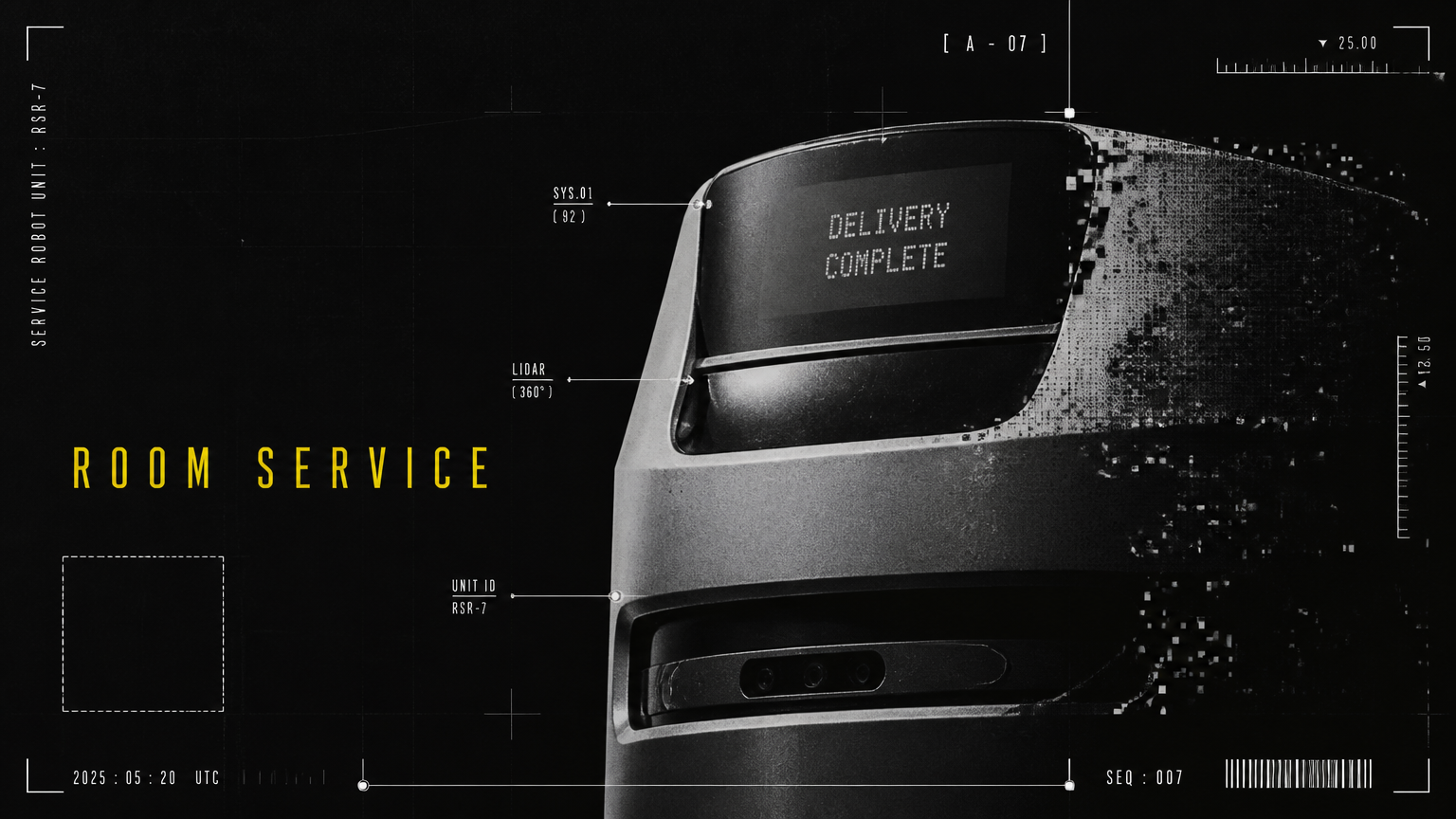
Think of service robots as tireless assistants. An AI receptionist never gets tired of answering the same directions question. A cleaning robot does not mind overnight shifts in a large transit hall. A surveillance robot does not lose focus on patrol at 3 a.m. Human staff, freed from these loops, can handle exceptions, de-escalation, complex applications, vulnerable citizens, and decisions that require empathy and discretion.
This is how robots support public service workers in practice:
| Capability | Service Robots | Human Public Service Staff |
|---|---|---|
| Best-suited tasks | Repetitive, rule-based, physically demanding, round-the-clock duties | Complex judgment, empathy, negotiation, discretionary decisions |
| Availability | 24/7 operation with consistent output | Shift-based, needs rest, affected by workload peaks |
| Core strength | Consistency, data logging, coverage at scale | Trust-building, problem-solving, citizen care |
| Citizen impact | Shorter waits, cleaner facilities, faster information | Resolved cases, personalized support, equitable outcomes |
| Role in team | Extends capacity and fills staffing gaps | Leads service delivery and owns outcomes |
The table makes the point clear: robots and people are complementary. Robotics in public services works best when technology takes the volume and humans own the value.
For decision-makers in Corporate IT campuses, Education institutions, Healthcare facilities, Retail complexes, Hospitality venues, Manufacturing plants, Logistics hubs, and Airports & Transit Hubs, the same principle applies. Wherever teams face front-desk pressure, dense foot traffic, and recurring facility maintenance, augmentation delivers more resilience than adding headcount alone.
How Augmentation Feels for Staff Day-to-Day
When augmentation is done well, staff report less strain, not more stress. Clerks no longer juggle visitor queues while answering phones. Janitorial teams no longer spend entire shifts on vast floor areas and can focus on detail work, restrooms, waste handling, and rapid response. Security personnel receive alerts and video context from mobile patrols instead of walking empty corridors for hours.
Crucially, robots create a digital record of work done — visitor check-ins logged, cleaning routes completed, patrols timestamped. That transparency protects staff as much as it reassures the public. It proves service levels were met, even under tight staffing budgets.
High-Impact Applications of Robotics in Public Services
The most effective deployments of robotics in government services start with three high-volume, high-visibility use cases: visitor management, facility cleaning, and safety monitoring. Each directly relieves a known pain point for public teams.
AI Receptionist Robots for Government Offices
Municipal headquarters, courts, licensing centers, tax offices, and public hospitals all share the same challenge: high visitor volume, repetitive queries, and thin front-desk staffing.
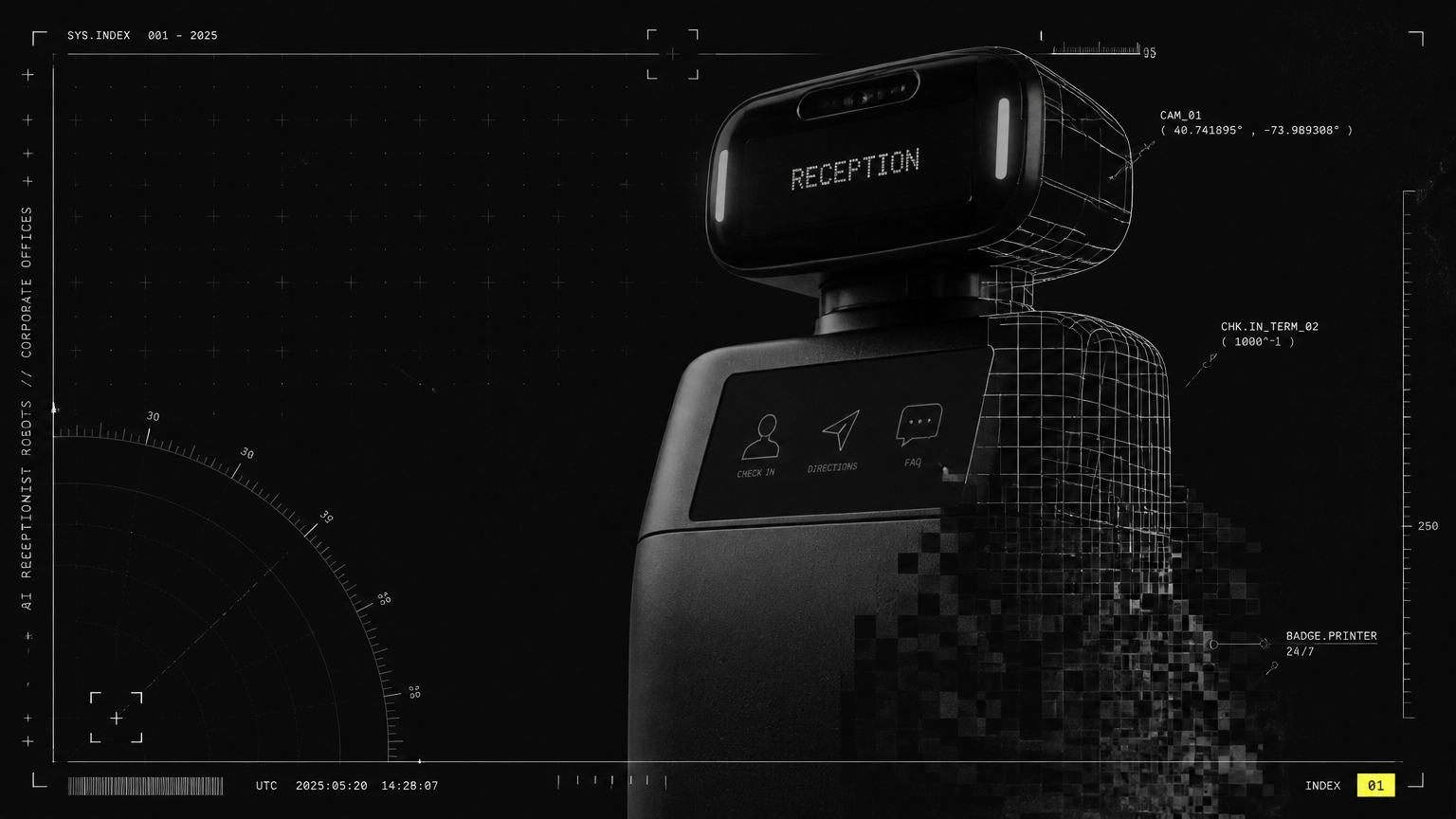
AI receptionist robots for government offices act as a first point of contact. They greet visitors in multiple languages, provide directions, explain processes and required documents, manage queue tokens and appointment check-ins, and guide visitors to the right counter or department. With conversational AI and wayfinding, they reduce queues during peak hours and ensure every citizen receives the same accurate information.
For staff, this means fewer interruptions and fewer frustrated visitors. Instead of repeating directions, front-desk officers can focus on case processing, verification, and helping elderly citizens, first-time applicants, or those with complex needs. In corporate campuses and universities, the same AI receptionist platform handles visitor management and staff check-ins, showing its cross-industry versatility.
Allbotix engineers AI receptionist and humanoid robots in-house with proprietary software, rather than assembling off-the-shelf parts. With 525+ robots developed and 180+ happy clients, its service fleet is designed for precision engineering at public scale — from a single civic center lobby to multi-building government complexes.
Cleaning Robots for Public Buildings
Large public facilities — railway stations, airports, government hospitals, schools, libraries, malls, and office parks — require continuous cleaning to meet hygiene and public-image standards. Manual teams cannot cover thousands of square meters around the clock without high cost and turnover.
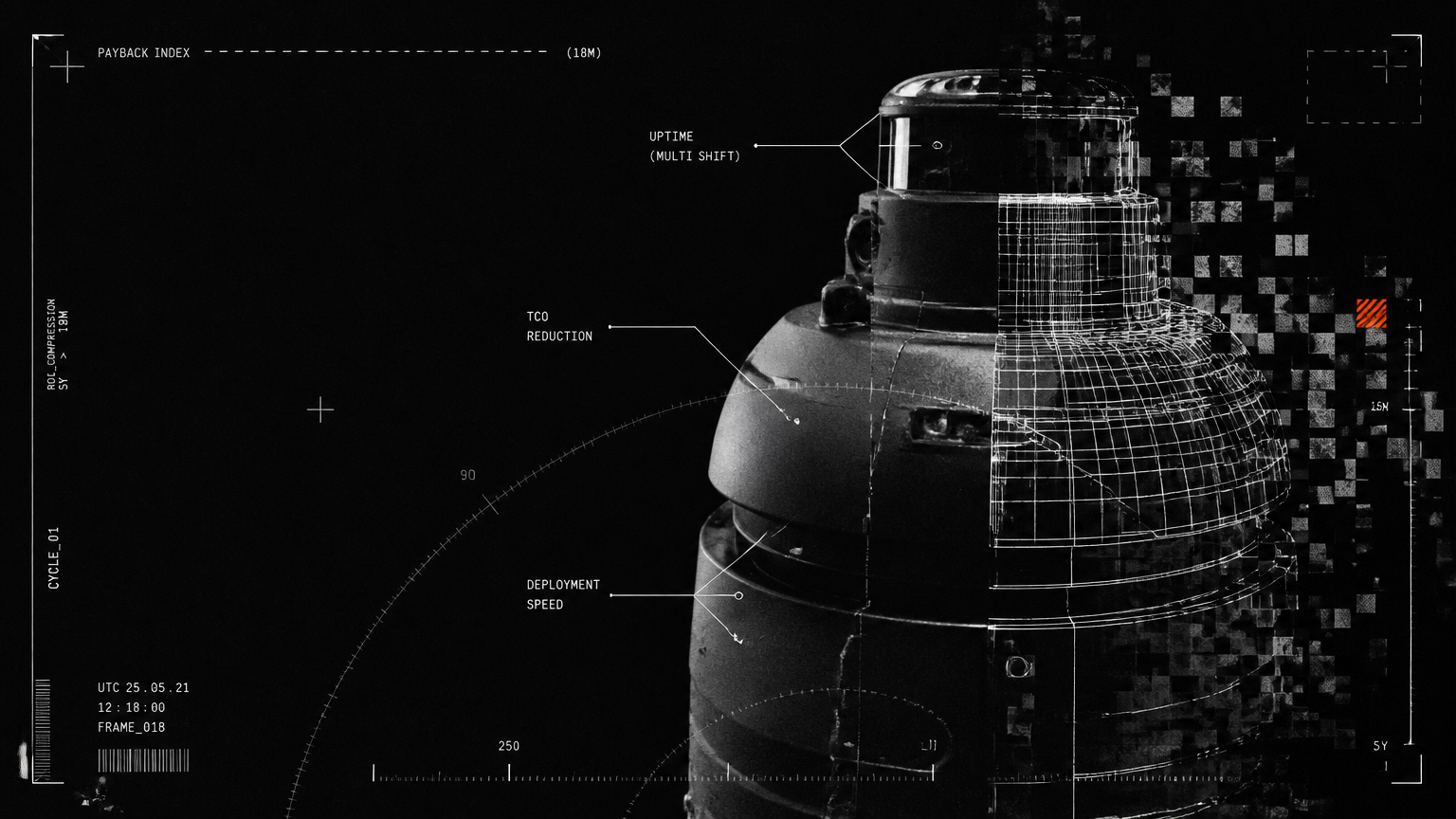
Cleaning robots for public buildings automate floor scrubbing, vacuuming, and sweeping across vast lobbies, corridors, and waiting halls. They follow mapped routes, avoid obstacles and people, operate overnight or during low-traffic windows, and log completed coverage for audit purposes.
This does not replace housekeeping teams. It elevates them. Robots handle the long, repetitive floor passes; human crews focus on high-touch surfaces, restrooms, spill response, and quality checks. The result is more consistent hygiene, better infection control in healthcare settings, and visible cleanliness that builds public confidence.
For facility managers under tight staffing budgets, automation also brings predictability. Cleaning performance no longer drops when a team member is on leave or during night shifts that are hard to staff.
Surveillance Robots for Public Safety
Public safety demands 24/7 monitoring needs with full transparency. Parks, campuses, parking structures, depots, industrial parks, and transit hubs are difficult to patrol continuously with limited security staff.
Surveillance robots for public safety provide mobile, sensor-driven patrols. Equipped with cameras, thermal sensing, two-way audio, and autonomous navigation, including quadruped dog-form robots for uneven terrain, they deter incidents through visible presence, stream live video to control rooms, trigger alerts on anomalies, and create timestamped patrol records.
Security staff remain in command. Robots extend their eyes and reach, allowing a small team to monitor a sprawling campus or public facility without fatigue. Human officers intervene only when judgment is needed — investigation, de-escalation, and citizen assistance.
| Deployment Criterion | AI Receptionist Robots | Cleaning Robots | Surveillance Robots |
|---|---|---|---|
| Primary task | Visitor management, guidance, information | Automated floor cleaning for large areas | 24/7 mobile monitoring and deterrence |
| Staff benefit | Fewer queues and interruptions at front desk | Less repetitive floor work, focus on detail tasks | Wider coverage without extra night patrols |
| Citizen benefit | Faster answers, multilingual support, shorter waits | Cleaner, safer, more hygienic public spaces | Greater sense of safety and visible presence |
| Operating pattern | Peak daytime hours in lobbies and service halls | Scheduled day and overnight cleaning cycles | Continuous patrols, including nights and weekends |
| Transparency output | Check-in and query logs | Coverage maps and cleaning reports | Video records and patrol timestamps |
Together, these three categories show how robots in the public sector deliver continuity: every visitor greeted, every floor covered, every patrol completed — even when human teams are stretched thin.
How Robotics in Public Services Strengthens Budgets, Transparency and Continuity
For government and public-service decision-makers, technology must answer three questions: Does it save money or capacity? Is it accountable? Will it keep working?
Doing More Under Tight Staffing Budgets
Robotics in public services helps close capacity gaps without proportional increases in recurring labor cost. Robots absorb volume — thousands of greetings, kilometers of floor cleaning, hours of patrol — at a predictable operating cost. Staff overtime drops, temporary staffing needs fall, and service levels hold during leave periods, hiring freezes, or peak seasons.
Well-run automation programs also reduce costly downtime and rework. Across industries, automation and condition-based monitoring have cut unplanned downtime by 30-50%, while consistent robotic execution reduces variability and improves quality. For public facilities, that translates to fewer service disruptions, cleaner audits, and better asset utilization.
Allbotix pairs its diverse hardware fleet — spanning receptionist, humanoid, dog, cleaning, serving, AMR, and cobot form factors — with proprietary AI fleet-management software featuring real-time monitoring and predictive maintenance. This software layer is a key differentiator from hardware-only vendors, because it keeps entire fleets visible, healthy, and accountable from a single dashboard.
Transparency Citizens Can See
Public-service transparency is not just a policy goal; it is operational proof. Service robots generate it automatically. Fleet management platforms log when a lobby was cleaned, which patrol route was completed, how many visitors were assisted, and whether systems are online.
With 99.8% uptime and 24/7 Premium Support, Allbotix is engineered for continuity that public services require. Real-time monitoring alerts operators to issues before citizens notice them, and predictive maintenance prevents failures rather than reacting to them. For leaders reporting to councils, boards, or the public, these logs provide defensible evidence of service delivery.
Backing from publicly listed Nanta Tech Limited and Made-in-India manufacturing scaled via the Aimtron Technologies partnership adds further institutional credibility — full IP ownership of design, firmware, source code, and trademarks, built in-house rather than assembled.
Consistency That Builds Trust
Citizens judge government by consistency. A clean station every morning, a helpful greeting every visit, a monitored parking lot every night — these small consistencies compound into trust. Robots deliver that repeatability without variation from shift to shift.
This is why the same model resonates beyond government. Corporate campuses use AI greeters and floor-cleaning automation to manage dense foot traffic. Retail malls use promotional robots and cleaners to handle flow and turnover. Universities use visitor management and large-scale cleaning for sprawling campuses. Hospitals offload non-clinical tasks to protect clinical time. Hotels, factories, warehouses, and airports all use the same logic: let machines own repetition so people can own experience, safety, and quality.
How Deployment Works in Public Facilities
Successful robotics in government services is not a plug-and-play purchase. It is a precision deployment shaped to the building, the workflow, and the scale of ambition.
A practical deployment journey typically follows four stages:
1. Workflow assessment: Map visitor peaks, cleaning zones, and risk areas. Identify where staff lose the most time to repetition and where coverage gaps occur overnight or at peak hours.
2. Fleet design and customization: Select form factors — receptionist, cleaning, surveillance, AMR — and tailor behavior, languages, routes, and integrations. Allbotix machines are engineered to a client's specific precision, ambition, and scale, reflecting its limitless innovation approach, not off-the-shelf assembly.
3. Integration with fleet management: Connect robots to proprietary AI fleet-management software for real-time monitoring, scheduling, and predictive maintenance. Define escalation paths so human staff remain in control — robots alert, humans decide.
4. Training, support, and scale: Train frontline teams to work alongside robots, establish cleaning and patrol schedules, and expand from pilot building to campus or city-wide fleet with continuous 24/7 support.
For decision-makers evaluating vendors, prioritize in-house engineering depth, software visibility, uptime guarantees, and local manufacturing and support capacity. Breadth of fleet matters too — a partner that can cover reception, cleaning, and security under one software platform simplifies procurement, training, and long-term scaling versus managing multiple single-vertical vendors.
Public staff adoption is critical. Frame robots from day one as assistants that reduce drudgery and night-shift burden. Involve security, housekeeping, and front-desk leads in route and script design. Celebrate early wins — shorter queues, audit-ready cleaning logs, completed night patrols — to build confidence.
Support Your Staff, Serve Citizens Better with Allbotix
Robotics will not replace the judgment, empathy, and public duty that define great public service. It will protect and amplify those qualities by removing the repetitive load that burns teams out.
If your offices face crowded lobbies, your facilities struggle to stay clean at scale, or your campuses need reliable 24/7 monitoring under tight budgets, augmentation is the path forward. Allbotix engineers and deploys multi-vertical service and industrial robot fleets with proprietary AI fleet management, in-house IP, and 24/7 Premium Support to help public teams do more with consistency and transparency.
Talk to Allbotix today to design a pilot for your government offices, public buildings, or civic campuses — and give your staff the tireless support they deserve while delivering better service to every citizen.