Quick Answer: Hospital delivery robots autonomously transport lab samples, medicines, and sterile supplies between pharmacies, labs, and wards without human contact. They cut infection risk, relieve nurses of non-clinical runs, and enable secure, trackable 24/7 hospital logistics.
For healthcare administrators and facility leaders, the challenge is familiar: nurses spending hours on pharmacy runs, lab samples waiting for a porter, and infection-control teams working to limit unnecessary contact across wards. hospital delivery robots solve this operational bottleneck by automating the repetitive movement of clinical materials across sprawling hospital campuses.
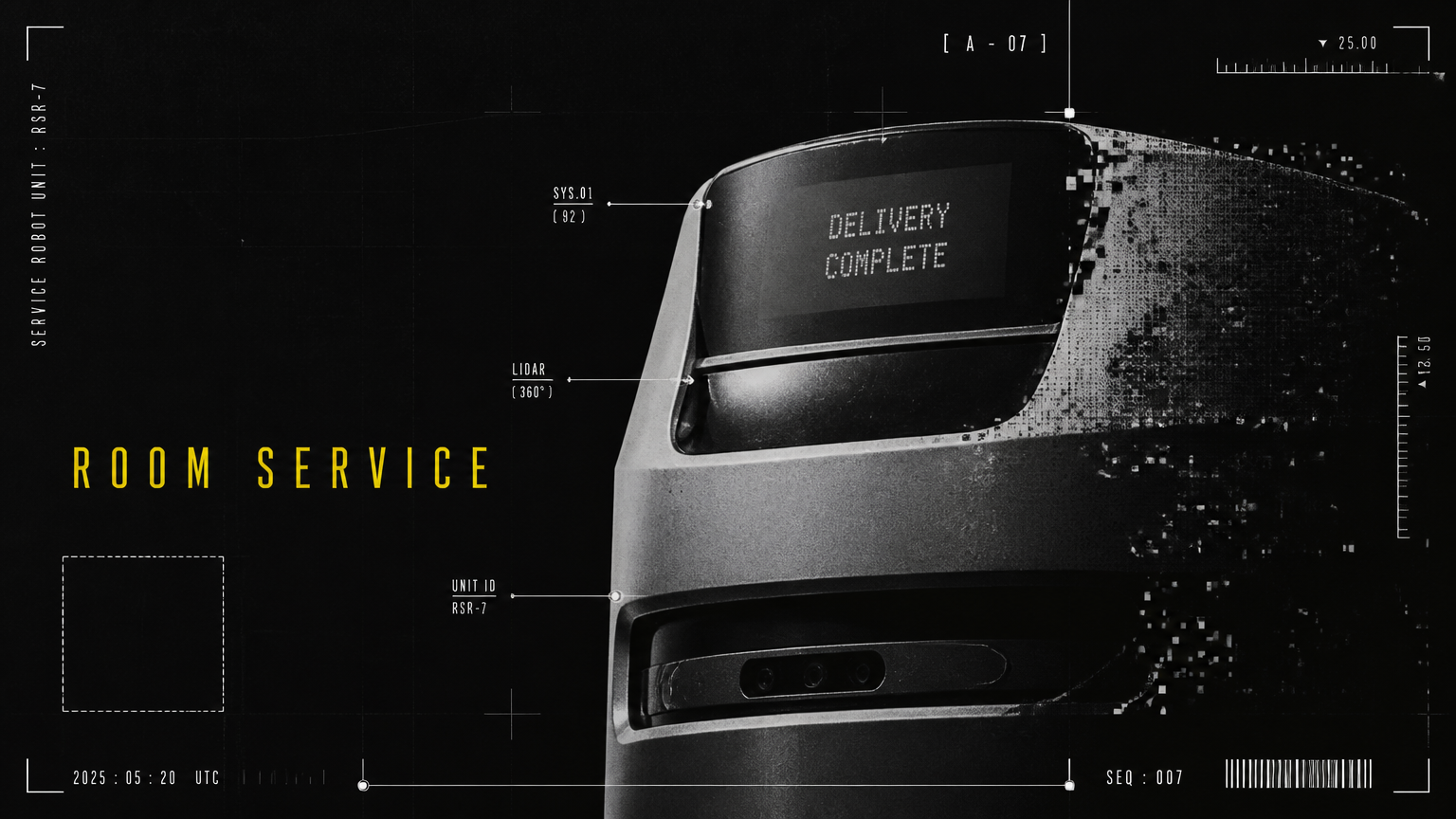
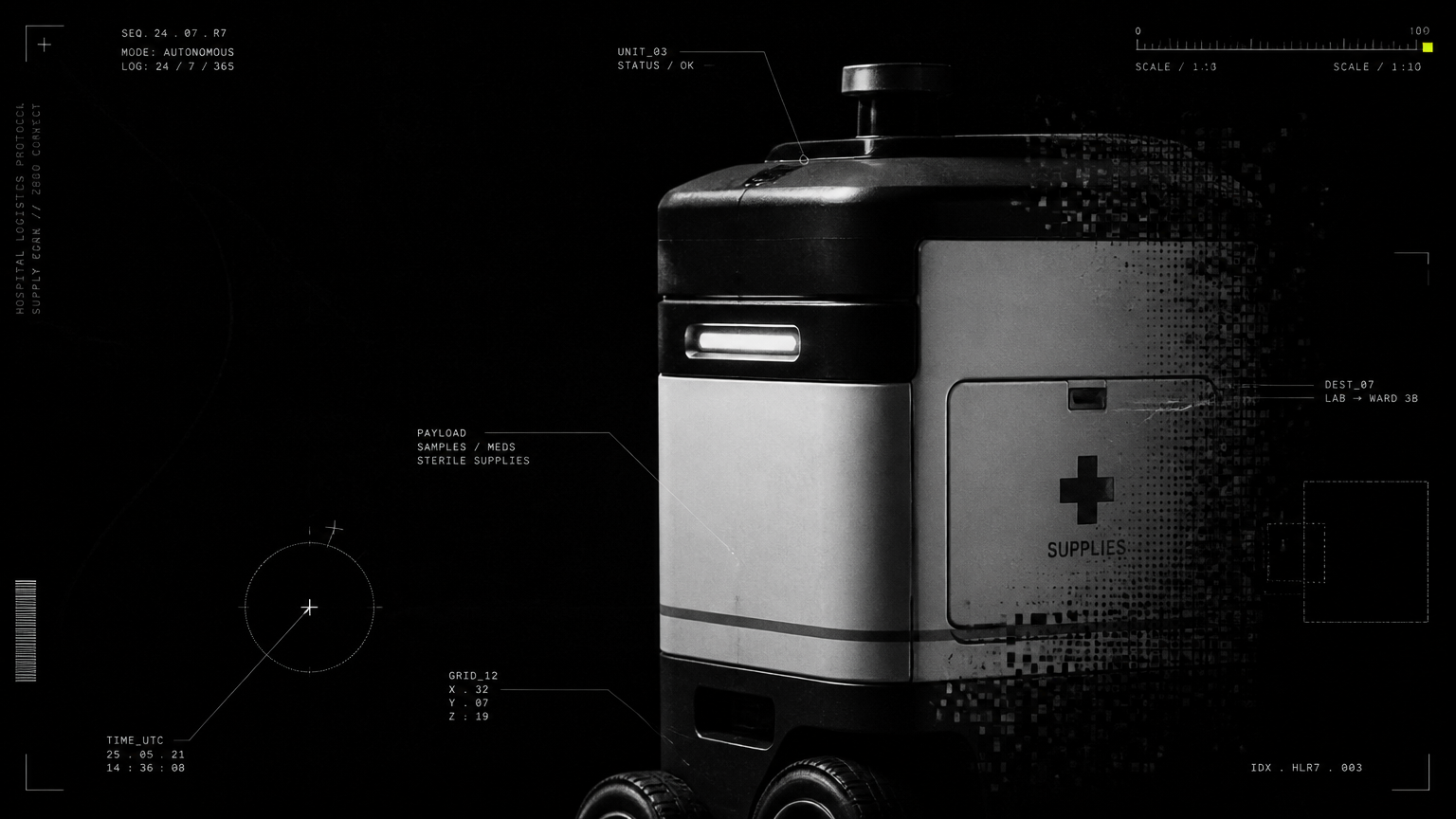
These medical delivery robots are a specialized application of autonomous mobile robots in healthcare — self-navigating platforms designed to move payloads safely through busy, dynamic clinical environments. From a pharmacy delivery robot dispatching scheduled medications to a lab sample transport robot carrying specimens, and a medicine delivery robot in hospital wards handling STAT orders, the goal is the same: move samples and medicine without human risk.
How hospital delivery robots Enable Zero-Touch Transport for Infection Control
Infection control is the primary driver for hospital logistics robots. Every manual handoff — a porter entering an isolation ward, a nurse carrying samples through a crowded corridor, a cart left unattended at a nurses' station — creates a contact point and a compliance risk. Hospital delivery robots replace these touchpoints with a closed-loop, zero-touch workflow.
Secure Compartments and Contactless Handoff
Modern medical delivery robots are built around secure, access-controlled payload design:
Lockable, compartmentalized storage ensures only authorized staff can load or retrieve contents. A pharmacist loads medications and assigns the delivery to a specific ward. The compartment remains locked in transit and opens only via PIN, RFID badge, or EHR-linked task code at the destination. This maintains chain-of-custody for controlled substances, high-value oncology drugs, and sensitive lab specimens.
Contactless handoff eliminates queuing at pharmacy windows and labs. Staff load the robot, select the destination on a touchscreen or hospital task system, and return to clinical work. At the receiving end, the designated nurse or lab technician receives an SMS or nurse-call notification, authenticates, and unloads. No porter-to-nurse handoff, no shared carts, no door-handle contact in isolation zones.
Auditable tracking supports NABH, JCI, and internal infection-control audits. Each run logs who loaded what, when, route taken, temperature conditions if applicable, and who received it. For lab samples and blood products, this traceability is critical for diagnostic integrity and patient safety.
Separation of Clean vs. Contaminated Flows
Hospitals must strictly separate clean flows (sterile instruments, prepared medicines, clean linen) from contaminated flows (used instruments, biohazard samples, waste). Assigning dedicated robots or lockable compartments to each flow prevents cross-contamination far more reliably than shared manual trolleys.
| Criterion | Clean Flow Robot Tasks | Contaminated Flow Robot Tasks |
|---|---|---|
| Typical Payload | Prepared medicines, IV bags, sterile surgical kits, clean consumables | Blood / urine / tissue samples, swabs, used instruments in sealed containers |
| Compartment Protocol | Sanitized compartments, tamper-evident loading | Sealed, leak-proof carriers, biohazard labeling |
| Routing Logic | Pharmacy -> Ward, CSSD -> OT, Store -> ICU | Ward / OT / ICU -> Lab, Ward -> CSSD decontamination |
| Access Control | Pharmacist and receiving nurse only | Collecting nurse and lab receiver only |
| Cleaning Protocol | Wipe-down between scheduled rounds | Disinfection cycle after each contaminated run |
| Tracking Requirement | Medication delivery time and recipient verification | Sample collection time, transit time, and lab receipt |
By dedicating hospital logistics robots to defined clean or dirty circuits, facility leaders can enforce unidirectional movement, reduce corridor mixing, and document compliance without adding supervisory burden.
What Medical Delivery Robots Move Across the Hospital Campus
A single hospital can generate thousands of internal transport tasks per day. Autonomous mobile robots in healthcare are designed to absorb the predictable, repeatable portion of this load:
Pharmacy to ward: A pharmacy delivery robot handles scheduled medication rounds, STAT orders, and ICU top-ups. Instead of nurses leaving the bedside to wait at the dispensary, medications arrive securely at the ward station on schedule, day and night.
Lab logistics: A lab sample transport robot moves specimens from wards, ICUs, emergency departments, and OTs to central pathology, microbiology, and biochemistry labs. Rapid, consistent transit times improve turnaround time (TAT) for diagnostics and reduce pre-analytical errors from delays or mislabeling during manual carries.
Sterile and consumable supply: Hospital logistics robots shuttle sterile packs from CSSD to operating theatres, consumables from central stores to nursing units, and documents or reports where digital systems still require physical transfer.
Medicine delivery at the bedside level: A medicine delivery robot in hospital corridors can serve night shifts, isolation wards, and oncology units where minimizing staff entry is clinically desirable. Patients receive timely medication without increasing footfall in sensitive zones.
For large medical colleges, multi-tower hospitals, and campuses with separate pharmacy, lab, and inpatient blocks connected by long corridors and lifts, these robots turn distance from a staffing problem into an automated flow.
How hospital delivery robots Relieve Nurses and Sustain 24/7 Flow
Nursing shortages and burnout are operational risks, not just HR issues. Studies of hospital workflows consistently show nurses spending significant time on non-clinical logistics — fetching medicines, chasing lab reports, transporting samples. Every such run pulls skilled clinicians away from patient care.
Hospital delivery robots directly address non-clinical task load and round-the-clock strain:
Automating repetitive runs: Pharmacy, lab, and ward runs are high-frequency, low-complexity, and route-predictable — ideal for automation. A fleet can run scheduled loops every 30-60 minutes between pharmacy-lab-ward hubs, plus on-demand STAT trips triggered from a tablet or hospital information system.
Enabling true 24/7 logistics: Unlike manual portering limited by shifts, breaks, and night staffing gaps, robots operate continuously. Night-shift medication deliveries, early-morning pre-round lab collections, and 3 a.m. emergency sample transfers happen without calling additional staff or delaying care until morning.
Reducing interruptions and fatigue: Nurses no longer leave the ward to hunt for supplies. Lab technicians receive samples in steady flow rather than batches. Pharmacy staff dispatch without managing porter queues. The result is calmer wards, faster response to physician orders, and more nursing hours redirected to assessment, counseling, and critical care.
Supporting surge resilience: During infectious outbreaks, seasonal census spikes, or staffing shortages, contactless delivery scales without adding exposure risk. Isolation wards can be served without donning and doffing for every delivery, preserving PPE and protecting staff.
This is where Allbotix's approach to service robotics is relevant. Allbotix engineers Autonomous Mobile Robots (AMRs) paired with proprietary AI fleet-management software, built in-house rather than assembled from off-the-shelf parts. With 525+ robots developed and 180+ happy clients across industries, the platform is designed for continuous operation with 99.8% uptime and 24/7 Premium Support — capabilities that map directly to hospital requirements for reliability during nights, weekends, and emergencies.
Hospital-Ready Deployment: Navigation, Fleet Intelligence, and Workflow Integration
Healthcare administrators rightly ask: will robots work in our crowded corridors, with stretchers, visitors, and unpredictable movement? Hospital-ready medical delivery robots are engineered specifically for this complexity.
Autonomous Navigation in Busy Clinical Corridors
Hospital-grade AMRs use LiDAR, 3D depth cameras, and ultrasonic sensors for 360-degree perception. They slow near patient beds and crowded OPD waiting areas, pause for stretchers and wheelchairs, navigate narrow ward corridors, and call and ride lifts autonomously for multi-floor delivery between pharmacy, lab, and inpatient towers.
Precision engineering matters here. Routes can be geofenced to avoid sterile zones, emergency bays during trauma alerts, or visitor-heavy lobbies during peak hours. Speed limits, audio alerts, and obstacle-stop distances are configured to hospital safety policies, not warehouse standards.
Fleet Monitoring with Predictive Maintenance
A single robot is helpful; a managed fleet is transformative. Allbotix combines hardware fleets with proprietary fleet-management and predictive-maintenance software that provides real-time monitoring of location, battery, task status, and system health.
For facility and biomedical engineering teams, this means live dashboards of all active deliveries, automatic rerouting if a corridor is blocked, low-battery auto-docking and task handover to the next available robot, and predictive alerts before a wheel, sensor, or battery issue causes downtime. This software layer is a key differentiator from hardware-only competitors and underpins sustained 24/7 hospital logistics.
Backed by publicly listed Nanta Tech Limited and scaled through Made-in-India manufacturing with Aimtron Technologies partnership, Allbotix retains full IP ownership of design, firmware, and source code. For hospitals, that translates to machines engineered to a client's specific precision, ambition, and scale — payload size, compartment configuration, lift integration, and infection-control protocols — rather than fixed off-the-shelf units.
Integration into Clinical Workflows
Successful deployment is 30% robot and 70% workflow. Leading implementations follow a phased model:
Pilot a high-volume circuit: Start with pharmacy-to-ward evening rounds or ward-to-lab sample runs. Define loading SOPs, authentication roles, and delivery SLAs.
Connect to hospital systems: Integrate dispatch with HIS, pharmacy management, or LIS via API or tablet interface. Enable automatic task creation for STAT orders and scheduled rounds.
Train and own: Brief pharmacists, nurses, and lab staff on loading, authentication, exception handling, and hygiene protocols. Assign a facility coordinator supported by Allbotix 24/7 Premium Support for monitoring and optimization.
Scale to fleet: Expand from 2-3 robots on one circuit to a campus fleet covering CSSD, stores, ICU, and emergency, managed as one intelligent logistics network.
Manual Runs vs. Pneumatic Tubes vs. hospital delivery robots
Facility leaders often evaluate robots against existing transport methods. Each has a role, but only AMRs provide secure, flexible, round-the-clock transport for diverse payloads.
| Criterion | Manual Porter / Nursing Runs | Pneumatic Tube System | Hospital Delivery Robots |
|---|---|---|---|
| Payload Range | Flexible but limited by carry capacity | Very limited weight and size, unsuitable for IV bags, sterile kits | Flexible: medicines, samples, sterile packs, consumables in lockable compartments |
| Infection Control | High human contact, cross-ward movement | Low contact but shared carriers, limited traceability | Zero-touch handoff, dedicated clean / dirty flows, full audit trail |
| Availability | Shift-dependent, gaps at night, leave-dependent | 24/7 if maintained, but frequent jams and downtime | 24/7 autonomous operation with fleet redundancy and 99.8% uptime design |
| Navigation Flexibility | High, but pulls clinical staff from care | Fixed point-to-point tubes, costly to extend | Dynamic routing across wards, lifts, and buildings, easily reconfigured |
| Security and Traceability | Manual registers, risk of loss or delay | Limited tracking, no recipient authentication | Locked compartments, badge / PIN authentication, real-time tracking |
| Impact on Clinical Staff | Increases non-clinical load and interruptions | Minimal, but staff still walk to tube stations | Relieves nurses and porters, delivers to point of need |
| Scalability and Cost | Linear staffing cost, hard to scale | High civil CAPEX to expand, disruptive retrofit | Modular fleet expansion with predictive maintenance and remote monitoring |
For new towers and retrofits alike, hospital logistics robots complement rather than replace tubes — tubes for small urgent capsules, robots for secure, larger, and trackable clinical flows.
Measuring Impact: What Facility Leaders Should Track
To build a business case for autonomous mobile robots in healthcare, track operational KPIs before and after deployment:
Turnaround metrics: Average pharmacy order-to-ward delivery time, lab sample collection-to-receipt time, and STAT delivery compliance. Robots typically stabilize these times across shifts, eliminating night-shift variance.
Clinical hours reclaimed: Number of nurse porter runs avoided per day multiplied by average round-trip time. Even 40 avoided runs at 12 minutes each returns 8 nursing hours daily to bedside care.
Safety and compliance: Needlestick-adjacent incidents during transport, lost or delayed samples, medication delivery errors, and audit findings on chain-of-custody. Lockable, trackable transport strengthens all four.
Throughput and uptime: Deliveries per robot per day, fleet availability, and maintenance incidents. Look for platforms with real-time fleet visibility and predictive maintenance, not just standalone units.
Across industries, well-run automation has shown 15–30% throughput gains, 30–50% reductions in unplanned downtime, and payback periods compressing toward 1.3 years. While hospital economics differ from manufacturing, the principle holds: automating repetitive movement cuts hidden labor cost, reduces delay-related length of stay, and improves staff retention by removing drudgery.
Bring Precision Engineering to Hospital Logistics with Allbotix
Moving samples and medicine without human risk is no longer a futuristic vision — it is a practical strategy for infection control, nursing productivity, and 24/7 care continuity. With limitless innovation in form factors from AMRs to humanoids and cleaning robots, Allbotix brings cross-industry versatility that single-vertical robotics players cannot match.
If you lead a hospital, medical college, or multi-facility health system facing infection-control pressure, non-clinical load on nurses, and round-the-clock delivery strain, now is the time to automate the corridors.
Talk to Allbotix at https://www.allbotix.ai/ to design a hospital delivery robot fleet for your pharmacy, lab, and ward flows — engineered in-house, monitored intelligently, and supported 24/7 for uninterrupted patient care.