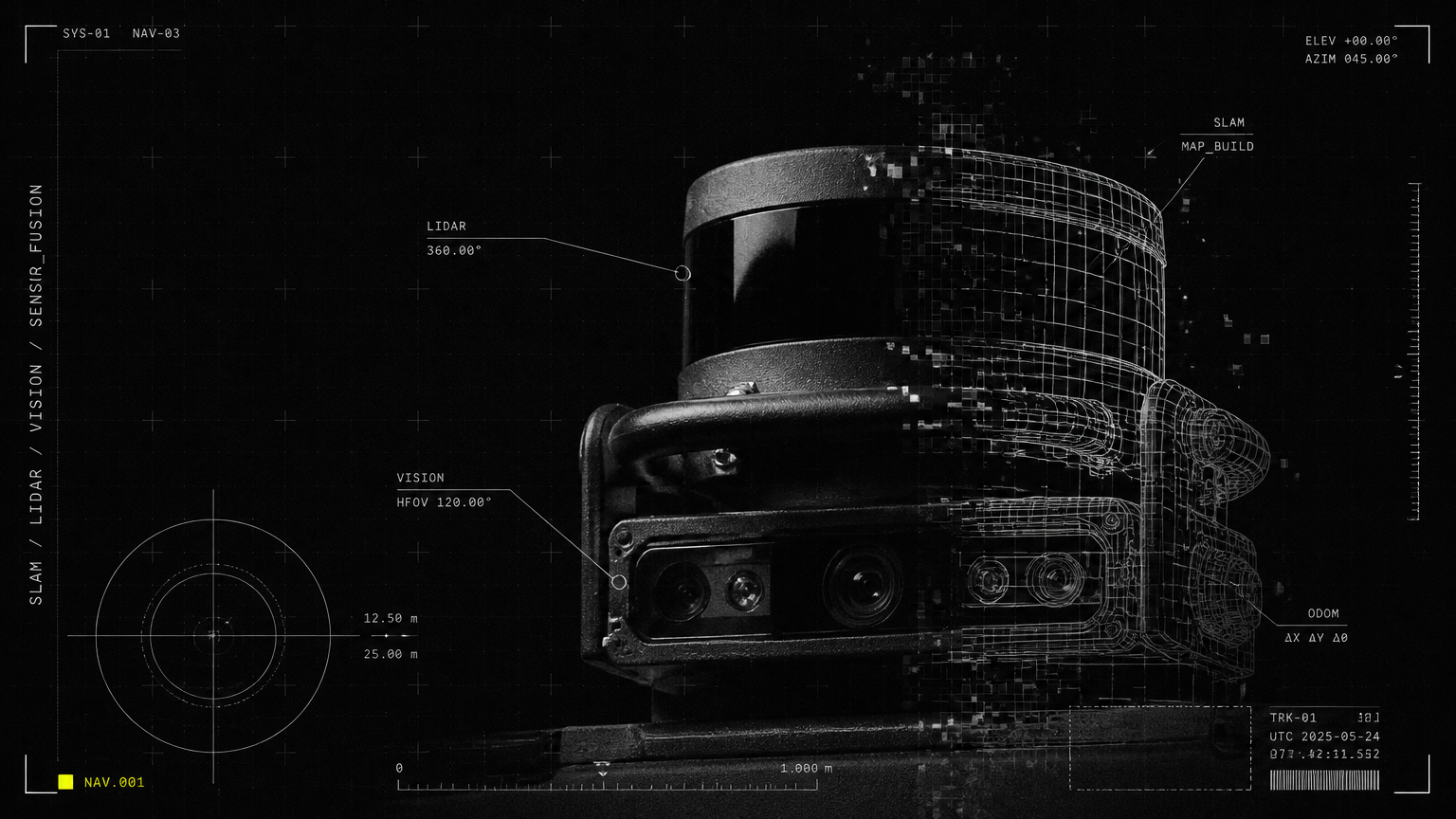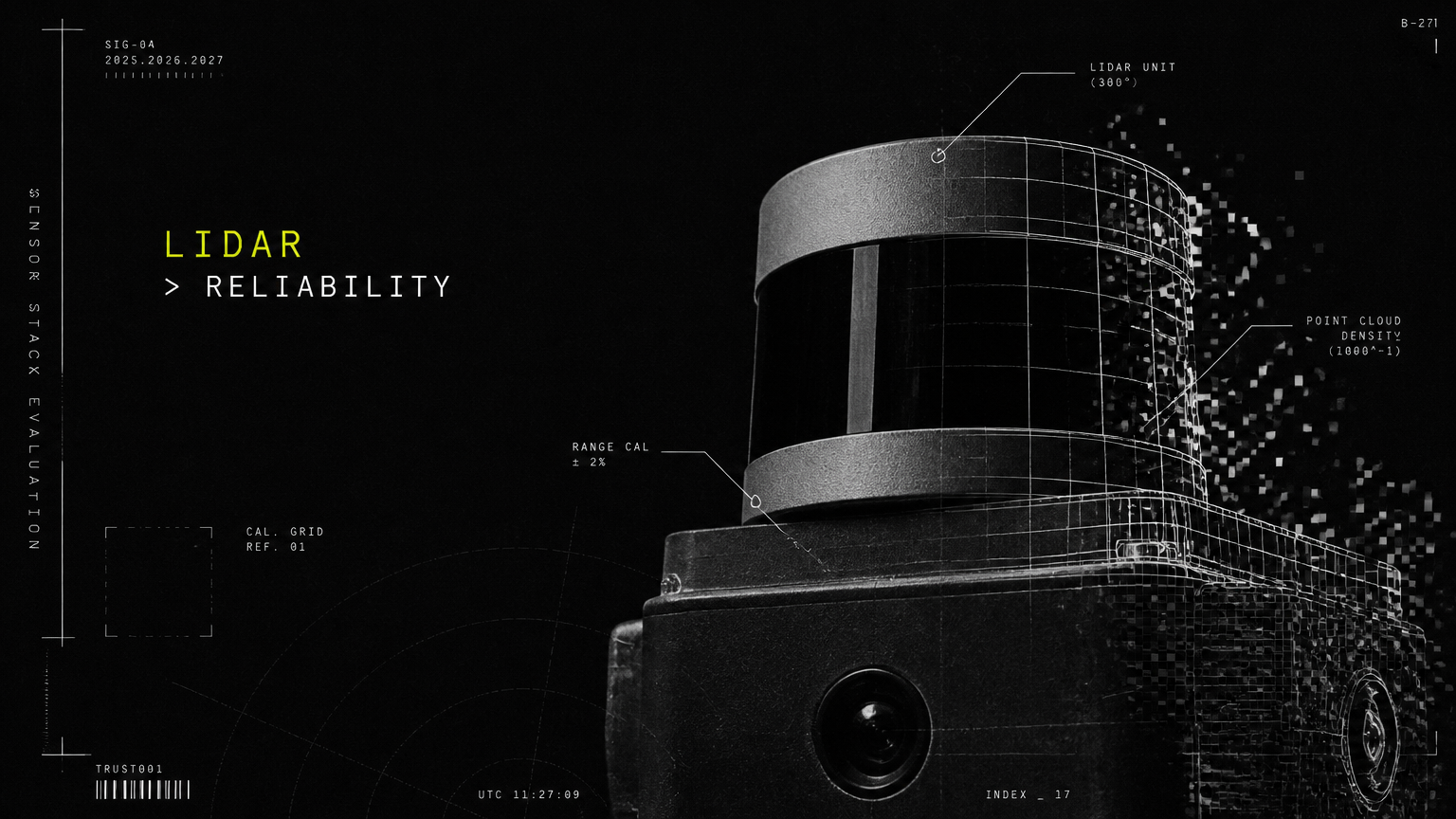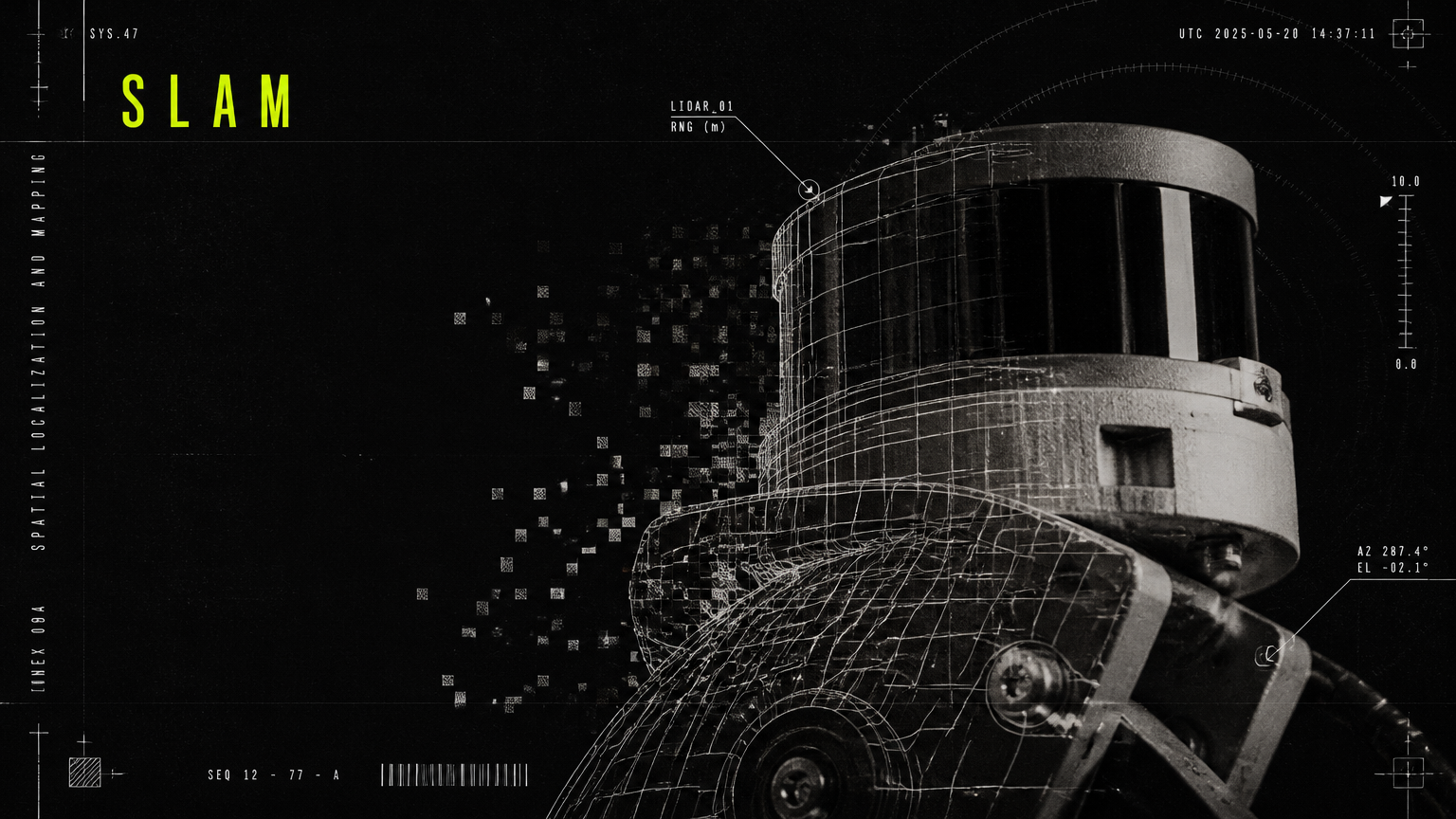
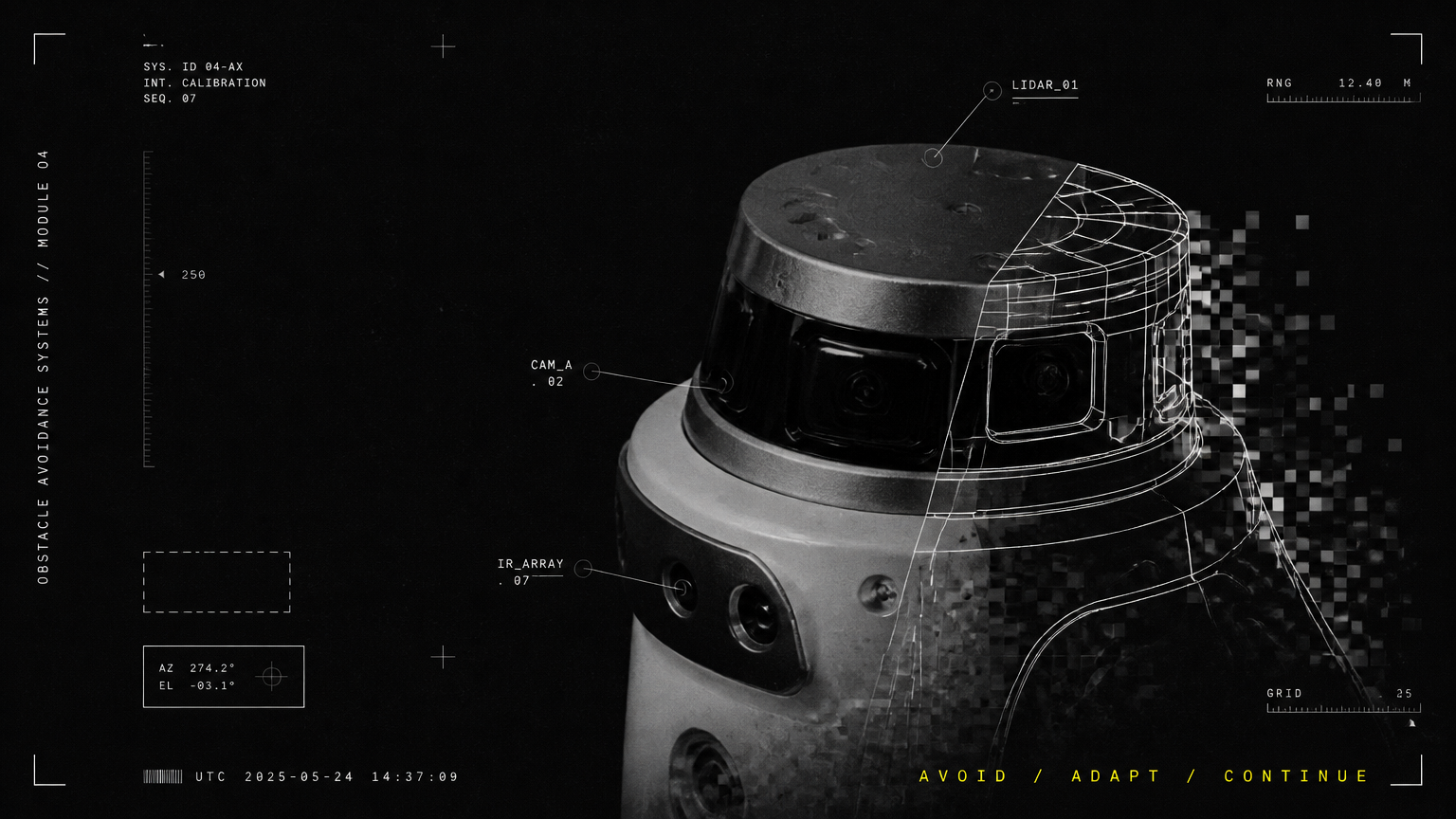
Quick answer: Service robots avoid obstacles using sensor fusion (LIDAR, cameras, ultrasonic/IR, depth sensors) plus mapping and navigation algorithms (SLAM, path planning, dynamic obstacle prediction) that combine global plans with fast reactive behaviors and safety stops. Special cases—moving crowds, small animals and transparent glass—are handled through dedicated classifiers, motion prediction and redundancy (multiple sensor types + fail-safe low-speed modes) to ensure reliable, human-safe operation.
Part of our guide to How Robots Actually Work: How Does an Autonomous Robot Navigate a Building? SLAM, LiDAR and Vision Explained.
robot obstacle avoidance: technical foundations
Robot obstacle avoidance depends on three pillars: sensing, perception (including sensor fusion and classification), and motion planning/control. Each pillar must be engineered end-to-end for the robot’s form factor and operational domain (office lobbies, retail aisles, hospital corridors, factory floors, etc.).
Primary sensor types and roles
Robots use a mix of complementary sensors to build a robust, redundant view of the environment.
- LIDAR: high-precision range data for 2D/3D mapping, excellent for structural obstacles and accurate distance estimation.
- Stereo or depth cameras (RGB-D): rich scene understanding, object classification, and depth for small or complex shapes.
- Monocular cameras + vision algorithms: semantic labeling (people, glass, signage) and classification at low cost.
- Ultrasonic and IR sensors: short-range proximity checks and bump-replacement in tight spaces.
- Time-of-Flight (ToF) sensors: compact depth sensing for close-range detection.
- IMU & wheel encoders: odometry and motion-state estimation, essential for dead-reckoning and sensor fusion.
Include sensor fusion in your architecture so no single sensor failure causes unsafe behavior.
Sensor comparison (LIDAR vs camera vs ultrasonic vs depth)
| Criterion | LIDAR | Stereo/Depth Camera (RGB-D) | Monocular Camera | Ultrasonic/IR |
|---|---|---|---|---|
| Typical range | 0.1–100+ m | 0.5–20 m | Depends on optics | 0.02–5 m |
| Strengths | Accurate distance, works in low light | Depth + visual semantics | Cheap, high-res visual data | Low cost, simple proximity |
| Weaknesses | Can miss transparent/reflective surfaces | Sensitive to lighting, limited long range | No direct depth, poor in low light | Low resolution, affected by soft surfaces |
| Best use | Mapping, obstacle localization | Object detection + depth | Classification, signage, people detection | Safety bumpers, close-range avoidance |
Sensor fusion in robots
Sensor fusion combines complementary measurements into a single, coherent world model. Typical fusion layers:
- Low-level fusion: combine raw depth from LIDAR and RGB-D for denser point clouds.
- Mid-level fusion: synchronize object detections (e.g., a person detected by camera, validated by LIDAR) to reduce false positives.
- High-level fusion: combine tracking and prediction results with SLAM map state and fleet telemetry for coordinated behavior.
Sensor fusion improves resilience to glass, reflections, and small moving targets like pets.
Perception: SLAM, classification and prediction
- SLAM (Simultaneous Localization And Mapping): builds and updates a global map and robot pose. In crowded, dynamic environments SLAM systems typically separate static-map landmarks from dynamic elements.
- Object detection & classification: deep learning models classify people, animals, carts, signage, and glass reflections. For transparent obstacles, classifiers look for visual cues (door frames, handles, reflections) and cross-validate with depth sensors.
- Motion prediction: short-term trajectory prediction for people and pets (e.g., constant-velocity, intent modeling). Prediction feeds into the local planner so the robot avoids predicted collisions.
Path planning and reactive control
A robust navigation stack mixes global planning and fast, reactive local control:
- Global planner (A, D Lite, or sampling-based methods) computes an efficient route on the static map.
- Local planner (Dynamic Window Approach, Elastic Bands, MPC) handles dynamic obstacles and smooths motion.
- Behavior layer: social navigation rules (yielding, human-aware path smoothing) and safety behaviors (emergency stop, slow-pass).
Algorithm comparison (SLAM vs Local/reactive vs Prediction)
| Criterion | SLAM (Global) | Local/reactive planner | Dynamic prediction & behavior |
|---|---|---|---|
| Purpose | Build map, global route | Avoid immediate obstacles, track trajectory | Anticipate moving agents and adapt behavior |
| Strengths | Efficient long-range planning, map reuse | Low-latency response, simple safety | Reduces oscillations, improves social compliance |
| Weaknesses | Not fast for sudden changes | Can be short-sighted, reactive jitter | Requires accurate detection & tracking |
robot obstacle avoidance: real-world cases and solutions
Service robots face several stubborn real-world problems: dense crowds, small animals and toys, and transparent/reflective surfaces like glass doors. Below we explain how each is addressed.
How robots avoid people in crowds
Crowds present continuous, unpredictable motion and social expectations (personal space). Techniques used:
- People detection + multi-target tracking: combine camera detection with LIDAR clusters to robustly track individuals even when partially occluded.
- Motion prediction: short-horizon trajectory forecasting allows the robot to anticipate crossings, grouping, and lane-like flows.
- Social navigation policies: yield to pedestrians, choose courteous passing side, and avoid cutting through clusters. These are implemented as cost functions in the local planner.
- Speed & personal-space tuning: reduce speed and increase safety margins in dense foot-traffic; use human-aware stopping behavior (face the person, beep/announce intent if needed).
Practical deployments tune parameters per site: an office lobby requires faster navigation through predictable flows; a hospital corridor needs ultra-conservative behavior.
Pet detection for robots and small dynamic obstacles
Pets and small objects are low-profile and can be missed by long-range sensors. Effective strategies:
- Multi-sensor confirmation: validate visual pet detection with depth or ultrasonic readings to avoid false positives (e.g., shadows mistaken for animals).
- Specialized classifiers: models trained on small-animal shapes and movement signatures reduce misclassification of inanimate objects.
- Low-clearance scanning: downward-facing depth or ToF sensors detect tiny obstacles on the floor.
- Safe fallback behaviors: slow to a stop, play an audio prompt or wait for human intervention when uncertain.
robot navigation glass doors: detecting transparent/reflective surfaces
Glass doors are a classic failure mode for naive range-only systems. Solutions include:
- Cross-sensor validation: if LIDAR shows no obstacle but camera detects door frame or reflections, treat as obstacle.
- Reflection-aware LIDAR processing: identify impossible reflections (e.g., ghost points) and mark surfaces as hazardous until verified.
- Visual markers & signage: install decals or use door handles with distinctive visual features—robots can be configured to treat doors lacking markers as potential obstacles.
- Behavioral rules: slow approach and verify using a contact-free short-range sensor (ultrasonic/ToF) before attempting to pass.
- Software classifiers trained specifically for glass-door detection using edge cues, reflections and context (door frames, handles).
Operational safety and deployment considerations
Practical, reliable obstacle avoidance is as much about testing, tuning and operations as about algorithms.
Safety engineering and fail-safes
- Redundancy: duplicate critical sensors and cross-validate detections. For example, pair LIDAR with a depth camera and short-range ultrasonic sensors.
- Hard safety stops: hardware e-stops and brake modes that override software.
- Speed regulation: maintain a maximum allowable speed per environment; lower speed in healthcare and hospitality settings.
- Predictable behaviors: human-aware, legible motions reduce startling and improve acceptance.
Testing and verification
- Simulation + real-world trials: validate edge cases (glass corridors, escalator thresholds, extreme crowd densities) in simulation, then staged live tests.
- Safety certifications and audits: adhere to local robotics safety standards and site-specific safety reviews.
- A/B parameter testing: tune personal-space radii and slow-pass thresholds with real users.
Fleet-level monitoring and predictive maintenance
Allbotix’s proprietary fleet-management software provides real-time telemetry, anomaly detection and predictive maintenance—reducing unexpected downtime and ensuring safe operation across mixed fleets. Key operational features:
- Live health dashboards: sensor status, uptime (Allbotix engineering track record: 99.8% uptime across deployments).
- Predictive alerts: detect sensor degradation and schedule service before failure.
- Remote parameter adjustments: tune navigation safety margins and behavior profiles centrally for site-specific needs.
Site-specific best practices (by sector)
| Sector | Recommended obstacle-avoidance focus | Deployment tip |
|---|---|---|
| Corporate campuses / Co-working | High-density pedestrian flows; graceful lobby navigation | Use social navigation profiles, slow-speed modes during peak times |
| Retail / Malls | Unpredictable shoppers, promotional displays | Visual markers on glass, dynamic re-routing around pop-up exhibits |
| Healthcare | Infection control, stretcher/cabinet interactions | Conservative distances, audible intent signals, strict speed caps |
| Hospitality | Peak service windows, transient crowds | Service-mode switching (slow during check-in/out), human-handoff behaviors |
| Education & Transit Hubs | Mixed-age users, luggage & strollers | Robust small-obstacle detection and multi-target tracking |
| Manufacturing & Logistics | Forklifts & equipment | High-priority safety zones, LiDAR + industrial-grade sensors |
Trade-offs and design choices
Choosing sensors and algorithms always involves trade-offs: cost vs. redundancy, latency vs. prediction complexity, and autonomy vs. human-in-the-loop safeguards. Use this quick comparison when designing deployments:
| Design dimension | Conservative (safety-first) | Aggressive (efficiency-first) |
|---|---|---|
| Sensor redundancy | High (LIDAR + RGB-D + ultrasonic) | Minimal (single LIDAR + camera) |
| Speed profiles | Low maximum speed, high safety margins | Higher speeds, smaller margins |
| Human override | Always allowed, immediate stop | Allowed but with higher autonomy threshold |
| Maintenance cost | Higher (more sensors) | Lower |
Allbotix typically engineers per-customer solutions that balance these trade-offs: "precision engineering" to meet a client’s required safety/throughput, not a one-size-off-the-shelf compromise.
Why Allbotix: reliability, scale and in-house control
Allbotix builds multi-vertical fleets (AI receptionists, cleaning robots, serving robots, AMRs, cobots, humanoids) with full in-house engineering—firmware, source code and hardware IP—delivered via Made-in-India manufacturing partnerships. That vertical control lets Allbotix optimize sensors, perception stacks and fleet-management behavior specifically for your environment.
Performance & credibility highlights:
- 525+ robots developed and deployed across sectors
- 180+ enterprise clients
- 99.8% reported uptime across deployments
- Backed by publicly-listed Nanta Tech Limited
- 24/7 Premium Support and proprietary AI fleet-management for predictive maintenance
These capabilities let Allbotix tune robot obstacle avoidance per customer—adjusting sensor suites, classifier models and fleet safety parameters to the exact requirements of corporate campuses, hospitals, retail floors, airports and industrial facilities.
Deployment checklist: what to plan before rolling out service robots
- Site survey: map glass areas, narrow passages, common congregation points, and floor clutter sources.
- Use-case profile: define acceptable speeds, personal-space policies, and fail-safe actions per site.
- Sensor configuration: specify redundant sensors keyed to identified hazards (glass doors, low furniture, pets).
- Testing plan: simulations, staged trials with staff, slow ramp to full operation.
- Fleet ops: integrate Allbotix fleet-management for monitoring, remote tuning and predictive maintenance.
Conclusion
Reliable robot obstacle avoidance combines sensor fusion, SLAM, predictive perception and a layered motion stack—backed by operational practices like redundancy, testing and fleet-level monitoring. Handling crowds, pets, and glass doors is a solved-but-engineered problem: the right mix of sensors, classifiers and behavior tuning yields safe, predictable robots that integrate seamlessly into environments from corporate lobbies to hospitals and retail spaces.
Ready to deploy service robots engineered for your environment? Contact Allbotix to discuss a precision-engineered solution—with in-house hardware, custom perception stacks and AI fleet-management—to meet your safety, throughput and uptime goals. Limitless innovation. Precision engineering. 24/7 Premium Support.