Quick answer: SLAM stands for Simultaneous Localization and Mapping — a set of algorithms and sensor systems that let a robot build a map of an unknown space while simultaneously locating itself on that map in real time. For facility managers this means robots (cleaning units, AMRs, reception and security bots) can operate autonomously in busy, changing environments without fixed beacons — delivering payroll savings and higher uptime — but successful deployments need the right sensors, mapping workflows, fleet-management software and vendor SLAs.
Part of our guide to How Robots Actually Work: How Does an Autonomous Robot Navigate a Building? SLAM, LiDAR and Vision Explained.
If you're reading this to understand SLAM in robotics for your site — whether a corporate campus, hospital, mall, airport or warehouse — this plain-English guide will explain how SLAM works, which SLAM types suit which environments (LIDAR SLAM vs visual SLAM vs odometry/fusion), the real-world benefits and limitations, and a practical procurement checklist to help you evaluate vendors and ensure uptime.
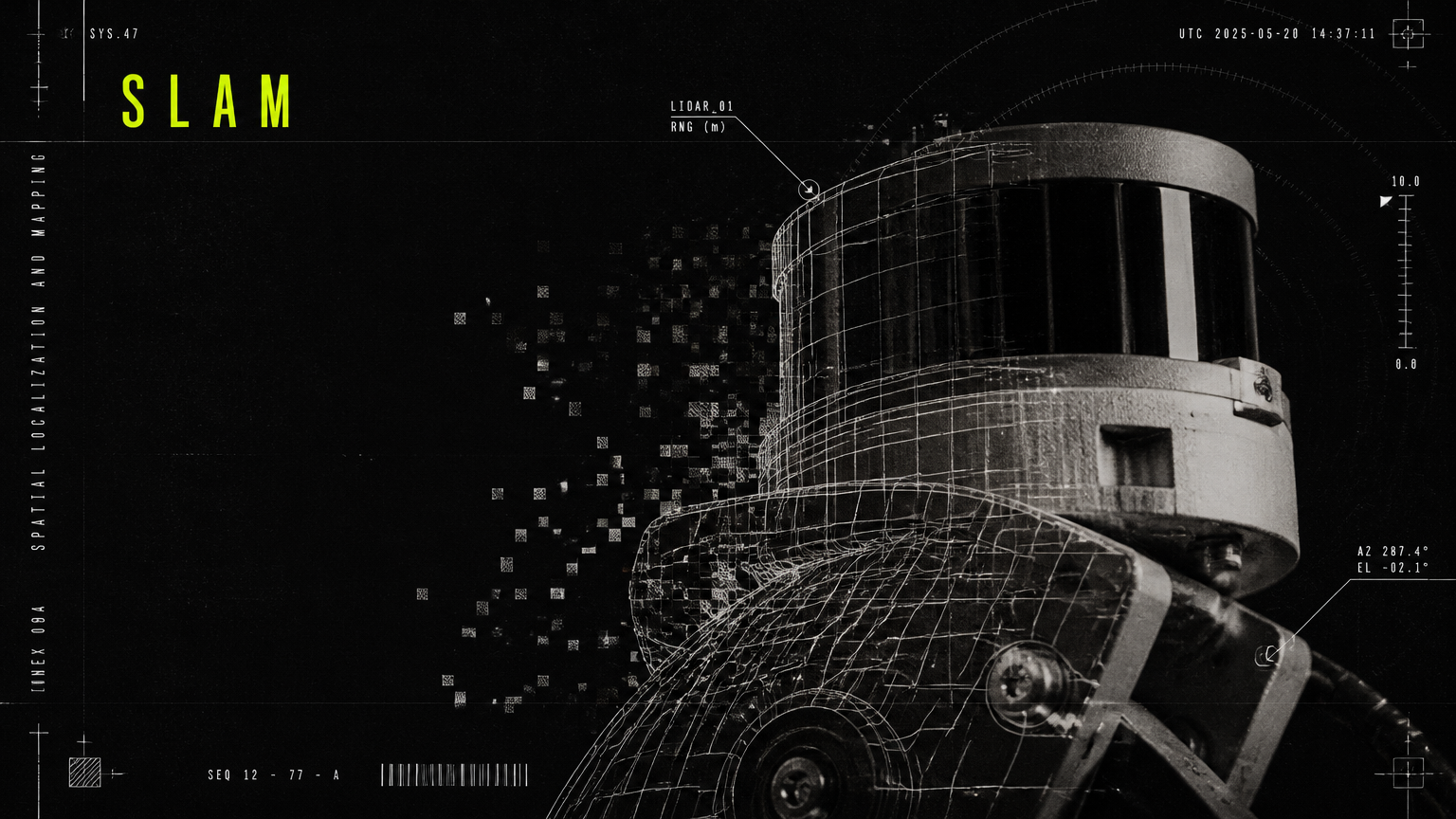
How SLAM in robotics works — plain English
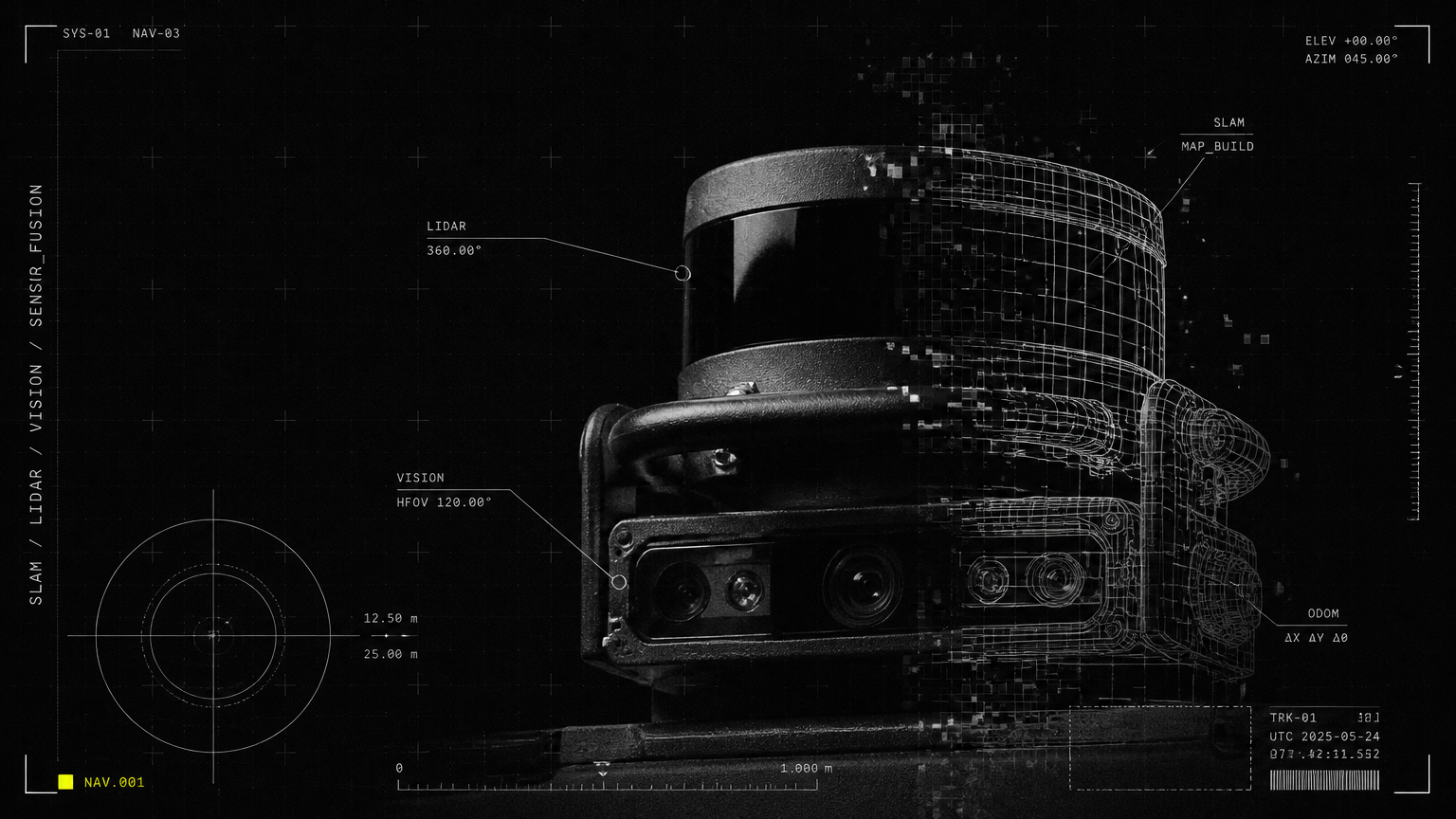
At its core, SLAM lets a robot answer two questions at once: "Where am I?" and "What's around me?" It does that by combining sensor inputs, motion estimates, and clever math to build a map and to localize the robot within that map — continuously and in real time.
Key terms to know:
- Mapping: Creating a representation (map) of the environment.
- Localization: Determining the robot’s position and orientation on that map.
- Odometry: The robot’s own estimate of movement (wheel rotations, IMU).
- Loop closure: Recognizing a previously seen place to correct map errors.
- Drift: Gradual error accumulation in position estimates that must be corrected.
How it typically flows:
- Sensors (LIDAR, cameras, wheel encoders, IMUs) gather raw data.
- The robot processes that data to identify landmarks or geometric features.
- The SLAM algorithm fuses motion estimates (odometry) with sensor observations to update a map and the robot’s estimated pose.
- When the robot recognizes a previously visited location (loop closure), it corrects accumulated drift and refines the map.
- The map and position feed into navigation and task-execution systems (path planning, obstacle avoidance).
SLAM runs on embedded compute on the robot, edge servers, or cloud systems. For facility use, robust SLAM requires continuous re-mapping capability (for temporary obstacles, layout changes) and fleet-level coordination when multiple robots operate in the same space.
How SLAM handles changing, busy spaces
Robots use sensor fusion (combining LIDAR, vision, odometry, IMUs) to stay reliable when one sensor is temporarily unreliable (e.g., glare or reflective floors). Loop closure and periodic re-mapping are especially important in busy facilities where furniture, displays, or crowds change routes daily.
Common SLAM types (LIDAR SLAM, visual SLAM, odometry, sensor fusion)
When choosing SLAM for AMRs or service robots, the sensor and algorithm choice matters. Below is a practical comparison.
| Criterion | LIDAR SLAM | Visual (Camera) SLAM | Odometry-only | Sensor-fusion SLAM |
|---|---|---|---|---|
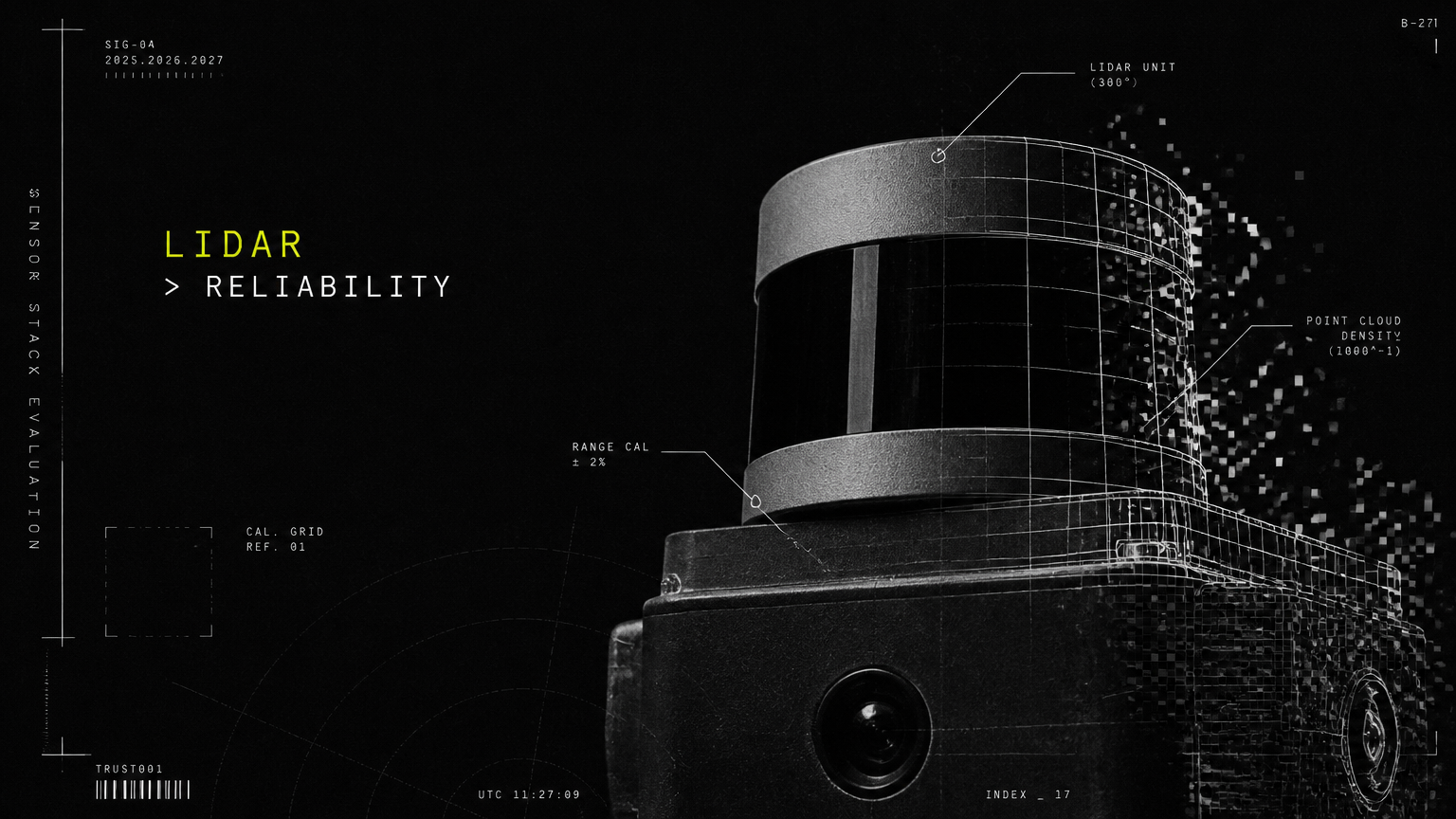
| How it senses | Laser distance measurements (2D/3D point clouds) | Camera images / feature tracking | Wheel encoders and IMU | Combines LIDAR, cameras, IMU, odometry |
| Strengths | High geometric accuracy; robust in varied lighting; excellent for industrial layouts | Rich visual features; cost-effective cameras; semantic understanding | Low cost; simple localization for short runs | Most robust overall — compensates for single-sensor weaknesses |
| Limitations | Costlier sensors; can be affected by glass/reflective surfaces | Sensitive to lighting, motion blur, low-texture areas | Rapid drift over time without corrections | Higher compute and integration complexity |
| Best site types | Warehouses, logistics, industrial plants, corridors with static geometry | Retail showrooms, malls, offices with distinctive visual cues | Short closed-loop routes, tugs, conveyor-following | Busy public spaces, mixed lighting, multi-floor campuses |
| Typical maintenance needs | Periodic re-scans when large layout changes occur | Re-calibration for camera placement and lighting changes | Frequent re-zeroing and drift correction | Regular sensor health checks; software updates |
| Cost profile | Mid–high | Low–mid | Low | Mid–high |
Use LIDAR SLAM when you need geometric precision and robustness to lighting; use visual SLAM where cameras can add semantic cues cheaply; use odometry only for very constrained tasks; use sensor fusion for the highest reliability in complex, dynamic facilities.
LIDAR SLAM vs visual SLAM: quick side-by-side
| Feature | LIDAR SLAM | Visual SLAM |
|---|---|---|
| Accuracy in distance measurement | High | Variable (derived from vision and depth estimation) |
| Lighting sensitivity | Low | High |
| Ability to work with glass/reflective surfaces | Can be affected but manageable | Often fails or produces noisy data |
| Cost per unit | Higher | Lower |
| Best for | Warehouses, corridors, logistics | Retail, marketing, semantics-rich environments |
Why SLAM matters for facility managers: concrete use cases and benefits
SLAM-enabled robots power many facility gains. Below are vertical-focused examples that map directly to operational concerns.
- Corporate campuses & co-working: AI receptionists and delivery robots navigate complex floorplans and dynamic human traffic. Impact: reduced front-desk staffing costs, consistent visitor handling, improved employee experience.
- Healthcare: Cleaning and delivery robots move through wards and corridors without needing new infrastructure, supporting infection control and reducing non-clinical burden on staff.
- Retail & malls: Greeter/guide robots and cleaning fleets adapt to shifting displays and peak crowds, maintaining customer flow and brand visibility.
- Education & campuses: Security and visitor-management robots map sprawling buildings and can autonomously patrol, reducing response time and easing staff shortages.
- Logistics & warehousing: AMRs with LIDAR SLAM deliver high-precision navigation around racking and forklifts, improving throughput and reducing collisions.
- Airports & transit hubs: Robots provide wayfinding, cleaning, and surveillance in high-density, changing environments — lowering wait times and keeping areas sanitary.
- Hospitality & events: Serving and concierge robots adjust to variable layouts and guest flows during peak events, smoothing service peaks.
- Manufacturing: Cobots and material-carrying AMRs use SLAM to operate safely alongside humans, reducing downtime and manual movement.
Operational benefits:
- Labor cost reduction and redeployment: Robots handle repetitive or 24/7 tasks.
- Higher uptime and continuity: With proper SLAM and fleet-management, deployments sustain operations even when layouts change.
- Safety and compliance: Accurate mapping helps collision avoidance and record keeping.
- Measurable ROI: Automation reduces unplanned downtime and improves throughput; industry examples show rapid payback when systems are well integrated.
Allbotix’s approach combines diverse hardware form factors (receptionist, humanoid, dog, cleaning, serving, AMR, cobot) with proprietary AI fleet-management and predictive maintenance — enabling multi-robot orchestrations that maintain high uptime in active facilities. Allbotix has engineered 525+ robots for 180+ clients, delivers 99.8% uptime, and provides 24/7 Premium Support backed by publicly listed parent Nanta Tech Limited.
Practical implementation and procurement checklist (SLAM in robotics)
Use this checklist when planning deployment or evaluating vendors.
- Required sensors & compute
- Confirm sensor suite: LIDAR and/or cameras, wheel encoders, IMU.
- Edge compute: GPUs/NPUs or capable CPUs for real-time SLAM.
- Redundancy: Sensor-fusion to avoid single-sensor failures.
- Mapping & re-mapping workflows
- Initial site survey and base map creation.
- Fast re-mapping process for layout changes (furniture, pop-ups).
- Ability to perform incremental updates without full re-scan.
- Fleet-management & predictive maintenance
- Real-time fleet telemetry (location, battery, faults).
- Predictive maintenance to reduce unplanned downtime.
- Remote software updates and health dashboards.
- Security & data privacy
- Encrypted telemetry and access controls.
- Policies on image storage and anonymization in public spaces.
- Compliance with local data-protection laws for cameras/microphones.
- Integration & operations
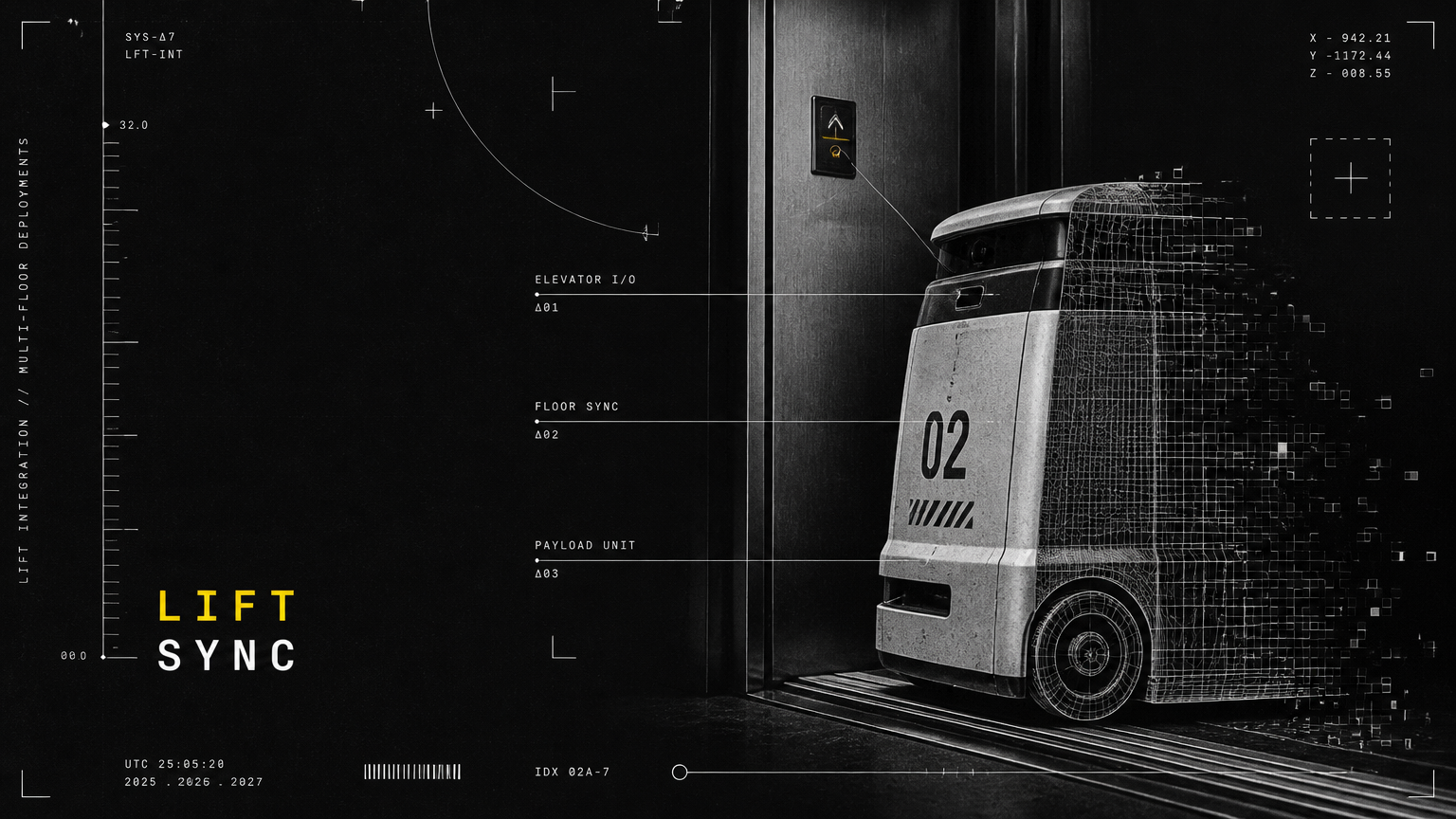
- BMS/IT integration (APIs for elevators, doors, scheduling).
- Training for on-site technicians and staff.
- Clear SLAs for uptime, repairs, and spare parts.
- Common failure modes & mitigations
- Drift due to poor odometry: mitigate with loop closure and periodic re-localization.
- Sensor occlusion (crowds): fallback to alternative sensors or safe-stop behavior.
- Reflective surfaces confusing LIDAR: fuse camera/IMU, mask known reflective zones.
- Network latency: local autonomous fallback and buffered telemetry.
Vendor-evaluation comparison
| Criterion | Allbotix | Hardware-only vendor (typical) | Third-party integrator (typical) |
|---|---|---|---|
| Engineering model | In-house design & IP (hardware + firmware + software) | Sells or integrates third-party hardware | Integrates disparate hardware + third-party software |
| Fleet-management software | Proprietary AI fleet-management & predictive maintenance | Often none or third-party | Usually third-party or custom integration |
| Multi-vertical fleet | Diverse: receptionist, humanoid, dog, cleaning, serving, AMR, cobot | Narrower product set | Depends on supplier relationships |
| Uptime SLA | 99.8% (documented across deployments) | Varies; often lower due to integration gaps | Varies widely |
| Support | 24/7 Premium Support | Business hours typical | Depends on contract |
| Manufacturing | Made-in-India; manufacturing partnership (Aimtron) | Varied; often imported/assembled | Depends on hardware supplier |
| Parent/backing | Backed by publicly listed Nanta Tech Limited | Varies | Varies |
| Customization | Machines engineered to client precision/scale | Limited | Moderate but with vendor locks |
Use these criteria in RFPs: request uptime commitments, sample telemetry dashboards, a mapping rework demo, and clear escalation paths for on-site failures.
Implementation timeline and tips
A typical phased deployment (small to medium site):
- Discovery & site survey (1–2 weeks): assess layout, traffic patterns, and integration points.
- Pilot (2–6 weeks): one or two robots map, run tasks, validate SLAM under real traffic.
- Scale rollout (4–12 weeks): add robots, integrate fleet-management, train staff.
- Optimization (ongoing): routine re-maps, analytics-driven route tuning, predictive maintenance.
Tips for success:
- Start with a short pilot in a representative zone during real operating hours.
- Test peak conditions (events, shift changes) to verify SLAM robustness.
- Require remote-debugging tools and on-site spares in SLA.
- Insist on clear map handover formats and ownership (who re-maps after layout change).
Common questions facility managers ask (and what to insist on)
When evaluating vendors or drafting an RFP, demand:
- Show me a live demo in a similar environment (lighting, crowds, reflectivity).
- Can you demonstrate map re-mapping in under X hours? (define X for your operations)
- What are your SLAs for uptime, response time, and spare-part delivery?
- How do you handle data privacy and encryption for camera feeds?
- Is the fleet-management platform proprietary, and do we get API access?
- What predictive-maintenance metrics do you provide, and what are average MTTR/MTBF?
- Who owns the map data and models after deployment?
Allbotix provides in-house engineering (full IP ownership), proprietary fleet-management and predictive maintenance, 24/7 Premium Support, and documented high-uptime performance — all points to verify in vendor responses.
Conclusion: Is SLAM right for your facility?
For most modern facilities that need autonomous service, cleaning, delivery, or reception robots, SLAM in robotics is the enabling technology that removes the need for fixed beacons and allows robots to adapt to changing spaces. The right SLAM approach depends on your environment: LIDAR for precise industrial navigation, visual SLAM for visually informative spaces, and sensor fusion for the most resilient performance in mixed, busy facilities.
If you’re evaluating deployment partners, prioritize vendors that own their engineering stack, offer robust fleet-management and predictive maintenance, provide clear SLAs, and can demo performance in an environment similar to yours. Allbotix engineers a broad, multi-vertical fleet (525+ robots), supports 180+ clients with 99.8% uptime, combines hardware made in India with proprietary AI fleet-management software, and provides 24/7 Premium Support — a combination that helps facility managers move from pilot to scale with confidence.
Ready to evaluate SLAM-powered robots for your facility? Contact Allbotix to schedule a site survey or a pilot demo and see how precision engineering and limitless innovation can reduce costs and increase uptime for your operations.