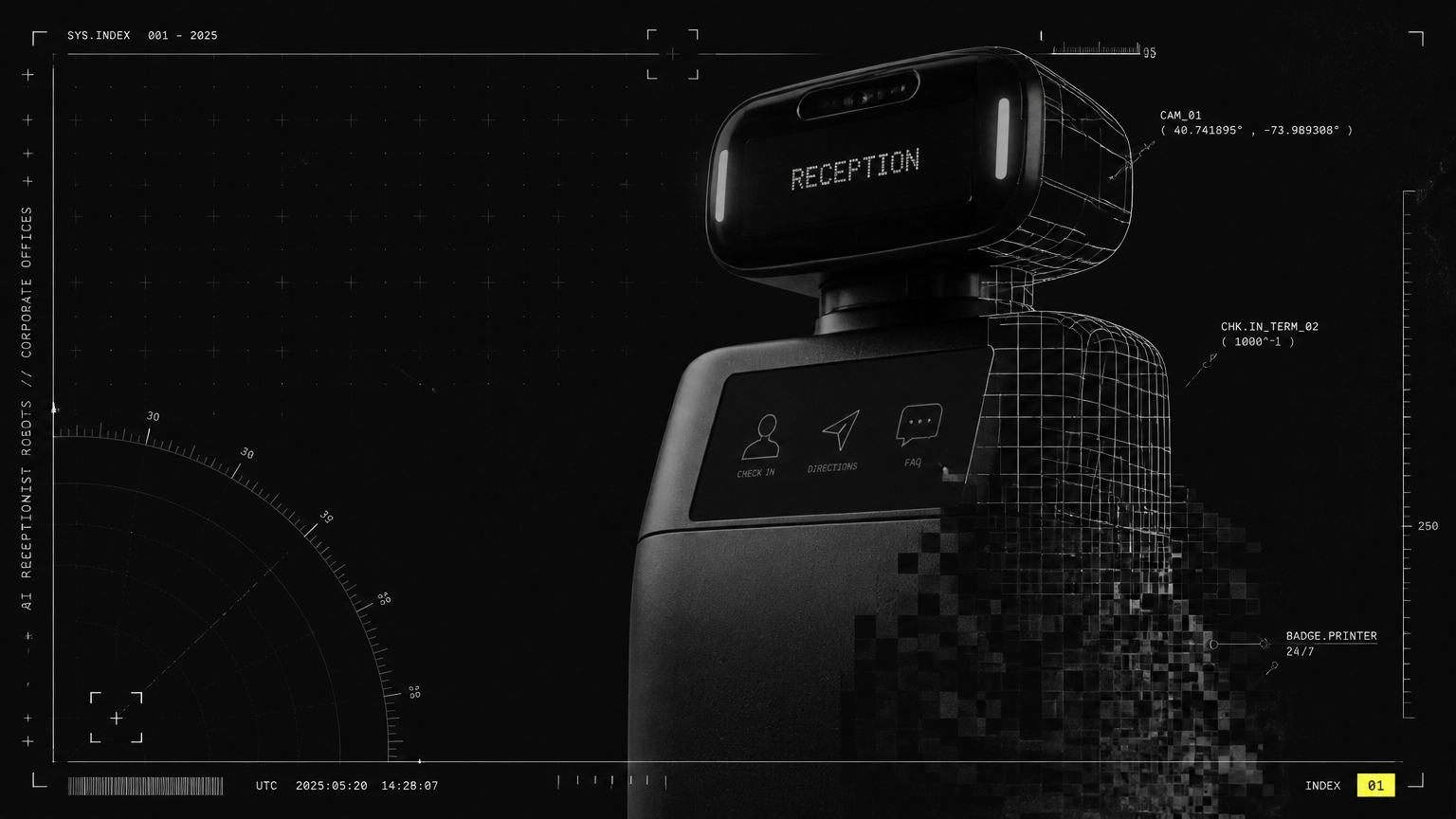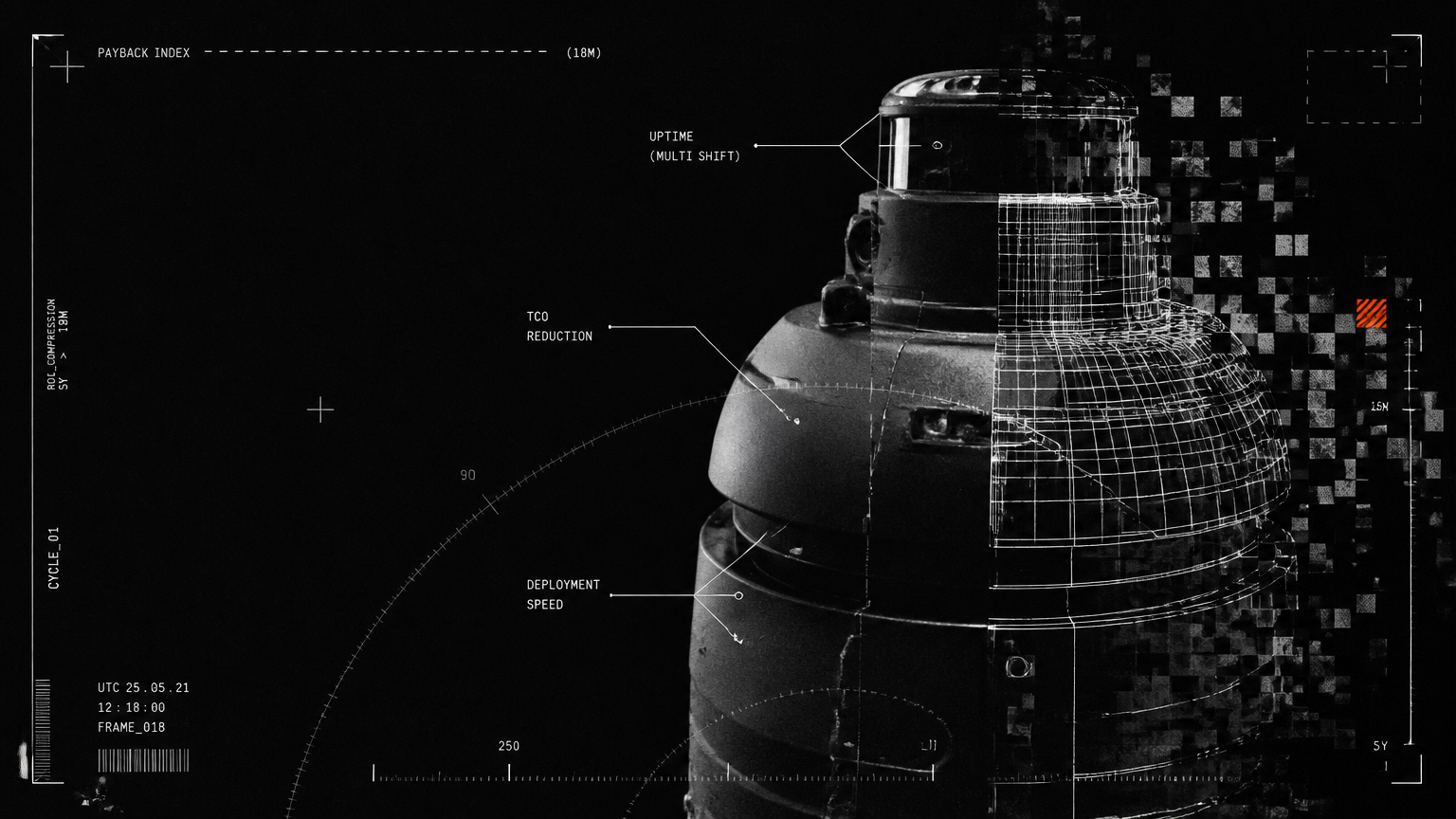
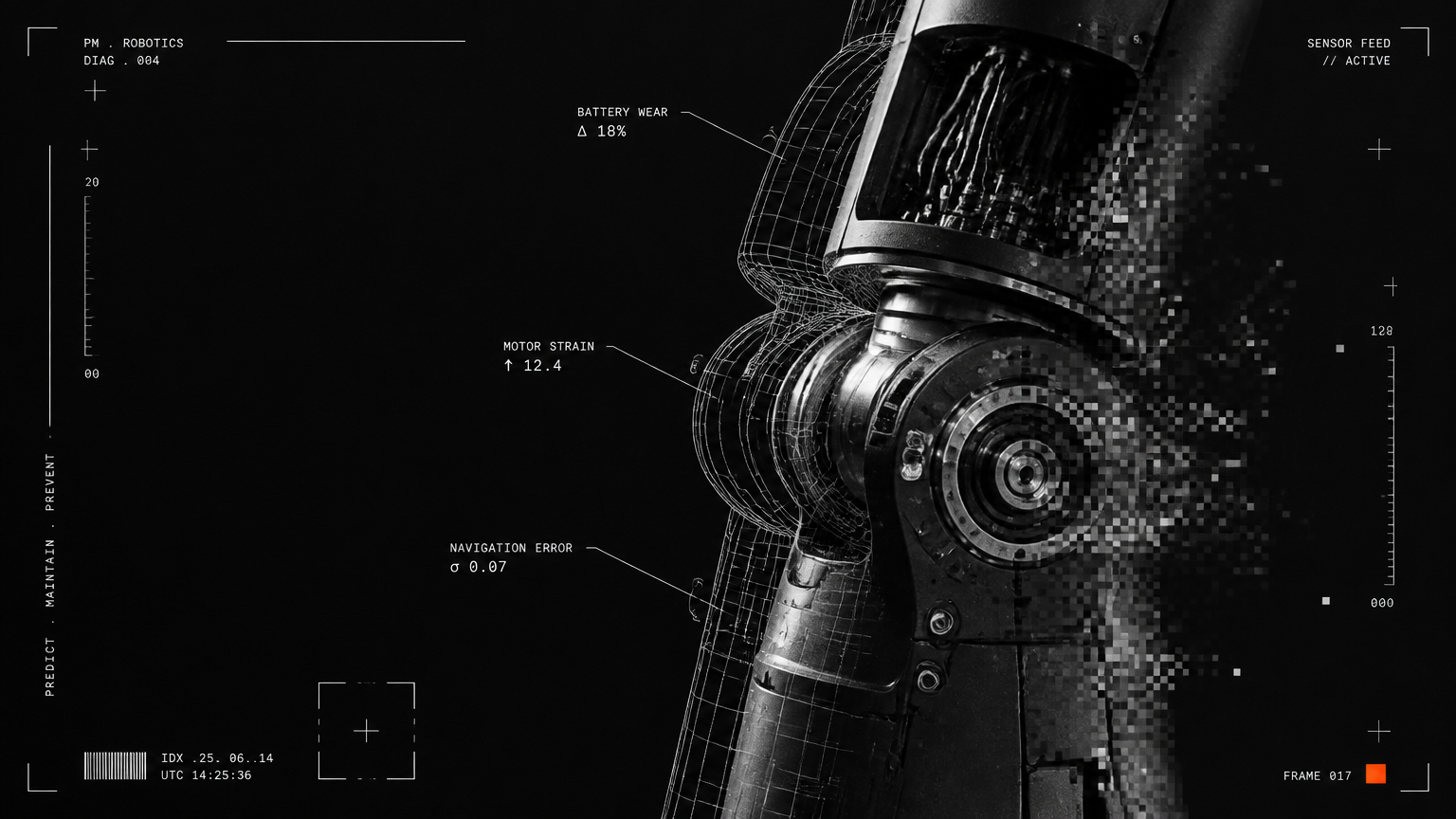
Quick answer: Predictive maintenance for robots uses sensors and AI fleet-management software to detect early warning signs like battery wear, motor strain or navigation errors and fix them before a breakdown. For busy offices, hospitals, malls, campuses, factories and warehouses, it keeps receptionist, cleaning, serving, AMR, cobot and humanoid fleets running reliably instead of relying on costly reactive repairs.
If you manage facilities, operations, or IT, you already know the problem: one robot down in a lobby, ward, terminal, or warehouse aisle creates queues, safety risks, and extra work for an already stretched team. This guide explains predictive maintenance for robots in plain language — what it is, how does predictive maintenance work, and why it is now essential for corporate campuses, government buildings, retail malls, universities, hospitals, hotels, factories, warehouses, and airports running diverse robot fleets.
What Is Predictive Maintenance for Robots?
Predictive maintenance for robots is a proactive way to keep robots healthy based on their actual condition, not on a fixed calendar or after something breaks.
Every robot — whether it is an AI receptionist greeting visitors, a cleaning robot scrubbing floors overnight, a serving robot running food in a hotel, an AMR moving pallets, a cobot assisting on a line, or a humanoid guiding guests — constantly generates health signals. Battery voltage, motor temperature, wheel current, vibration, LiDAR clarity, Wi-Fi drops, and navigation retries all tell a story.
AI predictive maintenance for robots listens to those signals through robot fleet management software, learns what “normal” looks like, and flags subtle changes weeks before they become failures. Instead of discovering a dead battery mid-shift or a clogged brush during peak hours, your team gets an early alert: “CleanBot-04 brush motor load up 22% — schedule cleaning in next 48 hours.”
In short: reactive maintenance fixes robots after they fail. Preventive maintenance services them on schedule. Predictive maintenance services them exactly when the data says they need it.
How Does Predictive Maintenance for Robots Work?
You do not need to be an engineer to understand how does predictive maintenance work. Think of it as a continuous health check in four steps:
1. Sensors Collect Real-Time Health Data
Modern service and industrial robots carry dozens of built-in sensors. They monitor:
- Battery state-of-charge, charge cycles, and temperature
- Drive motors, brushes, and actuators for current draw, vibration, and strain
- Navigation stack: LiDAR, depth cameras, bump sensors, localization confidence
- Connectivity and software: Wi-Fi latency, task success rate, error codes
- Environment: floor friction, dust load, ambient temperature
For example, predictive maintenance for AMRs watches wheel-motor current and localization retries to catch drivetrain wear or mapping drift on busy warehouse routes. Predictive maintenance for cleaning robots tracks water flow, suction pressure, and brush resistance to detect clogs, worn pads, or filter saturation.
2. Robot Fleet Management Software Streams and Centralizes It
Data from one robot is useful. Data from your entire fleet is powerful.
Robot fleet management software connects every robot — across floors, buildings, and cities — into a single dashboard. Facility and IT leaders can see fleet status, location, task history, battery health, and alerts in real time, rather than walking the floor or waiting for staff complaints.
Allbotix pairs its receptionist, cleaning, serving, AMR, cobot, humanoid, and quadruped fleets with proprietary AI fleet-management software engineered in-house. Because hardware and software are designed together rather than assembled from off-the-shelf parts, health telemetry, diagnostics, and updates work consistently across form factors.
3. AI Learns Normal and Detects Early Warnings
This is where AI predictive maintenance for robots goes beyond simple thresholds.
The software establishes baselines for each robot and route — for instance, how much current a cleaning robot normally draws on marble vs. carpet, or how long an AMR typically takes between two warehouse racks. Machine-learning models then spot anomalies:
- Gradual drift: battery capacity fading 3% month-over-month
- Pattern change: navigation retries spiking only in one lobby at rush hour
- Correlation: motor temperature rising together with vibration, indicating bearing wear
The system scores risk and predicts remaining useful life, so you know what is likely to fail and when.
4. Automated Alerts Trigger Action Before Downtime
Instead of a breakdown ticket, your team receives a prioritized, actionable alert via dashboard, email, or SMS:
- What: asset ID, component, and severity
- Why: trend chart and probable cause
- What to do: clean, swap battery, update map, schedule technician visit
With 24/7 Premium Support, issues can be triaged remotely — often with an over-the-air fix, map adjustment, or guided swap — before an on-site visit is needed. That is how well-run fleets sustain 99.8% uptime across 525+ robots developed and 180+ client deployments.
Predictive Maintenance for Robots vs Preventive Maintenance: What's the Difference?
Facility leaders often ask about predictive maintenance vs preventive maintenance. Both are better than waiting for failure, but they work very differently. Here is the simple breakdown:
| Criterion | Reactive Maintenance (Fix After Failure) | Preventive Maintenance (Fix on Schedule) | Predictive Maintenance for Robots (Fix on Condition) |
|---|---|---|---|
| How it works | Repair after breakdown or staff complaint | Service every X weeks / hours regardless of condition | Monitor live sensor data and service when AI predicts risk |
| When action happens | After downtime has already occurred | On calendar, often too early or too late | Just in time, days to weeks before failure |
| Downtime risk | High — surprises during peak hours | Medium — still misses random failures between services | Low — early warnings prevent most unplanned stops |
| Maintenance load | High overtime and emergency callouts | High routine labor, parts changed unnecessarily | Focused work only where needed, fewer site visits |
| Cost profile | Costly repairs, overtime, service disruption | Predictable but wasteful over-servicing | Lowest total cost, longer component life |
| Visibility | None until failure | Paper checklist, limited history | Real-time dashboard, trends, and audit trail |
| Best fit for | Single, non-critical device | Small, low-use fleet with spare capacity | Dense, 24/7, multi-site fleets where uptime matters |
Preventive schedules still have a place — for example, replacing HEPA filters or sanitizing tanks. Predictive adds intelligence on top, so you do not change a healthy battery at 6 months or miss a failing motor at month 4. For hospitals, airports, malls, and factories where every hour of downtime affects safety, revenue, or throughput, that difference is critical.
Research on automation and condition-based monitoring shows 30–50% cuts in unplanned downtime, with documented cases of 26%+ reductions and ~$630K in annual savings per plant. At the same time, average robot payback has dropped from ~5.3 years in 2019 to ~1.3 years in 2024 — and uptime is the lever that protects that ROI.
Why Predictive Maintenance for Robots Matters for 24/7 and Multi-Site Operations
Robots are no longer pilots. They are staffing infrastructure. Here is why prediction matters across verticals:
1. Uptime where failure is not an option In healthcare, a delivery robot stuck in a corridor blocks clinical flow. In airports and transit hubs, a cleaning robot stopped mid-terminal is a safety and perception issue. In manufacturing and logistics, one AMR down can stall pallet movement and cut throughput. Predictive alerts keep receptionist, cleaning, serving, AMR, and cobot fleets available during peaks, nights, and weekends.
2. Safety and consistency Motor strain, degraded LiDAR, or worn wheels show up first as navigation hesitation or longer stopping distances. Catching them early maintains safe operation around patients, students, shoppers, travelers, and workers — and keeps service quality consistent across shifts and sites.
3. Front-desk and facility cost control Corporate campuses, co-working spaces, and office parks use AI receptionists and pantry-delivery robots to control front-desk staffing cost amid dense foot traffic. Retail malls and showrooms rely on greeters and floor-cleaning automation despite high staff turnover. Government buildings need 24/7 monitoring on tight budgets. Unplanned failures force overtime, temp staffing, and emergency vendor visits. Predictive maintenance reduces all three by turning surprises into planned 15-minute tasks.
4. Relief for thin teams Education campuses, hotels, and hospitals run sprawling facilities with lean support staff. Instead of daily manual checks on every robot, teams manage by exception from one dashboard. Multi-site operators get the same view for every building, which is essential for transparency in public services and for brand consistency in retail and hospitality.
5. Longer asset life Batteries, brushes, wheels, and belts last longer when they are not run to failure or replaced too early. With manufacturing facing a projected shortfall of 2M+ workers over the next decade, and well-run deployments delivering 15–30% throughput gains and 20–40% capacity uplift, protecting robot health directly protects output.
AI Predictive Maintenance for Robots in Action Across Your Fleet
One of the biggest advantages of a unified approach is coverage across form factors. Here is what good looks like in practice:
Predictive Maintenance for AMRs
Autonomous Mobile Robots in warehouses, 3PL fulfillment centers, and plants run hundreds of missions per day. AI predictive maintenance for robots monitors:
- Drive health: motor current, vibration, and temperature per wheel
- Power: discharge curves, charge time, and cell imbalance
- Navigation: localization confidence, obstacle-stop frequency, route deviations
If an AMR starts drawing more current on the same route or retrying localization near a new rack layout, the system flags drivetrain inspection or a map update before pallets pile up. Fleet managers can reroute tasks to healthy units automatically, maintaining flow with full fleet visibility.
Predictive Maintenance for Cleaning Robots
Cleaning robots in malls, hospitals, airports, universities, and offices face dust, water, and variable floors. Predictive maintenance for cleaning robots tracks:
- Brush and squeegee load, suction pressure, and water flow rate
- Filter saturation and tank levels vs. area cleaned
- Coverage gaps and repeat-pass areas indicating sensor occlusion
Instead of streaky floors or mid-shift shutdowns, staff get prompts like “empty and rinse dirty-water tank after next run” or “left brush wear at 80% — swap this week.” That preserves infection control in healthcare, shine in retail and hospitality, and audit-ready cleanliness in government facilities.
Receptionist, Serving, Cobot, and Humanoid Robots
- AI receptionists in corporate lobbies and campuses: microphone, speaker, touchscreen, and check-in success rates are monitored to prevent visitor-queue issues during morning rush.
- Serving and delivery robots in hotels, restaurants, and hospitals: tray-load sensors, suspension, and elevator-integration logs predict wheel or docking wear before peak service.
- Cobots and humanoids in manufacturing and training centers: joint torque, repeatability, and safety-stop logs flag calibration needs early, reducing scrap rates by 20–50% through consistent execution.
Because Allbotix engineers these diverse form factors — receptionist, humanoid, quadruped, cleaning, serving, AMR, and cobot — under one platform with full IP ownership of design, firmware, and source code, predictive models improve across the entire installed base, not just one robot type.
What Good Robot Fleet Management Software Looks Like
Software is what turns sensor data into staffing relief. When evaluating robot fleet management software, look for:
- Real-time monitoring across form factors: One pane of glass for battery, location, task status, and health for every robot type, not separate apps per vendor.
- Automated, prioritized alerts: Severity scoring with context — not noise. Clear owner, deadline, and recommended fix.
- Remote diagnostics and OTA updates: Resolve map, software, and configuration issues without dispatching a technician.
- Maintenance history and audit trail: Every alert, action, and part swap logged for compliance, especially for healthcare, government, and airports.
- Multi-site and role-based access: Facility managers see their building, operations leaders see the region, IT controls integrations and data security.
- 24/7 human support behind the software: Technology plus service. Allbotix backs its Made-in-India fleets, scaled via its Aimtron Technologies manufacturing partnership, with 24/7 Premium Support and backing from publicly listed Nanta Tech Limited — a credibility layer few single-vertical players can match.
This combination of precision engineering and limitless innovation is what lets thin teams run large, mixed fleets without adding headcount.
Bringing Predictive Maintenance for Robots to Your Facility
You do not need to rip and replace to get started. A practical path:
- Map critical failure points: Identify where downtime hurts most — front desk at 9 a.m., terminal cleaning at 6 p.m., outbound pallets before cut-off.
- Connect the fleet: Onboard receptionist, cleaning, serving, AMR, or cobot units to centralized fleet management with real-time monitoring.
- Baseline for 2–4 weeks: Let AI learn your floors, traffic, and routes.
- Act on predictions: Shift from calendar servicing to condition-based tasks, supported by remote triage and scheduled on-site care.
- Scale across sites: Replicate healthy thresholds, dashboards, and SOPs to every campus, store, ward, hotel, plant, or terminal.
Predictive maintenance for robots is not about more technology to manage. It is about fewer surprises, lower maintenance load, and reliable service for the people who depend on your building — whether they are employees, patients, shoppers, students, guests, or travelers.
Ready to keep your fleet running at 99.8% uptime? Talk to Allbotix to engineer a receptionist, cleaning, serving, AMR, cobot, or humanoid fleet with proprietary AI fleet-management and predictive maintenance built in — designed for your precision, ambition, and scale, and supported 24/7.