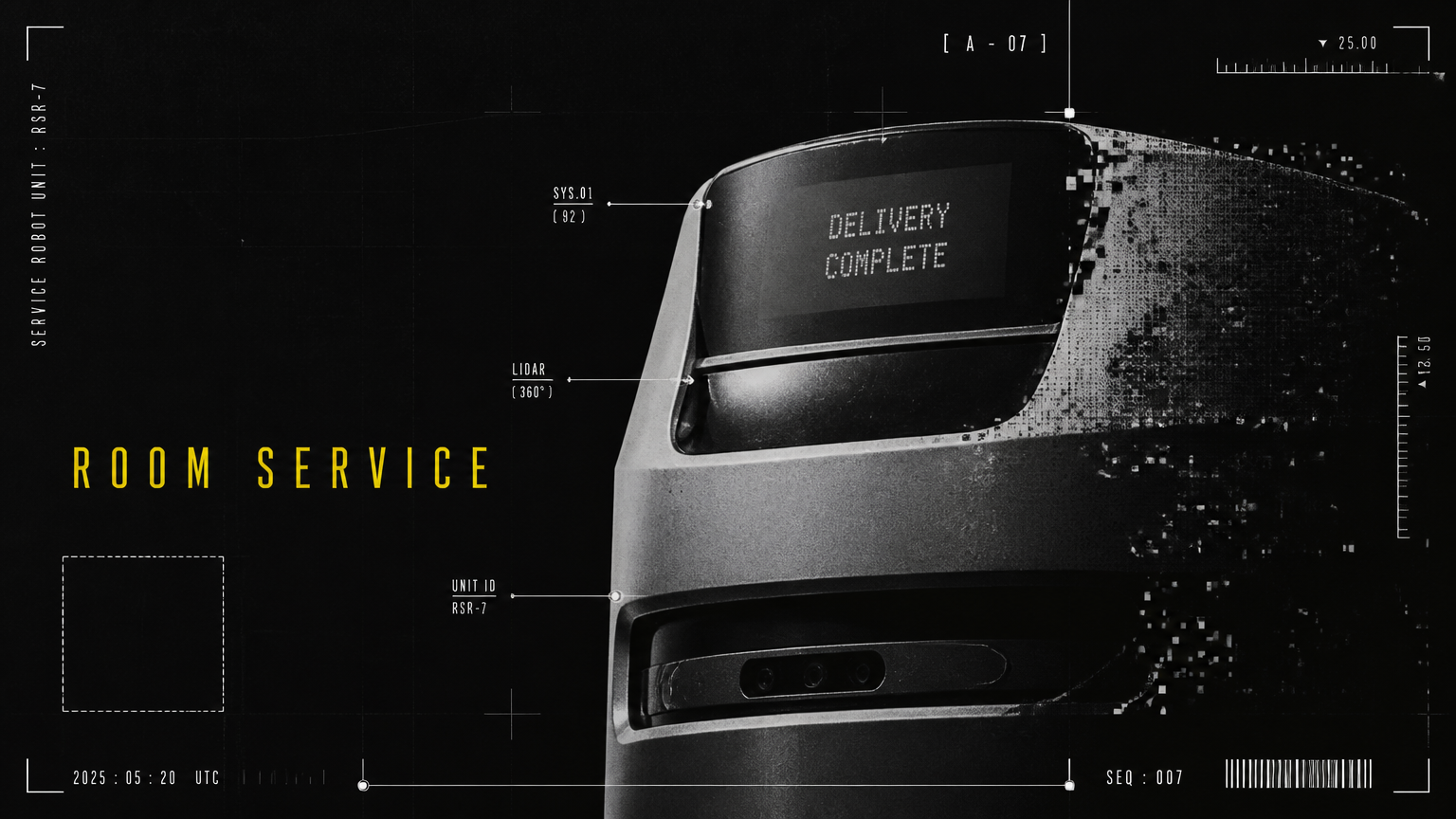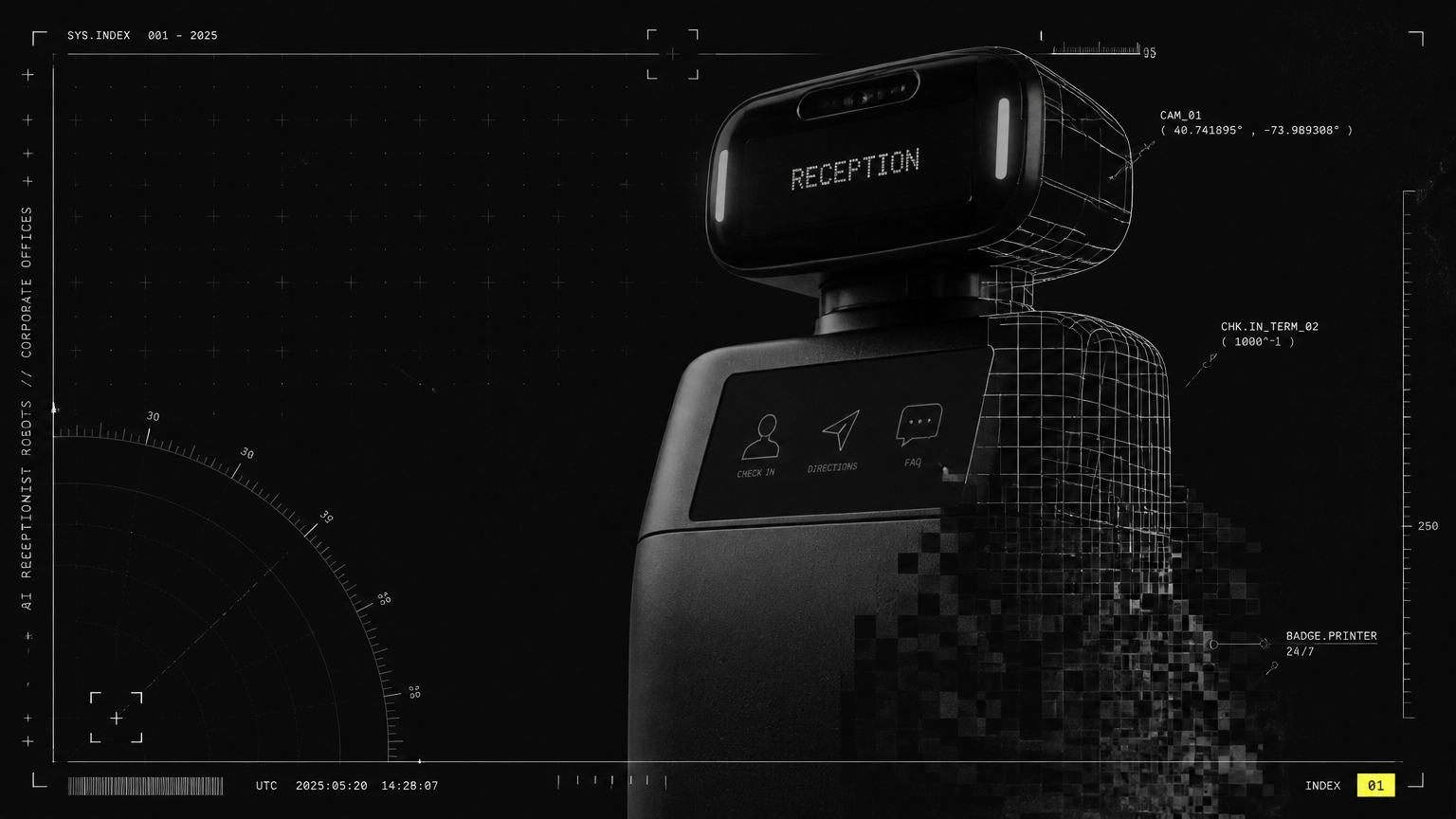
Quick Answer: Scaling from one robot to a multi-city fleet changes everything from device management to centralized operations — monitoring, maintenance, staffing, and SOPs must be standardized across sites. With proprietary AI fleet-management software, predictive maintenance, and 24/7 support, enterprises can scale receptionist, cleaning, serving, and AMR fleets while maintaining uptime and consistent service quality.
This guide to robot fleet management explains what operationally, technically, and financially changes when you move from a successful pilot to sustained operations across multiple cities and sites — and how to scale without losing uptime, consistency, or ROI.
One robot is a device. Ten robots across five cities is an operation. That is the shift most teams underestimate.
A pilot succeeds because it gets attention: facilities managers watch it closely, IT gives it priority, vendor engineers are on call, and staff work around it. At scale, that white-glove attention disappears. What replaces it determines whether your fleet delivers consistent value or becomes a distributed maintenance burden.
For Corporate campuses, Retail chains, Healthcare networks, Hospitality groups, Education campuses, Government facilities, Manufacturing plants, Logistics hubs, and Airports & Transit Hubs, the challenges rhyme: more sites, more stakeholders, more variability, and higher expectations for reliability.
Why Robot Fleet Management Becomes Non-Negotiable After Site Two
With one robot, management is manual. You check battery, you push an update, you observe performance, you call support if needed. With 15, 50, or 100+ robots, manual management breaks.
Robot fleet management is the discipline and software layer that lets you operate all robots as one fleet — not as dozens of isolated machines. It covers provisioning, health monitoring, task orchestration, remote diagnostics, software updates, user access, SOP enforcement, and performance analytics across locations.
Without it, scaling creates blind spots: Site A runs the latest navigation behavior, Site B does not. Cleaning coverage in Mumbai is verifiable, but in Bengaluru it is anecdotal. A receptionist robot in Delhi greets in the approved brand voice, while another in Hyderabad runs an outdated script.
The Same Scaling Problem Across Multi-Site Operations
Corporate IT campuses and co-working office parks pilot an AI receptionist to reduce front-desk load and manage dense foot traffic. Retailers pilot a greeter or floor-cleaning robot to handle customer flow and high staff turnover. Hospitals pilot cleaning automation for infection control and delivery robots for non-clinical task load.
Once the pilot proves value, leadership asks the same question: can we replicate this in every location with the same quality?
That replication is where scaling robot deployment across multiple locations gets complex:
Corporate: Multiple towers, different facility vendors, varying visitor peaks. Standard check-in flows and pantry delivery routes must work everywhere. Retail: Large-format stores, showrooms, and malls with different layouts, lighting, and crowd density. Promotional content and cleaning schedules must stay on-brand. Healthcare: Hospitals and clinics with strict hygiene protocols and round-the-clock strain. Cleaning validation and material transport cannot vary by shift. Hospitality: Hotels, restaurants, and resorts with peak-time service gaps. Serving robots must integrate with kitchen and floor workflows consistently. Education and Government: Sprawling campuses and public facilities with thin support staff and 24/7 monitoring needs. Visitor management and large-scale cleaning must be auditable. Manufacturing, Logistics, Airports: Industrial parks, fulfillment centers, and transit hubs where AMRs move inventory and pallets. Fleet visibility and safety compliance are critical.
In all cases, success moves from "does the robot work?" to "does the fleet perform predictably everywhere?"
| Operational Dimension | Single-Robot Pilot | Multi-City Fleet Operation |
|---|---|---|
| Monitoring | On-site visual checks by local staff | Centralized dashboard with real-time status, location, battery, and task state for all sites |
| Software Updates | Manual, USB or on-site push by engineer | Remote, scheduled OTA updates rolled out by fleet, site, or robot group |
| Maintenance | Reactive: call support when robot stops | Proactive: health alerts, usage analytics, and scheduled service windows |
| Staffing | Enthusiastic local champions | Defined roles: central fleet admin, site super-users, and trained floor staff |
| SOPs | Informal, learned by trial | Standardized, version-controlled SOPs for deployment, daily ops, and escalation |
| Reporting & ROI | Anecdotal feedback and basic logs | Site-wise uptime, task completion, coverage, and cost-per-task benchmarking |
Robot Fleet Management Software: What Centralized Operations Actually Looks Like
Robot fleet management software is what makes a multi-city fleet manageable with a lean central team. Allbotix pairs its service and industrial robots — AI receptionists, cleaning robots, serving robots, AMRs, cobots, and humanoids — with proprietary AI fleet-management software built in-house, not bolted on from third-party tools.
Here is what centralized operations means in practice:
1. A Centralized Robot Monitoring System for Every Site
A centralized robot monitoring system gives operations leaders a single pane of glass: which robots are online, on-task, charging, idle, or need attention — by city, site, floor, and robot type.
For a facilities head managing office parks in Gurugram, Hyderabad, and Pune, this means no longer relying on WhatsApp updates from each site. For a retail operations manager, it means verifying that floor-cleaning coverage actually happened overnight in all 12 stores. For hospital administration, it means audit-ready logs for cleaning tasks and delivery runs.
Effective monitoring includes real-time telemetry, task history, map and route status, battery and consumable levels, and alerting with severity levels. Critically, access is role-based: central admins see everything, site managers see their site, floor staff see only what they need to act on.
2. Remote Configuration, Content, and Updates
At scale, you cannot send an engineer to update a greeting script or cleaning map. Fleet software must allow remote configuration: push new visitor workflows to all receptionist robots, update promotional messages for retail greeters, adjust cleaning zones for a renovated hospital wing, or revise AMR routes for a reconfigured warehouse.
Version control matters. You need to know which software, map, and content version each robot runs, test updates on one site group, then roll out fleet-wide. This is essential for multi-site service robot deployment where brand consistency and safety compliance are non-negotiable.
3. Standardized SOPs Enforced by Software
SOPs are where many multi-city rollouts fail. The technology works, but each site invents its own process.
Standardize three SOP layers:
Deploy SOP: Site readiness checklist — Wi-Fi, flooring, docking space, safety signage, stakeholder training. Same criteria for every new Corporate tower, Retail store, or hospital block.
Daily Ops SOP: Start-up, task assignment, handover between shifts, guest and staff interaction scripts, end-of-day docking and charging. For serving fleets in hospitality, this includes kitchen-to-table handoff. For cleaning fleets, this includes pre-clean declutter and post-clean verification.
Escalation SOP: What floor staff do in 60 seconds (pause, move, call), what site super-users do in 15 minutes (basic troubleshooting, swap task), and when the central team escalates to 24/7 support with remote diagnostics.
When SOPs live inside the fleet platform — as checklists, task templates, and alert workflows — compliance becomes measurable across cities.
Uptime at Scale: Predictive Maintenance for Robots and 24/7 Support
Uptime is easy with one robot and an engineer nearby. Uptime across cities, with dust, crowd variation, network drops, and heavy daily use, is an engineering and support problem.
Allbotix reports 99.8% uptime across its deployed base of 525+ robots developed for 180+ clients. That level of reliability at scale depends on three factors: how the machines are engineered, how failures are predicted, and how fast support resolves issues.
Predictive Maintenance for Robots Prevents Distributed Downtime
Predictive maintenance for robots uses operational data — drive motor load, brush wear, battery cycles, sensor health, navigation anomalies, temperature trends — to flag issues before they cause downtime.
Instead of discovering at 8 a.m. that a cleaning robot in Chennai failed overnight, the central team sees declining brush efficiency or repeated localization retries two days earlier and schedules service. Instead of an AMR stalling during peak fulfillment, abnormal vibration or path deviation triggers a remote check.
Because Allbotix owns full IP for design, firmware, and source code and engineers machines in-house rather than assembling off-the-shelf parts, telemetry is deeper and fixes can be made at the firmware and system level — not just by swapping a third-party module. Made-in-India manufacturing, scaled via the Aimtron Technologies partnership, supports parts availability and service consistency for Indian multi-city operations.
Combined with 24/7 Premium Support, this model shifts maintenance from reactive site visits to centralized, data-driven fleet care.
| Reliability Criterion | In-House Engineered Fleet (Allbotix Approach) | Assembled Hardware Approach |
|---|---|---|
| Design and IP Ownership | Full ownership of design, firmware, source code, and trademarks; built for client precision, ambition, and scale | Dependent on third-party vendors for core modules and firmware changes |
| Hardware-Software Integration | Proprietary AI fleet management and predictive maintenance designed with the hardware | Generic dashboard retrofitted to disparate hardware |
| Diagnostics Depth | System-level telemetry across navigation, power, and task execution | Limited to what off-the-shelf components expose |
| Parts and Service Consistency | Standardized platform with India-based manufacturing scale-up | Variable lead times tied to multiple component suppliers |
| Multi-City Update Control | Coordinated OTA updates and configuration management across fleet | Site-by-site manual updates and version drift |
| Support Model | 24/7 Premium Support with in-house engineering escalation | Tiered support split across assemblers and component OEMs |
For operations leaders, the takeaway is simple: ask not just about robot features, but about fleet uptime architecture. Who owns the IP? What data predicts failure? How are updates and spares managed across cities?
Scaling Robot Deployment Across Multiple Locations: People, Process, and ROI
Technology scales fast. People and processes determine whether value scales with it.
How Staffing Shifts from Pilot to Fleet
One robot creates curiosity. A fleet changes job roles.
Receptionist fleets: In Corporate and Education campuses, front-desk staff move from repetitive check-ins to exception handling, VIP engagement, and visitor experience. One central admin can manage visitor flows, FAQs, and multilingual scripts across sites, while site staff focus on human touchpoints.
Cleaning fleets: In Healthcare, Retail, Airports, and Government facilities, housekeeping teams shift from manual coverage to robot supervision, declutter prep, and quality verification. Night shifts become more productive with autonomous floor-cleaning automation running validated routes.
Serving fleets: In Hospitality and Corporate pantries, servers and pantry staff shift from running trays to managing guest interaction and peak-load orchestration. Robots handle repetitive transport; humans handle hospitality.
AMR fleets and autonomous mobile robot fleet management: In Manufacturing, Logistics & Warehousing, material handlers shift from pallet pushing and cart runs to fleet tasking, safety supervision, and bottleneck management. Central visibility into inventory movement and fleet status reduces idle time and improves throughput.
The key is to define new roles explicitly: Central Fleet Owner, Site Super-User, and Floor Operator. Train for each. Measure adoption by site, not just by robot.
Workflow Integration Matters More Than Robot Specs
Robots fail at scale when they sit outside workflows. They succeed when they are embedded in them.
Map integration points before adding sites: visitor management system for receptionists, work-order and facility-management tools for cleaning, POS and kitchen display for serving, WMS/MES for AMRs and cobots. Standardize handoffs: who assigns tasks, who confirms completion, where logs go.
Allbotix's cross-industry versatility — spanning receptionist, humanoid, dog, cleaning, serving, AMR, and cobot form factors — helps here. Enterprises can standardize on one fleet-management approach and support model while deploying different form factors per use case, rather than managing five vendors with five dashboards.
Cost Consistency and ROI Across Cities
CFOs do not fund robots; they fund predictable outcomes. Pilots often hide true costs because engineering support is free and staff time is uncounted.
At scale, model total cost per site: hardware, deployment and mapping, network readiness, training, consumables, maintenance, support, and central admin overhead. Then model value per site: labor hours redeployed, coverage consistency, service speed, audit compliance, and brand experience.
Well-run automation programs address the cost of inaction directly: manufacturing faces a projected shortfall of 2M+ workers over the next decade, automation can cut unplanned downtime 30-50%, reduce scrap 20-50% through consistent execution, and average robot payback has compressed from ~5.3 years in 2019 to ~1.3 years in 2024. Your business case should track site-level payback, not just fleet averages, so underperforming sites get coaching, not just more hardware.
Standardization drives cost consistency: same deployment checklist, same training, same consumables, same support SLA. That is how unit economics improve from site 1 to site 20.
A Practical Blueprint for Multi-Site Service Robot Deployment
If you have proven one robot, use this sequence for multi-site service robot deployment:
1. Lock the replicable use case. Choose one workflow with clear success metrics — e.g., overnight cleaning coverage, visitor check-in time, pantry delivery cycle time, or AMR pallet moves per hour. Do not scale three use cases at once.
2. Harden the fleet stack. Confirm centralized monitoring, remote updates, role-based access, and predictive alerts are live before site three. Validate network, flooring, and docking requirements as a formal site-readiness gate.
3. Codify SOPs and training. Document deploy, daily ops, and escalation SOPs. Certify site super-users. Track compliance in the fleet platform.
4. Expand in clusters. Add 2-3 sites per cluster with similar profiles — e.g., three large-format retail stores, then three hospitals. Compare performance within clusters to isolate site variables.
5. Industrialize maintenance. Move to scheduled service windows driven by predictive data, stocked consumables per region, and 24/7 remote triage. Measure uptime by site and robot cohort.
6. Govern ROI centrally. Review task completion, uptime, labor redeployment, and experience scores monthly. Standardize what works; fix or pause what does not.
Enterprises backed by long-term partners scale faster because engineering, software, and support evolve together. Allbotix, backed by publicly listed Nanta Tech Limited and built on precision engineering with limitless innovation as its operating ethos, is structured for that kind of multi-year, multi-site scale.
Scaling from one robot to a multi-city fleet is not about buying more robots. It is about building centralized operations — monitoring, updates, maintenance, staffing, and SOPs — that make every new site easier than the last.
Ready to scale your pilot into a reliable multi-city fleet? Talk to Allbotix to design your robot fleet management blueprint — from site readiness and SOP standardization to proprietary fleet software, predictive maintenance, and 24/7 Premium Support for receptionist, cleaning, serving, and AMR fleets.