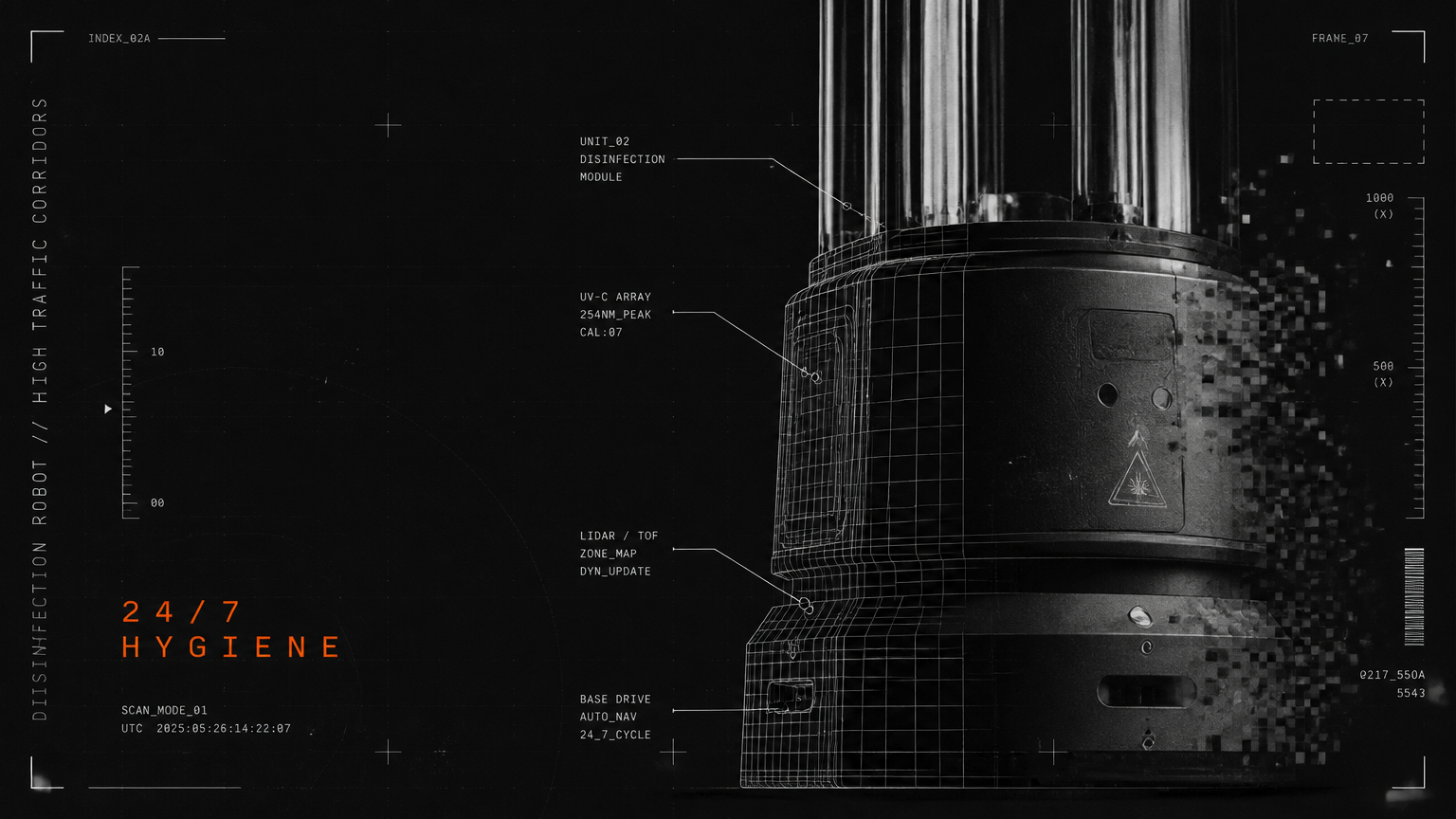
Disinfection robots for hospitals reduce infection risk in busy corridors by delivering consistent, autonomous, 24/7 disinfection without adding to non-clinical workload. For hospital administrators and facility managers, they close the gap between periodic manual cleaning and the continuous hygiene high-traffic zones actually require.
Corridors never sleep. Patient transfers, visitors, carts, wheelchairs, and staff move through them around the clock, depositing pathogens on floors, handrails, door handles, and air. Manual teams cannot be everywhere at once — robots can.
Why Corridors Are the Highest-Risk, Hardest-to-Clean Zone
Hospital corridors combine dense foot traffic, constant touchpoints, and limited cleaning windows. Traditional mopping and wiping are episodic: a corridor is clean for minutes, then recontaminated.
This creates three persistent problems for healthcare facilities:
- Infection control gaps: High-touch surfaces and floors are re-soiled within minutes of manual cleaning.
- Non-clinical task load: Housekeeping teams are stretched thin covering wards, ICUs, OTs, and public areas, leaving corridors under-serviced during peaks and night shifts.
- Round-the-clock strain: Night and early-morning hours have the lowest staffing but ongoing patient movement and emergency transfers.
Disinfection robots for hospitals are designed specifically for this continuous-use reality. They patrol, scrub, disinfect, and document — autonomously and repeatably.
What Disinfection Robots for Hospitals Actually Do in Corridors
Modern hospital-grade disinfection robots combine multiple hygiene functions in one autonomous platform:
Autonomous floor scrubbing and disinfection with precise chemical dosing for consistent pathogen removal across long corridor runs.
UV-C or dry-mist air and surface disinfection for handrails, waiting benches, elevator lobbies, and other high-touch corridor zones.
Intelligent navigation in live environments using LiDAR, 3D cameras, and obstacle avoidance to safely operate around patients, stretchers, and carts without blocking flow.
Fleet-managed scheduling and reporting with real-time monitoring, cleaning logs, and predictive maintenance. Every run is tracked, time-stamped, and auditable — critical for NABH, JCI, and internal infection-control audits.
This is precision engineering applied to hygiene: same path, same dose, same standard, every shift.
Manual Cleaning vs. Automated Corridor Disinfection
| Criterion | Manual Cleaning Teams | Disinfection Robots for Hospitals | Fixed UV Fixtures |
|---|---|---|---|
| Coverage | Periodic, zone-by-zone | Continuous, autonomous patrol of full corridor loops | Single fixed room/point only |
| Consistency | Varies by staff, shift, fatigue | Standardized dose, path, and contact time every run | Consistent but limited range |
| 24/7 Operation | Limited by shifts and labor shortage | Operates nights, gaps, and peak hours autonomously | Always on but passive |
| Safety in Live Traffic | Manual cordoning needed | LiDAR navigation, auto-stop around people and carts | Requires room to be vacant for UV |
| Documentation | Manual checklists | Digital logs, maps, and compliance reports | No cleaning verification |
| Staff Impact | Adds non-clinical workload | Frees staff for wards, ICUs, and terminal cleaning | No workload relief |
For high-traffic corridors that cannot be closed for cleaning, autonomous mobile disinfection is the only option that maintains flow while maintaining hygiene.
4 Operational Wins for Administrators and Facility Managers
1. Lower infection risk with measurable consistency Automated execution reduces variability that drives healthcare-associated infections. Consistent robotic execution helps cut quality deviations by 20-50%, a critical advantage when corridor hygiene directly impacts wards and ICUs.
2. Ease non-clinical workload amid labor shortages With manufacturing and facilities facing a projected shortfall of 2M+ workers over the next decade, hospitals feel the same strain. Robots handle repetitive corridor loops, delivering 15-30% throughput increases so housekeeping can focus on clinical areas.
3. Reliable 24/7 hygiene with 99.8% uptime Corridors need overnight and inter-peak disinfection. Purpose-built fleets with condition-based monitoring cut unplanned downtime by 30-50%, ensuring scheduled runs actually happen — even at 2 a.m.
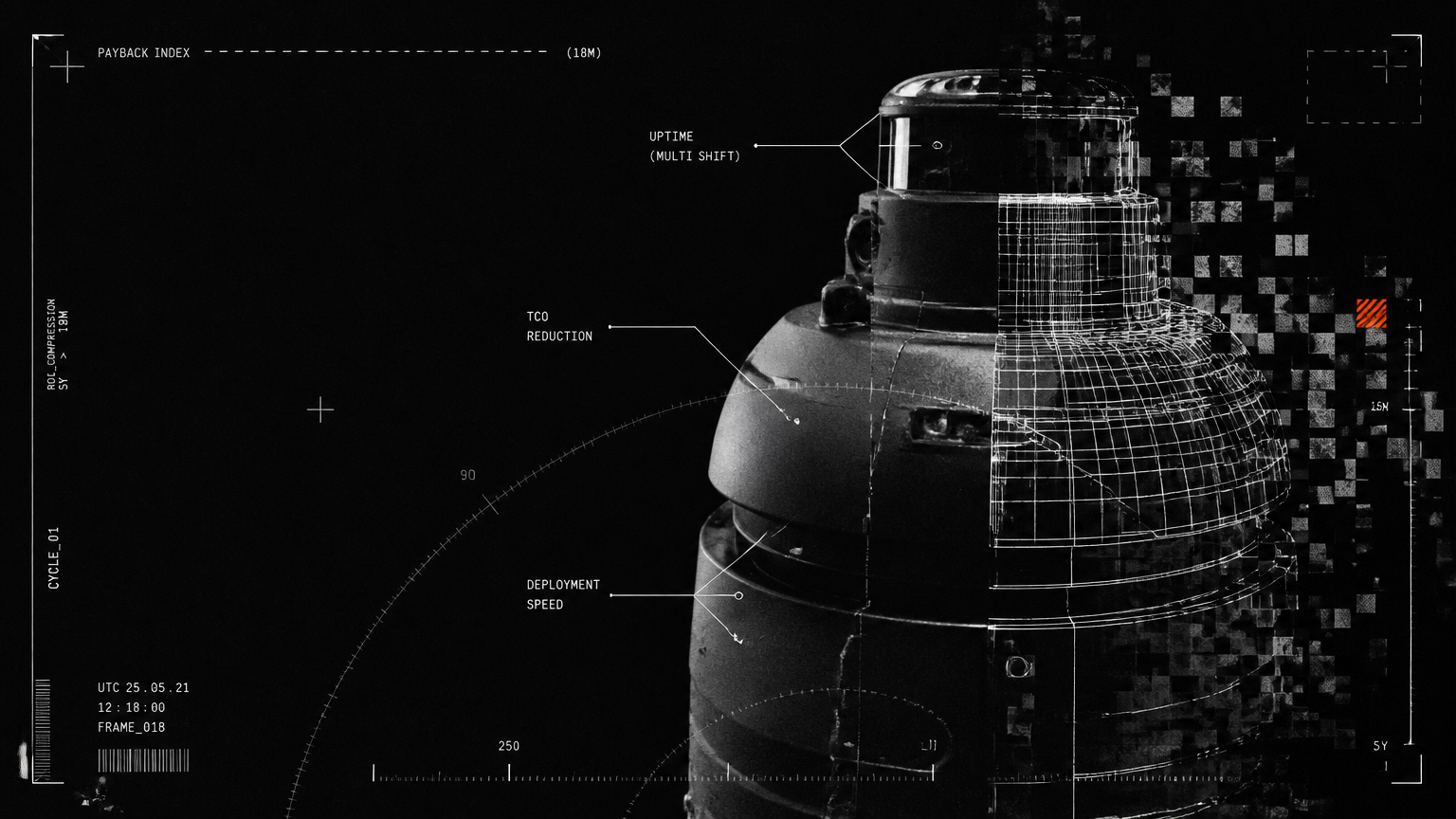
4. Faster payback than adding headcount Average robot payback has dropped from ~5.3 years in 2019 to ~1.3 years in 2024, with well-run deployments seeing 10:1 to 30:1 ROI within 18 months. One robot covering multiple corridor loops across three shifts costs far less than equivalent round-the-clock staffing.
Built for 24/7 Reliability: What to Look For
Not all machines are built for hospital duty. Facility leaders should prioritize:
- In-house engineered hardware and firmware with full IP ownership for long-term spares and support
- Proprietary AI fleet-management software with real-time monitoring and predictive maintenance
- Hospital-safe navigation, low noise, and chemical-safe operation around patients
- 24/7 Premium Support and Made-in-India manufacturing for rapid service response
- Proven scale: 525+ robots developed and 180+ happy clients across industries
This is where limitless innovation matters — machines engineered to a client's specific precision, ambition, and scale, not assembled off-the-shelf.
Proven in Hospitals, Ready for Every High-Traffic Facility
While corridors are the use case, the same platform logic serves corporate IT campuses and office parks managing dense foot traffic, government facilities needing 24/7 monitoring on tight budgets, retail malls and showrooms managing customer flow, universities securing sprawling campuses, hotels filling peak-time service gaps, airports handling high-density transit, and manufacturing and logistics sites fighting downtime and workforce shortages.
One fleet-management backbone across receptionist, cleaning, serving, AMR, cobot, and humanoid form factors means standardized operations facility-wide.
Deploy Corridor Disinfection with Confidence
High-traffic corridors will not get less busy. Your hygiene strategy needs to work continuously, document automatically, and scale without adding headcount.
Allbotix engineers and deploys disinfection robots for hospitals as part of a broad, multi-vertical fleet backed by publicly listed Nanta Tech Limited — with in-house design, proprietary fleet software, and 24/7 support built for round-the-clock healthcare environments.
Talk to Allbotix to map your corridor loops, calculate coverage and ROI, and pilot autonomous disinfection in your facility.