
Being a publicly listed robotics company in India means operating under SEBI-regulated disclosure, audited financials, and shareholder accountability. For enterprise buyers and partners, it signals financial transparency, long-term stability, and the governance discipline to deliver and support large-scale robotics deployments.
In a market where many automation vendors are early-stage startups assembling off-the-shelf parts, that distinction matters. When you are trusting robots with front-desk experience, facility cleaning, patient-area hygiene, factory material flow, or 24/7 public infrastructure, you are not just buying hardware. You are entering a multi-year relationship for deployment, integration, software updates, spare parts, and support. Public-market backing tells you the provider is built to stay, scale, and be accountable.
Allbotix, backed by publicly listed Nanta Tech Limited, operates with that discipline — combining in-house engineering, proprietary AI fleet-management software, and Made-in-India manufacturing to serve corporate campuses, government facilities, retail, education, healthcare, hospitality, manufacturing, logistics, and airports and transit hubs.
What Is a Publicly Listed Company in India?
To understand why listed status builds trust, it helps to answer a common buyer question: what is a publicly listed company in India?
A publicly listed company is a company whose shares are offered to the public and traded on recognized stock exchanges such as BSE and NSE. Once listed, the company comes under the regulatory oversight of the Securities and Exchange Board of India (SEBI) and must follow the SEBI Listing Obligations and Disclosure Requirements (LODR).
In practice, this means:
Regular, audited financial reporting with quarterly results, annual reports, and disclosures of material events. A formal board structure with independent directors, audit committees, and defined accountability for strategy and risk. Continuous disclosure of shareholding patterns, related-party transactions, leadership changes, and governance practices. Scrutiny from auditors, analysts, institutional investors, and regulators — not just customers.
For buyers evaluating BSE NSE listed robotics companies or researching robotics stocks in India, this framework is the core filter. Among listed robotics companies in India, very few combine full-stack robotics engineering with commercial fleet deployment. Most automation providers remain private, which makes transparency harder to verify.
A publicly traded robotics company India buyers can trust is therefore not just a company with shares for sale. It is a company that has accepted public accountability for how it builds, spends, hires, reports, and delivers.
What It Means to Be a Publicly Listed Robotics Company in India for Governance and Transparency
SEBI compliance for listed companies creates a level of transparency that private robotics startups are not required to provide.
1. Audited Financials You Can Verify
A publicly listed robotics company in India must publish audited financial statements. Enterprise procurement teams, government tender committees, and facility-management partners can review revenue trends, R&D investment, debt levels, and cash flow — rather than relying on pitch decks.
This is critical for robotics, where deployments are capital-intensive and long-lived. An AI receptionist fleet for an IT park, AMR-based material movement for a plant, or cleaning automation for a hospital network requires confidence that the vendor will fund software maintenance, spare parts, and support in year three and year five, not just month one.
2. Board Accountability and Process Discipline
Listed-company governance requires documented processes for risk management, internal controls, and board oversight. That discipline carries over into operations: structured quality systems, traceable engineering change management, and formal service-level commitments.
Allbotix reflects this approach in its engineering model. Rather than assembling third-party kits, the company retains full in-house IP ownership of design, firmware, source code, and trademarks, guided by precision engineering. That ownership means issues can be fixed at the root — in code and design — with clear accountability, instead of being passed between resellers.
3. Public-Service Transparency for Government Stakeholders
For Government and Public Services, transparency is non-negotiable. Agencies managing railway stations, municipal facilities, public hospitals, and administrative buildings need 24/7 monitoring capability, tight staffing budgets, and auditable vendor relationships.
Working with a provider backed by a listed parent simplifies due diligence. Ownership structure, financial health, and compliance history are matters of public record. Combined with real-time fleet monitoring and predictive maintenance data from proprietary software, this gives public stakeholders both financial transparency and operational transparency — who deployed what, where it is running, and how it is performing.
Why a Publicly Listed Robotics Company in India Is a Safer Choice for Enterprise Buyers
For corporate campuses, retail chains, hospitals, hotels, universities, and industrial groups, robotics purchases are facility decisions, not gadget purchases. Downtime affects visitors, patients, shoppers, guests, students, or production lines.
A provider with public-market backing is structured to protect uptime and continuity in ways that matter on the ground:
Multi-year service continuity: Listed-backed companies plan for sustained R&D and lifecycle support because shareholders expect durable revenue, not one-time sales. Allbotix supports this with 24/7 Premium Support and a software layer that enables remote diagnostics, real-time monitoring, and predictive maintenance across its fleet.
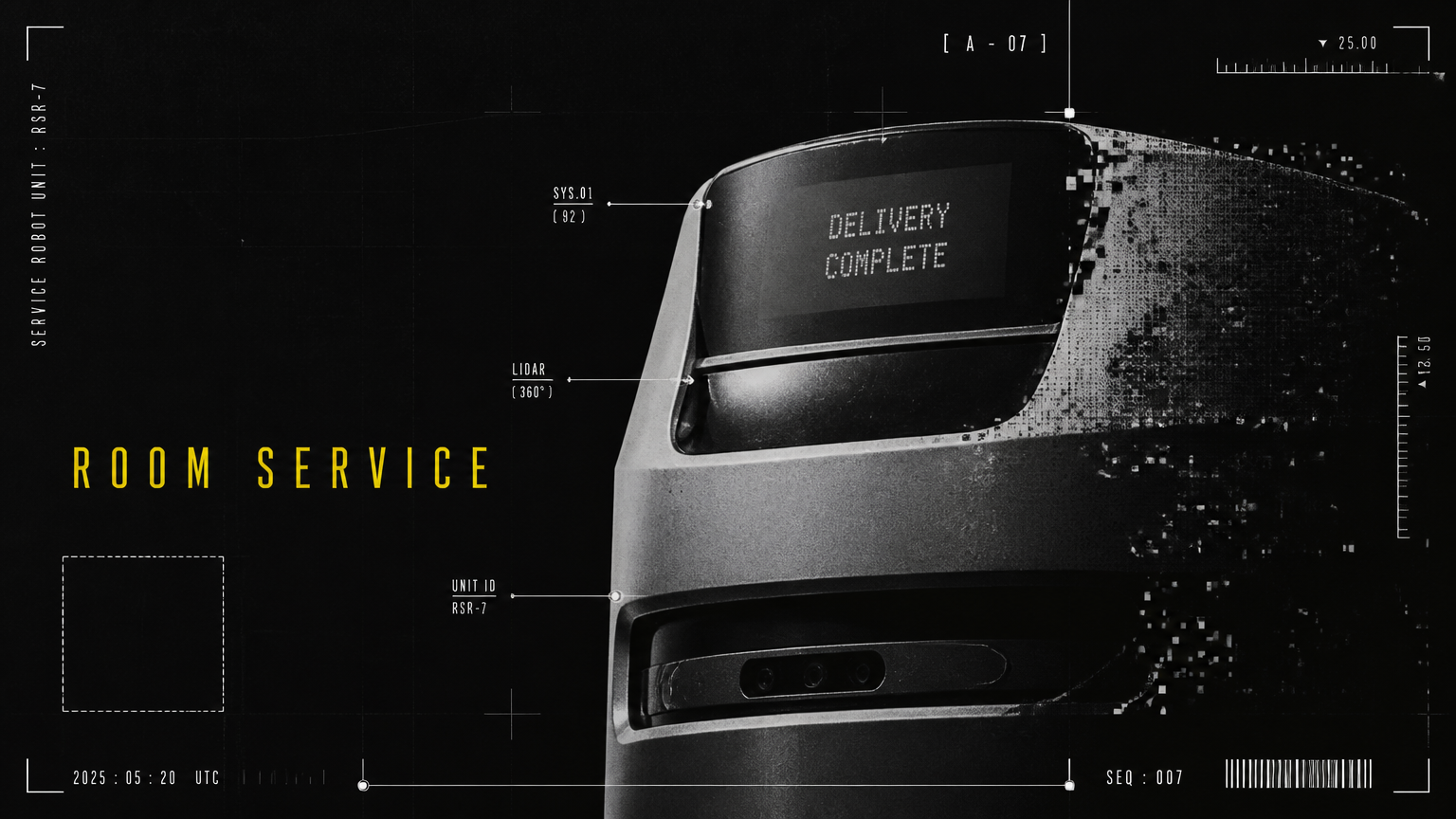
Cross-industry deployment experience: Public capital enables breadth. Allbotix engineers and deploys a broad, multi-vertical fleet — AI receptionist robots, humanoid robots, quadruped dog robots, cleaning robots, serving and delivery robots, AMRs, and cobots — paired with proprietary AI fleet-management software. With 525+ robots developed and 180+ happy clients, that breadth translates into proven playbooks for different environments, from high foot-traffic office parks to infection-sensitive clinics to peak-time restaurants and resorts.
Uptime as a governance metric: Allbotix reports 99.8% uptime across managed fleets. For buyers, that figure is more credible when it comes from an organization accustomed to audited reporting and measurable SLAs. Automation that cuts unplanned downtime by 30-50% only delivers value if the vendor itself is reliable enough to sustain it.
| Evaluation Criteria | Publicly Listed-Backed Robotics Provider | Private Robotics Startup |
|---|---|---|
| Financial Transparency | Audited quarterly and annual results under SEBI disclosure norms | Limited or unaudited financials shared on request |
| Governance and Accountability | Board oversight, audit committee, public shareholder accountability | Founder-led decisions with limited external oversight |
| Long-Term Service Continuity | Capital base and reporting discipline to support multi-year contracts and 24/7 support | Higher risk of pivot, acquisition, or shutdown affecting spares and support |
| IP Ownership and R&D Investment | Sustained, disclosed R&D with full in-house IP for design, firmware, and software | Often dependent on imported kits or third-party platforms with limited customization |
| Suitability for Large Tenders | Easier due diligence for enterprise and government procurement | Longer vendor validation and higher perceived counterparty risk |
| Fleet Visibility | Proprietary fleet-management with real-time monitoring and predictive maintenance | Hardware-only sale with limited centralized software oversight |
This difference is why procurement leaders increasingly search for publicly traded robotics company India options before committing to campus-wide or chain-wide rollouts. Listed status does not replace technical evaluation, but it de-risks it.
How Trust Translates by Sector
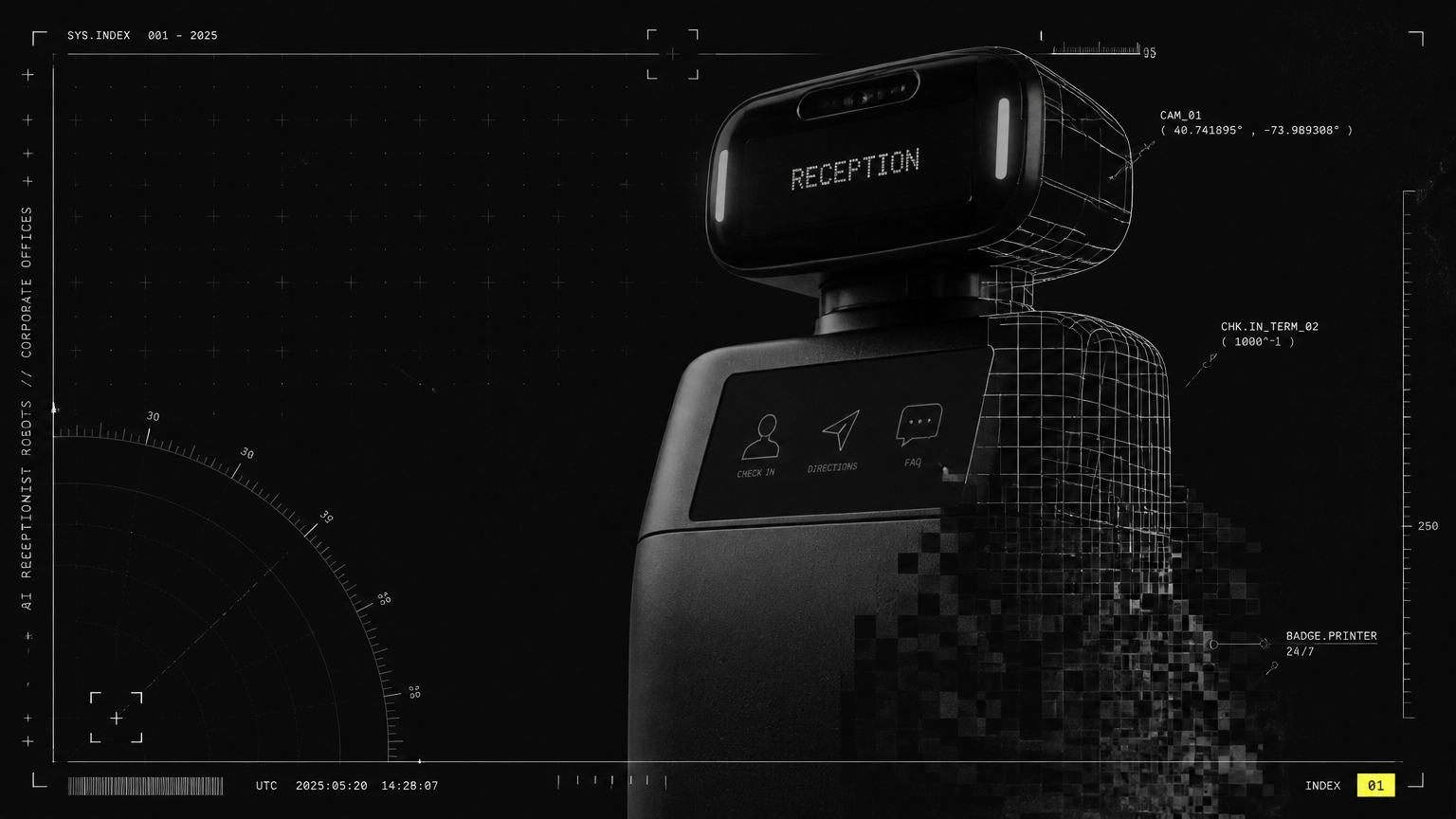
Corporate IT campuses, co-working, and office parks: Front-desk staffing costs and dense foot traffic demand consistent visitor management and pantry delivery. A listed-backed fleet of AI receptionists and delivery robots ensures standardized experience across towers and cities, with centralized software updates.
Retail, malls, and showrooms: High staff turnover and customer flow peaks make AI greeters, promotional robots, and floor-cleaning automation valuable for brand differentiation — provided the vendor can support dozens of sites simultaneously.
Healthcare: Hospitals face infection control pressures and round-the-clock strain from non-clinical tasks. Cleaning automation and delivery robots reduce load on staff, but only if uptime and hygiene protocols are rigorously maintained.
Hospitality: Hotels, restaurants, and resorts cannot afford inconsistent service during peak hours. Serving robots engineered to a client's specific scale and workflow, backed by dependable support, protect guest experience.
Education: Universities and large campuses balance safety risks with thin support staff. AI receptionists for visitor management, AMRs for inter-department transport, and large-scale cleaning robots extend coverage without expanding headcount.
Airports and transit hubs: High-density public infrastructure demands continuous cleaning, guidance, and surveillance support with full operational audit trails — exactly where governance discipline and fleet software matter most.
How a Publicly Listed Robotics Company in India Enables Scale and Made-in-India Capability
The third implication of listing is scale. Public markets provide access to growth capital that funds what private assemblers often cannot: deep R&D, tooling, manufacturing partnerships, and software platforms.
In-House IP Instead of Assembly
Many service-robot sellers in India are integrators — they import platforms and rebrand them. A publicly listed robotics company in India with genuine engineering capability does the opposite: it owns the stack.
Allbotix builds in-house rather than assembling from off-the-shelf parts. That includes mechanical design, embedded firmware, application software, and fleet orchestration. Full IP ownership allows machines to be engineered to a client's specific precision, ambition, and scale, whether that means a multilingual AI receptionist for a corporate lobby, a cobot cell tuned for a production inefficiency bottleneck, or an AMR fleet mapped for pallet transport in a 3PL warehouse.
Manufacturing Partnerships for National Scale
Made-in-India manufacturing is a strategic advantage for cost, customization, and serviceability — but it requires capital and partners. Allbotix scales manufacturing through its partnership with Aimtron Technologies, enabling repeatable build quality while retaining design control.
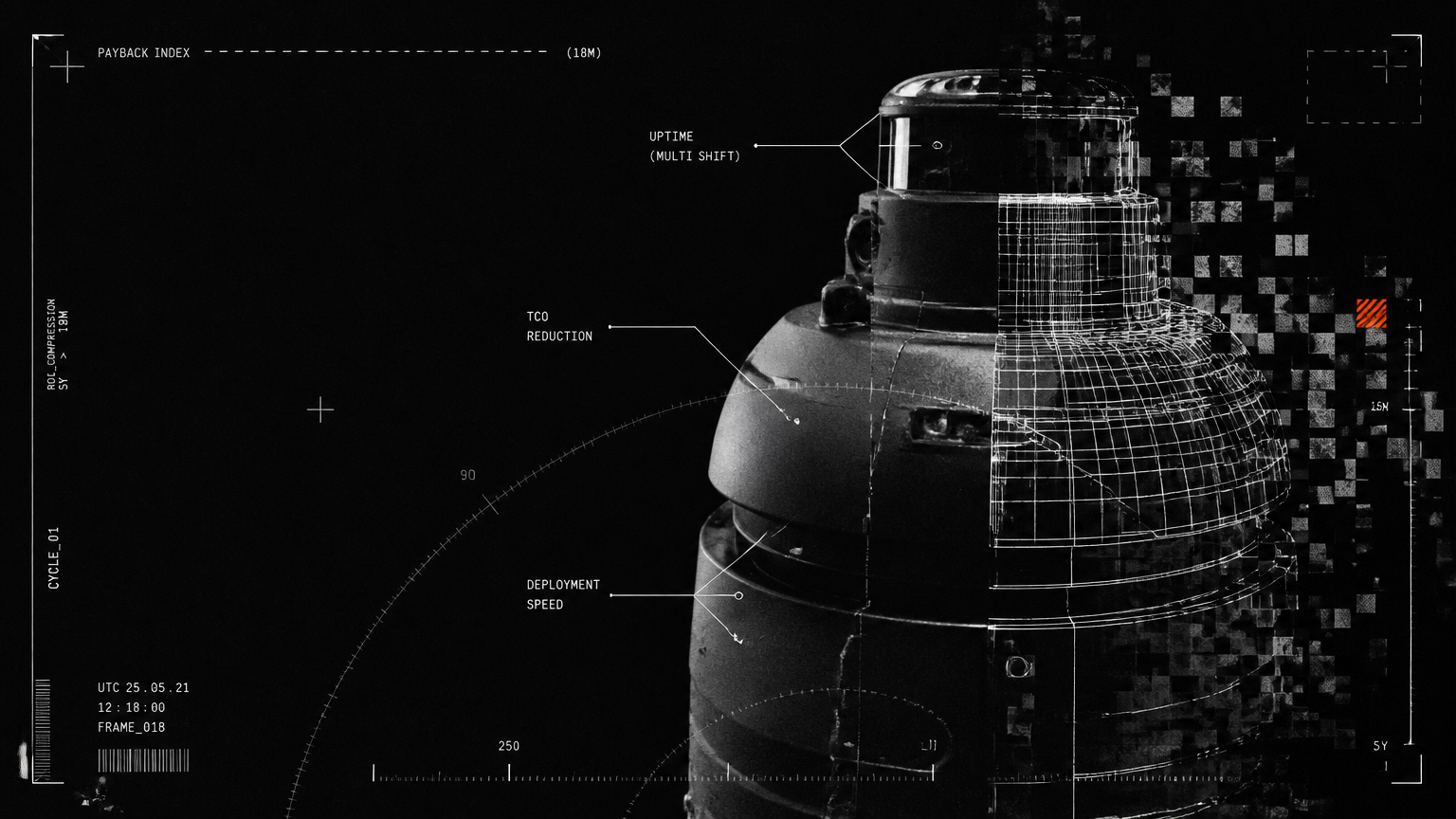
For Manufacturing and Production and Logistics and Warehousing buyers, this matters directly. Plants facing a projected shortfall of 2M+ workers over the next decade need 15-30% throughput gains and 20-40% capacity uplift that automation can provide. Well-run deployments now see payback in as little as 1.3 years versus 5.3 years in 2019, with 10:1 to 30:1 ROI within 18 months. Those returns depend on locally supportable hardware and software that evolves with the plant — not imported units with uncertain spares.
Software-Defined Fleets and Sustained R&D
Hardware breadth without software control creates fragmentation. Allbotix pairs its diverse fleet spanning receptionist, humanoid, dog, cleaning, serving, AMR, and cobot form factors with proprietary fleet-management and predictive-maintenance software.
This combination, sustained by public-market backing for ongoing R&D, embodies limitless innovation in practice: one dashboard for deployment health, usage analytics, and maintenance alerts across verticals. For facility heads managing inventory movement, fleet visibility, and pallet transport, or for operations leaders tackling quality consistency and scrap reduction of 20-50%, software visibility is what turns robots from pilots into infrastructure.
What to Look for When Evaluating Listed Robotics Companies in India
Investor interest in robotics stocks in India is growing, but enterprise buyers should evaluate differently than equity investors. When shortlisting listed robotics companies in India, look beyond the ticker:
Check SEBI filings and disclosures for consistent reporting and governance quality. Verify in-house engineering claims — who owns design, firmware, source code, and trademarks. Ask for fleet data: uptime, number of robots developed, active clients, and support SLAs. Validate manufacturing depth: Made-in-India capability plus scalable partnerships. Test software maturity: real-time monitoring, fleet orchestration, and predictive maintenance, not just teleoperation.
A vendor that meets these tests offers more than robots. It offers the institutional stability to stand behind large-scale, multi-site deployments.
Build Your Next Deployment on Listed-Company Accountability
Choosing automation is choosing a long-term operating partner. Public listing brings the transparency, governance, and scale that make that partnership safer — from audited financials and board accountability to sustained R&D and nationwide support capability.
If you are planning front-of-house transformation, facility automation, or industrial material flow, talk to Allbotix to see how a publicly backed, Made-in-India fleet with proprietary software and 24/7 Premium Support can deliver measurable uptime and ROI across your sites. Contact Allbotix to scope a pilot engineered to your precision, ambition, and scale.