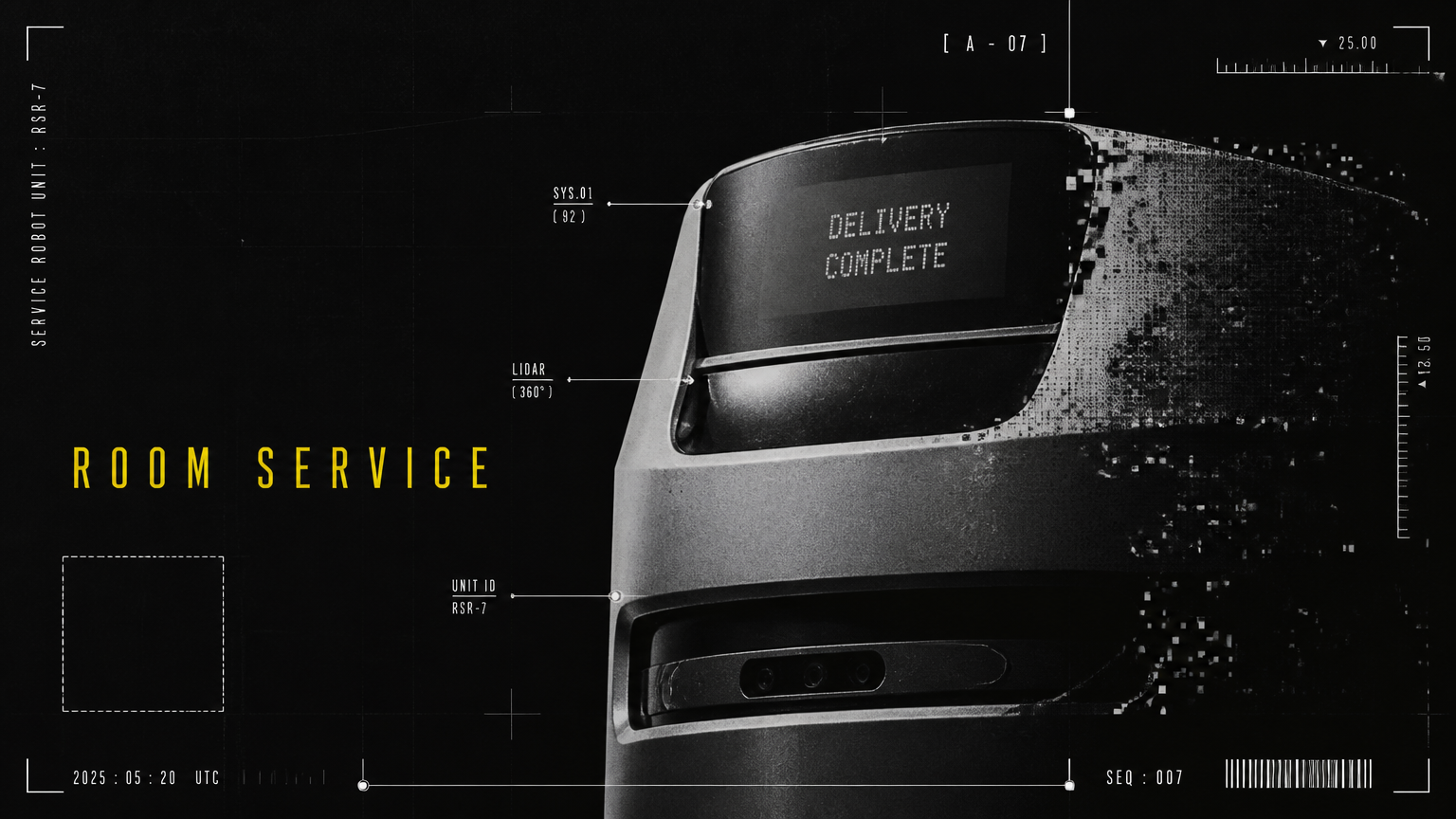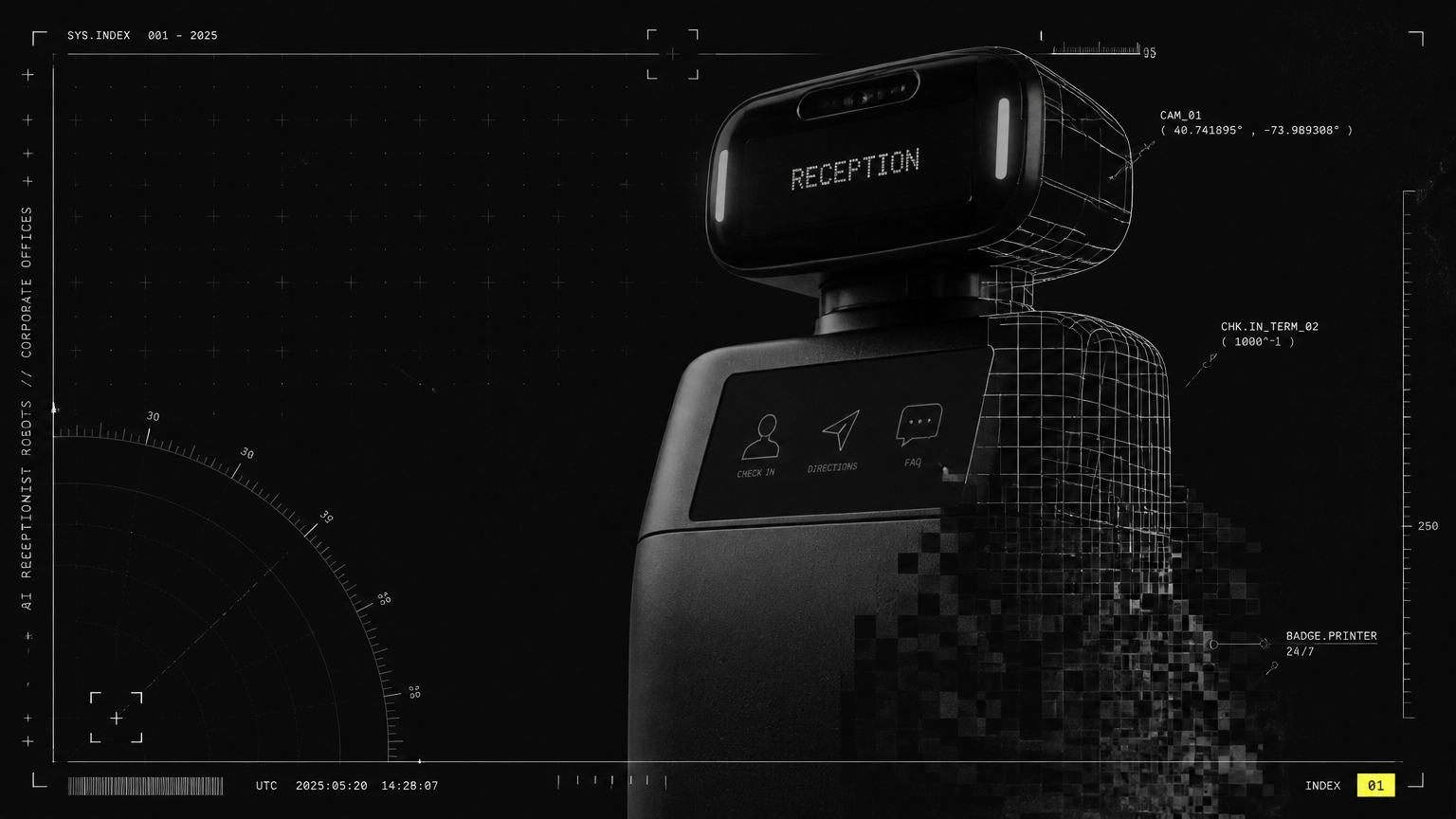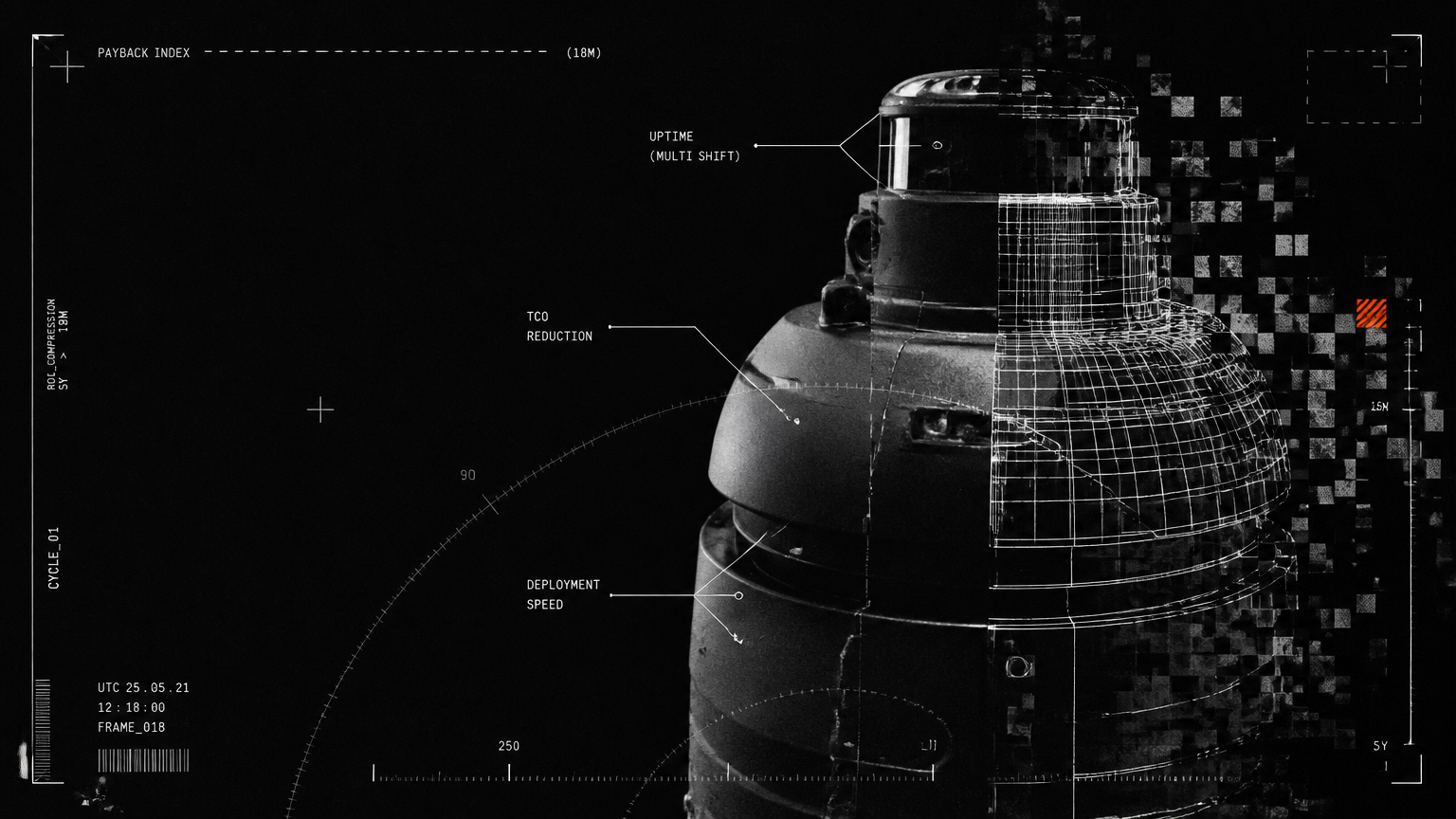
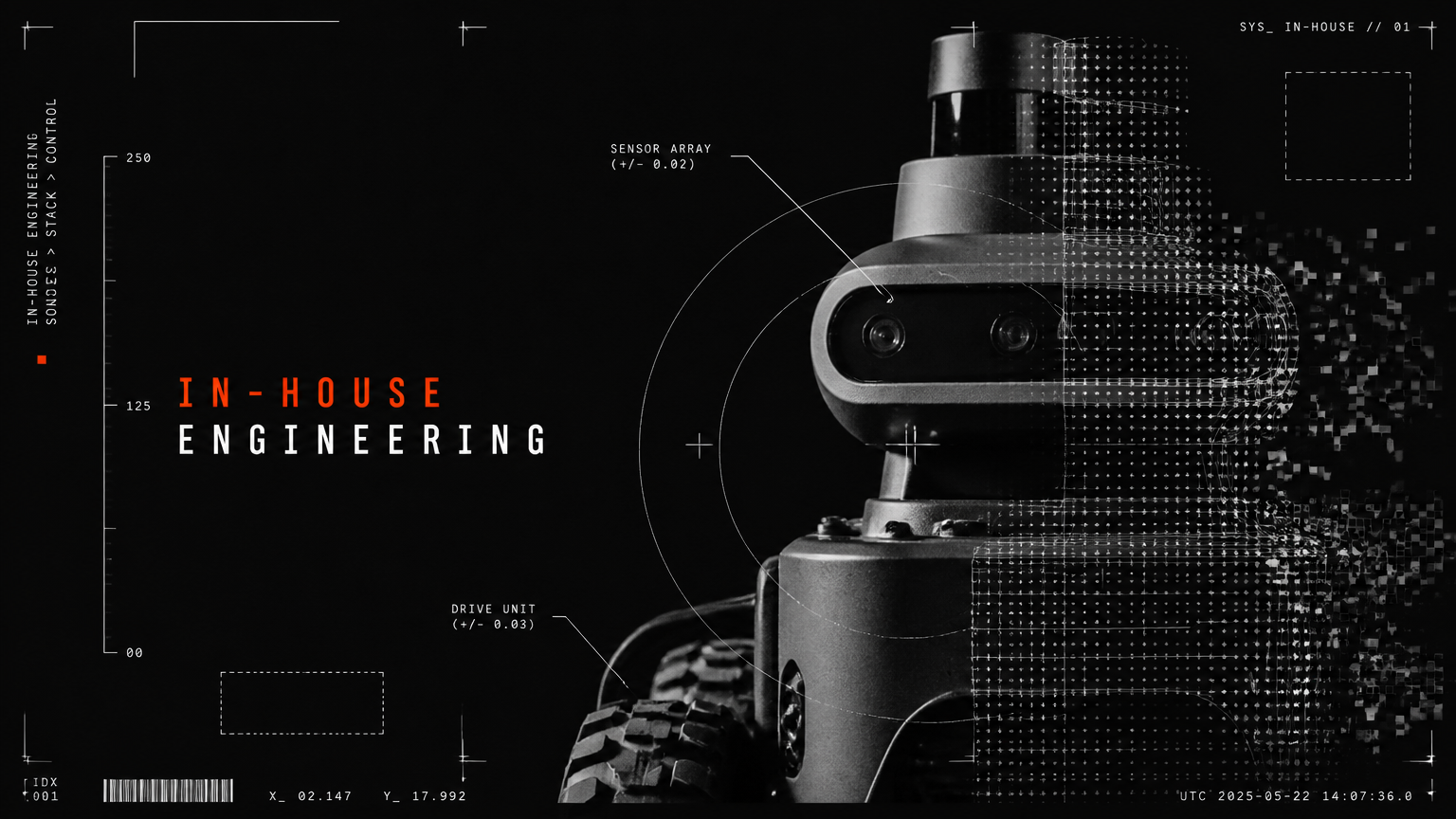
In-house engineering means the same team that designs the robot also builds its firmware, software and fleet-management layer, so problems get fixed at the source instead of through third-party vendors. For corporate campuses, retail, healthcare, hospitality, manufacturing, logistics and public infrastructure, that translates into robots tailored to real workflows, higher uptime, and faster lifetime support.
Why "In-House Engineering" Matters More Than It Sounds
Every robotics vendor claims reliability, customization, and support. For operations, facility, IT, and public-service buyers, the hard question is what makes those promises hold up in dense foot traffic, 24/7 shifts, and multi-site deployments.
That is where in-house engineering stops being a marketing phrase and starts being an operating model. When the same organization owns the robot's design, firmware, source code, and fleet software, it can adapt machines to your staffing gaps and workflows, integrate with your existing systems, and take accountability for uptime over years — not just at installation.
Allbotix was built around that model: in-house robotics development across AI receptionists, cleaning, serving, AMRs, cobots, and humanoids, paired with proprietary AI fleet management, rather than assembling off-the-shelf parts. With 525+ robots developed, 180+ happy clients, and 99.8% uptime, the difference shows up where buyers feel it most — in daily performance.
In-House Engineering vs Outsourcing: What Actually Changes for Buyers
The debate around in-house engineering vs outsourcing in robotics is not about where a screw is tightened. It is about who owns the intellectual property and who can change the product when your operation needs it.
An assembler buys a base platform, adds branding or a top module, and resells it. An in-house engineering company owns full IP of design, firmware, source code, and trademarks. That ownership determines how fast a navigation issue in a crowded lobby gets fixed, whether a robot can be re-tuned for a hospital corridor versus a mall atrium, and who is responsible when something fails at 2 a.m.
| Evaluation Criterion | In-House Engineered Fleet (Allbotix Model) | Assembled / Resold Robots |
|---|---|---|
| IP Ownership | Full ownership of proprietary robot design and firmware, source code, and trademarks | Limited or no IP; dependent on third-party OEM for core changes |
| Customization Depth | Custom service robots for business workflows: height, payload, UI, language, task logic, safety zones | Cosmetic changes only: skins, decals, pre-set scripts |
| Problem Resolution | Fix at source in firmware and hardware together; updates pushed across fleet | Ticket raised to external vendor; wait for upstream patch |
| Fleet Software | In-house fleet management software robotics layer with real-time monitoring and predictive maintenance | Third-party dashboard or no central fleet view; limited diagnostics |
| Systems Integration | API-level integration with visitor management, BMS, elevator, ticketing, and WMS systems | Integration limited to what OEM exposes |
| Manufacturing & Scale | Made-in-India manufacturing scaled via Aimtron Technologies partnership | Import-dependent supply chain with longer spares lead time |
| Lifetime Accountability | Single owner for hardware + software + support with 24/7 Premium Support | Split accountability between reseller, OEM, and software provider |
For buyers comparing vendors, that table is the due-diligence shortcut. Ask: who writes the firmware? Who owns the source code? Who monitors the fleet? If the answers point to three different companies, lifetime risk sits with you.
Assembled vs Engineered: Why IP Ownership Enables Precision Customization
Precision engineering requires control. When Allbotix engineers a receptionist robot for a corporate IT campus, a serving robot for a high-turnover restaurant, or an AMR for pallet movement in logistics, the team can adjust chassis design, sensor placement, navigation stack, and interaction flow together.
That matters because use cases diverge quickly:
Corporate and co-working parks need AI receptionists that handle dense morning foot traffic, multilingual visitor check-in, and pantry delivery without blocking corridors. Retail and malls need greeters and promotional robots that manage customer flow and reinforce brand differentiation. Healthcare needs non-clinical task support and cleaning consistency that aids infection control without adding strain to round-the-clock staff. Manufacturing and logistics need AMRs and cobots tuned for throughput, safety interlocks, and fleet visibility.
An assembler cannot re-engineer obstacle-avoidance behavior, docking logic, or payload balance without OEM permission. An in-house team can. That is the practical meaning of limitless innovation — machines engineered to a client's specific precision, ambition, and scale, not off-the-shelf units forced to fit.
The Benefits of In-House Engineering in Real-World Operations
The benefits of in-house engineering become clearest after go-live, when robots meet reality: crowds, noise, layout changes, staff turnover, and peak-time pressure.
1. Reliability in Dense Foot Traffic and 24/7 Environments
Airports and transit hubs, hospitals, universities, and large-format retail share one trait: they never really empty. Navigation tuned in a lab fails in a food court at lunch hour unless hardware and software were co-designed for dynamic obstacles, sudden stops, reflective floors, and elevator lobbies.
Because Allbotix owns both the hardware design and the navigation firmware, tuning is iterative. Sensor fusion, speed profiles, stopping distances, and voice interaction volumes can be calibrated for a specific site, then standardized across sites via the fleet layer. The result is higher sustained uptime in environments where outsourced stacks often degrade — a core reason Allbotix targets 99.8% uptime across deployments.
For government and public services with 24/7 monitoring needs and tight staffing budgets, that reliability also supports transparency. Surveillance and cleaning robots that log routes, coverage, and incidents in software provide an auditable record of public-space service, not just a machine on patrol.
2. Custom Service Robots for Business Staffing Gaps, Not Generic Tasks
Labor shortage and cost are consistent drivers across sectors. Manufacturing faces a projected shortfall of 2M+ workers over the next decade, while hospitality struggles with peak-time service gaps, retail with high turnover, and healthcare with non-clinical task load pulling nurses and aides away from care.
Custom service robots for business operations close specific gaps:
In hospitality, serving and delivery robots sustain peak-time throughput and consistent service quality when human teams are stretched. In corporate facilities, refreshment delivery and floor-cleaning automation absorb recurring facility maintenance load. In education, AI receptionists streamline visitor management across sprawling campuses while AMRs handle inter-department transport with thin support staff. In logistics and warehousing, AMRs address inventory movement and pallet transport with full fleet visibility.
In-house development allows each of these to be specified correctly from the start — payload, bin size, tray height, cleaning width, battery swap logic, humanoid interaction scripts — instead of retrofitting a generic platform.
3. Integration With Systems You Already Own
Operations buyers rarely want another siloed dashboard. They want robots that work with access control, visitor management, building management systems, elevator controllers, POS, and warehouse management tools.
When firmware, APIs, and fleet software are built by one team, integration is a design task, not a workaround. Allbotix pairs its hardware fleets with proprietary fleet-management and predictive-maintenance software, so IT and facility teams get real-time monitoring, task assignment, and health diagnostics in one layer that can be extended to existing enterprise systems. That co-design approach sustains performance across multi-site corporate, healthcare, retail, education, and transit deployments where each site has slightly different infrastructure.
How Proprietary Design, Firmware, and Fleet Software Work Together
In-house robotics development pays off because the three layers most vendors split — body, brain, and fleet — are developed together.
Proprietary Robot Design and Firmware as One System
Proprietary robot design and firmware means the mechanical platform and the code that drives it evolve together. If a cleaning robot needs a lower center of gravity for ramps in a transit hub, the motion-control firmware is updated to match. If a dog-form robot needs new gait stability for uneven industrial yards, the hardware joints and control loops are tuned as a pair. If a receptionist robot needs quieter operation for a hospital lobby, motor drivers, speaker placement, and behavior scripts change together.
This is why breadth matters. Allbotix spans receptionist, humanoid, dog, cleaning, serving, AMR, and cobot form factors under one engineering roof. Learnings from navigation in a crowded mall improve navigation in a hospital. Safety logic proven in manufacturing informs deployment in education campuses. Single-vertical assemblers and resellers cannot transfer innovation across categories because they do not own the core.
In-House Fleet Management Software Robotics Teams Can Actually Rely On
Hardware gets attention at launch; software determines lifetime value. In-house fleet management software robotics operations need three things: real-time visibility, predictive action, and fleet-wide learning.
Allbotix’s proprietary AI fleet management provides real-time monitoring of location, task status, battery, and system health across single-site and multi-site fleets. Predictive maintenance flags degradation — brushes, wheels, sensors, battery cycles — before it causes unplanned downtime. Research on automation and condition-based monitoring shows 30-50% reductions in unplanned downtime, with documented cases of 26%+ reductions and ~$630K in annual savings per plant. Applied to service fleets, the same principle prevents a 9 a.m. lobby failure or a missed overnight cleaning window.
Because the fleet layer and the robot firmware share an owner, an anomaly seen in software can be fixed in firmware and rolled out fleet-wide. That closed loop is impossible when the dashboard vendor, firmware vendor, and hardware reseller are different companies pointing at each other.
Quality and consistency compound the same way. Automated QC and consistent robotic execution reduce scrap rates 20-50% in industrial settings, while consistent cleaning paths, serving times, and greeting scripts stabilize service quality in hospitality and retail. With average robot payback dropping from ~5.3 years in 2019 to ~1.3 years in 2024, well-run deployments now see 10:1 to 30:1 ROI within 18 months — but only if uptime and consistency hold.
Why In-House Engineering Is the Foundation for Lifetime Value and Trust
Robots are a multi-year commitment. The purchase price is a fraction of lifetime cost; maintenance, spares, software updates, retraining for new layouts, and expansion to new sites determine real ROI.
Three factors define that lifetime value, and all three trace back to engineering ownership.
First, Made-in-India manufacturing scale. Allbotix builds in India and scales via its partnership with Aimtron Technologies, reducing import dependency for spares and enabling faster turnaround. For facility heads managing corporate parks, hospitals, and airports, local manufacturing means predictable lead times, not container-delay roulette.
Second, 24/7 Premium Support with source-level accountability. When one company owns design, firmware, and fleet software, support is not triage between vendors. It is direct resolution, backed by a publicly listed parent, Nanta Tech Limited, which adds governance credibility that early-stage resellers cannot match.
Third, cross-industry versatility. A vendor that only serves restaurants cannot support your expansion from lobby reception to floor cleaning to material movement. Allbotix’s multi-vertical fleet — AI receptionists, cleaning automation, serving and delivery, surveillance, AMRs, cobots, and humanoids for factory training and assistance — lets corporate, retail, healthcare, hospitality, manufacturing, logistics, education, government, and transit buyers standardize on one engineering partner and one software layer as needs evolve.
That combination — full IP ownership, hardware plus software co-design, scaled local manufacturing, and always-on support — is what turns precision engineering from a slogan into measurable uptime, tailored workflows, and long-term trust.
If you are comparing robotics vendors for a campus, store, hospital, hotel, plant, warehouse, or public facility, start with the engineering question: who actually built the robot, the firmware, and the fleet software — and who will own them in year three? Talk to Allbotix to see what an in-house engineered fleet, customized to your workflows and backed by 24/7 Premium Support, can deliver for your operation.