Cobot safety means designing robots and workplaces so collaborative robots can work directly with people without physical barriers, using force/torque limits, speed and separation monitoring, safety-rated stops, sensors, and rigorous risk assessments. Successful deployments pair safety-capable hardware with policies, operator training, routine validation, and integrated monitoring/predictive-maintenance software to keep humans productive and safe.
Part of our guide to Safety, Standards & Compliance: Robot Safety Standards Explained: ISO 10218, ISO/TS 15066 and Your Floor.
Cobot Safety: How Collaborative Robots Work Alongside People
Collaborative robot safety (cobot safety) is about more than a compliant arm or a safety cage — it’s an engineered system combining hardware limits, sensors, certified control logic, workplace design and human procedures. For organizations from corporate campuses and retail spaces to hospitals and factories, understanding cobot safety is essential to unlocking productivity without increasing risk. This article explains cobot safety features and sensors, applicable standards and risk controls, industry-specific considerations, and practical deployment and operations best practices.
How cobot safety works: core mechanisms and sensors
Cobot safety relies on layered protections that limit the chance and severity of human–robot interaction incidents. Key cobot safety features and sensors include:
- Force- and torque-limited joints: Mechanical and control limits stop motion when forces exceed predefined thresholds, reducing injury risk on contact.
- Speed and separation monitoring: Systems reduce speed or stop motion when a person enters a protected zone or the calculated safe separation distance closes.
- Safety-rated stops and e-stops: Certified stops with defined reaction times safely remove power or halt movement while preserving system state for diagnostics.
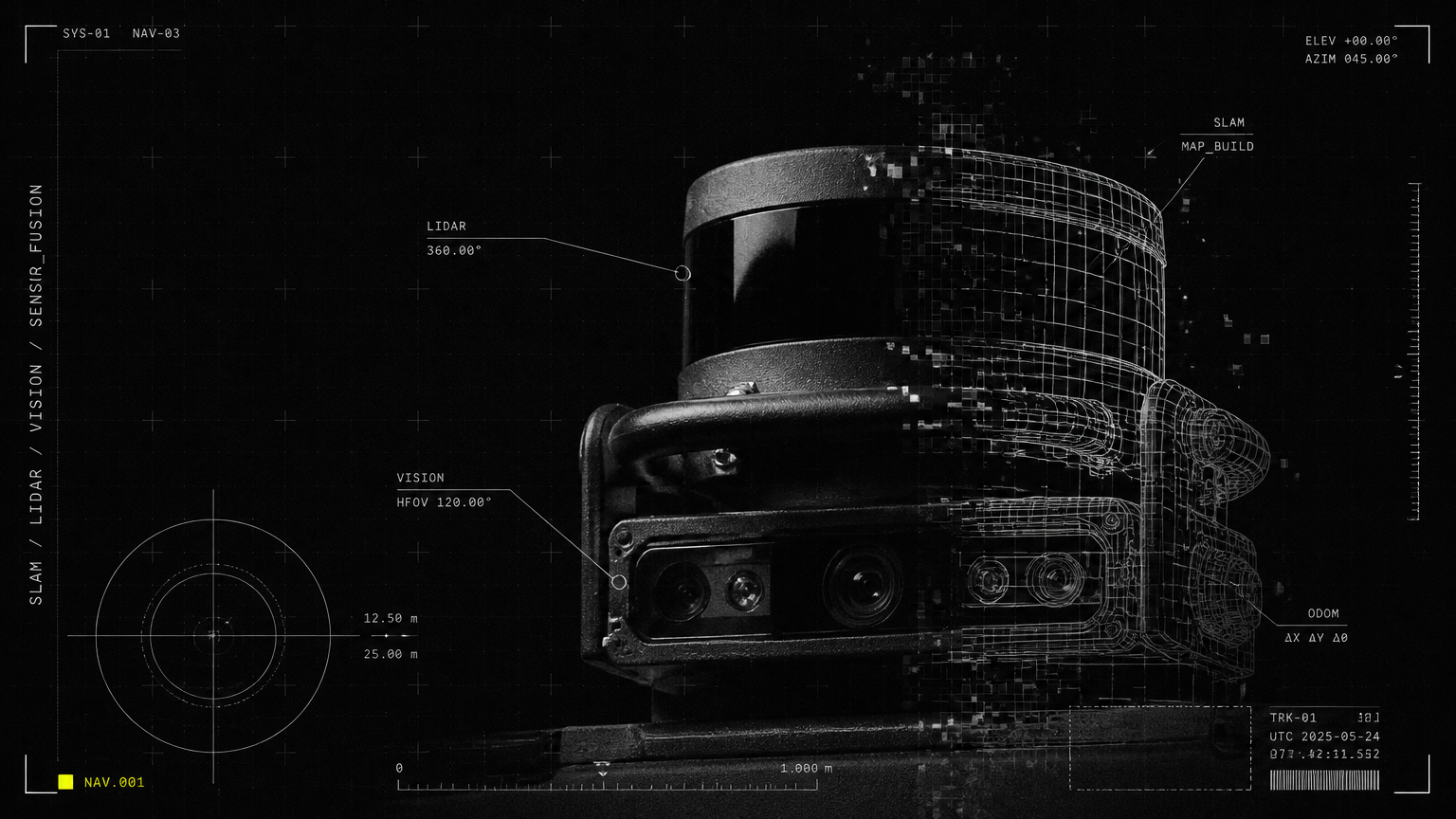
- Proximity and presence sensing: 2D/3D vision, depth cameras, LiDAR, ultrasonic sensors, and capacitive/infrared proximity switches detect people and obstacles.
- Power and energy limiting: Reduced motor torque, soft padding, and compliant transmission elements reduce impact energy.
- Safety-rated control architecture: Redundant safety controllers, SIL/PLe-rated components, and emergency protocols meet functional safety standards.
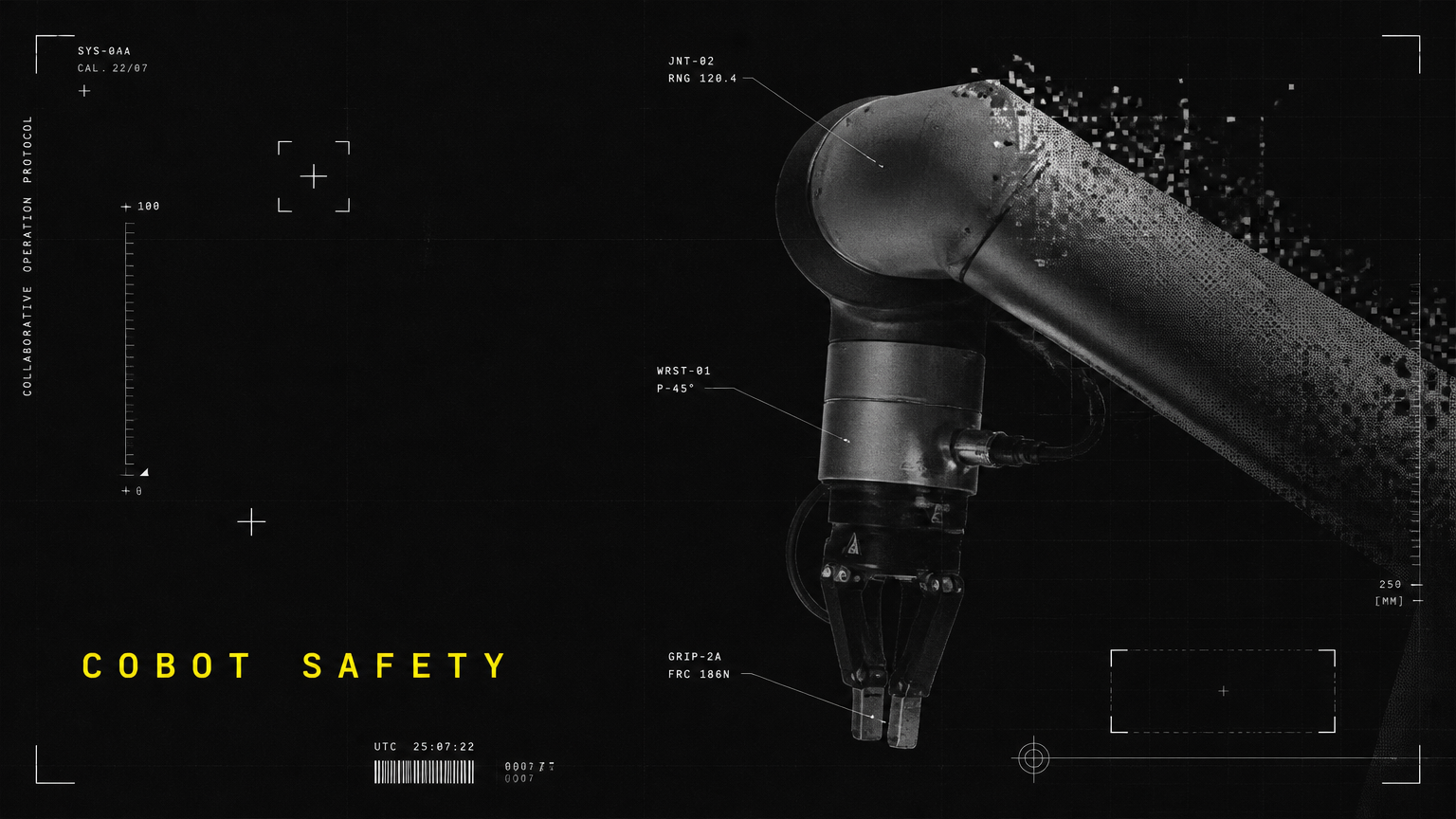
- Collaborative end-effector design: Rounded, low-mass grippers and breakaway couplings minimize pinch and crush risks.
- Software-layer safeguards: Motion planners enforce limits, collision detection algorithms trigger safe stops, and supervised learning modules are restricted in safety-critical behaviors.
Harmonizing these mechanisms with a rigorous risk assessment for cobots ensures that safety isn’t an afterthought but the operational baseline.
Standards and risk assessment
Cobot deployments must follow international and national safety standards; the most relevant are:
- ISO 10218 (Robots and robotic devices — safety requirements for industrial robots)
- ISO/TS 15066 (Safety requirements for industrial collaborative robot systems)
- IEC 61508 / ISO 13849 (Functional safety for control systems — PL / SIL concepts)
Risk assessment for cobots includes task analysis, exposure frequency, severity estimation, and identification of safety functions and protective measures. The assessment drives physical guarding, sensor placement, control reaction times, and operator procedures.
Cobot vs traditional industrial robot safety
| Criterion | Collaborative Robot (Cobot) | Traditional Industrial Robot |
|---|---|---|
| Typical workspace | Shared with people, no fixed barrier required | Segregated by fences/cages or light curtains |
| Motion characteristics | Force-limited, lower impact energy, human-aware | High speed/power, optimized for throughput |
| Safety focus | Interaction mitigation, presence detection, ergonomic support | Perimeter safeguarding, interlocks, guarded access |
| Typical standards emphasized | ISO/TS 15066, ISO 10218 collaborative sections | ISO 10218, machine guarding standards |
| Typical use cases | Assembly assistance, lab automation, service support | High-speed welding, heavy handling, palletizing |
| Reaction to human intrusion | Speed reduction, safe stop, compliant contact | Immediate shutdown, restart procedures, lockouts |
Cobot safety in manufacturing, healthcare, retail and beyond
Cobot safety requirements vary by industry because workflows, exposure, and regulatory regimes differ. Below is a concise comparison of common verticals where Allbotix deploys collaborative systems.
| Topic | Manufacturing & Production | Healthcare (Hospitals, Clinics) | Retail & Corporate Campuses | Hospitality (Hotels, F&B) | Logistics & Warehousing | Airports & Transit Hubs |
|---|---|---|---|---|---|---|
| Typical hazards | Heavy payloads, high-cycle motion, tooling risks | Infection transmission, sensitive environments, patient vulnerability | Dense foot traffic, customer interactions, variable visitor behavior | Guest contact, spill hazards, peak-volume interactions | Mixed human/robot traffic, pallet loads, dynamic routing | Very high people density, mixed cargo/passenger zones |
| Primary safety focus | Guarding collaborative zones, safe tooling, lockout procedures | Surface/material hygiene, disinfectable surfaces, restricted task sets | Human traffic management, intuitive signaling, soft interfaces | Guest-facing interaction design, clear prompts and failsafes | Speed/separation, combined AMR + cobot coordination | Robust presence detection, redundancy, transient crowds |
| Example controls | Power limiting, safety-rated stops, tool enclosures | Non-porous materials, antimicrobial coatings, LOTO for maintenance | Behavioral cues (lights/tones), proximity slowdowns | Clear signage, contactless interactions, training for staff | Integrated fleet management, fail-safe choreography | Multi-sensor fusion, high-assurance control, queuing management |
| Deployment note | May require hybrid safeguarding (fences + collaborative modes) | Limit tasks to non-clinical or strictly validated procedures | High emphasis on UX and minimal friction for customers | Staff training and guest communications critical | Strong value from predictive maintenance + uptime metrics | Security & regulatory alignment, continuous monitoring |
Across sectors, safeguarding collaborative robots combines physical engineering with human-centered workflow design and operational governance.
Deployment & operations best practices for cobot safety
Successful cobot safety programs pair capable machines with disciplined operations. Follow these steps and practices:
- Site risk assessment and task analysis
- Map workflows, define interaction points, analyze task frequency and severity.
- Use ISO/TS 15066 guidelines to set force/pressure thresholds and safe distances.
- Choose hardware with certified safety features
- Prefer robots with safety-rated control systems, certified sensors, and force-limiting mechanisms.
- For multi-robot fleets or mixed environments, validate interoperability (safety-rated communication).
- Design the workspace and human workflows
- Create clear approach paths, visual cues, and physical delineations where needed.
- Optimize layout to minimize crossing trajectories and bottlenecks.
- Implement layered sensing and control
- Combine short-range contact detection (force/torque) with longer-range presence sensing (LiDAR, vision).
- Enforce speed and separation strategies, with graded responses (slowdown → stop).
- Establish SOPs, emergency procedures and maintenance regimes
- Standardize start-up checks, maintenance lockout/tagout (LOTO), and emergency-stop drills.
- Keep detailed logs of safety incidents, near-misses, and corrective actions.
- Train operators, managers and maintenance staff
- Train on safe interaction, override rationale, recovery and incident reporting.
- Include contractor and vendor staff in training and access controls.
- Validate and certify before production use
- Run validation tests: force measurement, intrusion tests, stop times, and sensor performance in operational lighting and noise.
- Document compliance with applicable standards and maintain records for audits.
- Monitor operations and use predictive maintenance
- Integrate robots with fleet-management and predictive-maintenance software to track uptime, component deterioration, and safety events.
- Analyze telemetry for trends: near-miss frequency, slowdown triggers, MTTR, and unplanned stops.
- Continuous improvement and re-risk-assessment
- Reassess after process changes, new tooling, or layout modifications.
- Use incident data and operator feedback to tighten controls and SOPs.
Allbotix deployments pair precision-engineered machines with proprietary AI fleet-management and predictive-maintenance software, enabling real-time monitoring, automated alerts, and data-driven optimization. With 525+ robots developed, 180+ clients, and a 99.8% uptime track record, Allbotix emphasizes rigorous validation and ongoing operational excellence supported by 24/7 Premium Support.
Validation testing checklist (example)
- Safety-rated stop and e-stop timing verification
- Collision/force response measurement against thresholds
- Sensor performance tests under operational lighting/noise
- Human intrusion scenarios and recovery procedures
- Interlock and supervisory control verification
- Documentation of risk assessment and control placement
Measuring success: metrics for cobot safety and uptime
Track both safety and operational KPIs:
- Safety KPIs: number of incidents, near-miss rate, time-to-stop, compliance audit scores, and percentage of tasks in collaborative mode.
- Operational KPIs: MTTR (mean time to repair), MTBF (mean time between failures), uptime (Allbotix customers see 99.8% uptime on average), cycle-time improvements and overall equipment effectiveness (OEE).
- Business KPIs: labor-cost savings, throughput increases (15–30% typical in mixed workflows), defect or scrap reduction, and ROI timelines (many modern deployments see payback in under 18 months).
Integrated fleet-management software amplifies safety and uptime by correlating safety events with maintenance data to preempt failures and optimize intervention windows.
Safeguarding collaborative robots: lifecycle governance
Safeguarding collaborative robots is an ongoing lifecycle responsibility:
- Design for safety: ensure safety is embedded from mechanical design through control firmware.
- Commissioning and certification: document tests and approvals.
- Operations: enforce SOPs, maintain training records, and log changes.
- Maintenance: scheduled inspections, software updates, and parts replacement tracking.
- Decommissioning: safe removal and documentation for equipment retirement.
Allbotix’s in-house engineering and full-IP approach (design, firmware, source code ownership) makes lifecycle governance and rapid, validated updates practical for enterprise customers. Being Made-in-India and backed by Nanta Tech Limited enables scale and enterprise-grade accountability.
When to call in experts
Bring in robotics safety specialists when:
- You’re integrating cobots with heavy tooling or high payloads.
- Multiple robot types (AMRs, cobots, humanoids) share a space.
- Regulatory compliance is complex (healthcare, airports, critical infrastructure).
Allbotix’s multi-vertical experience — across reception, cleaning, serving, AMRs, humanoids and cobots — means deployments are engineered to client precision, ambition and scale rather than assembled from off-the-shelf parts.
Quick decision guide: Is a cobot right for your use case?
| Scenario | Recommended approach |
|---|---|
| High-density, public-facing environment (campus, mall) | Cobot with multi-sensor presence detection, UX-focused interfaces, and rigid SOPs |
| Healthcare non-clinical tasks | Cobots limited to validated, non-invasive tasks with disinfectable surfaces and strict cleaning protocols |
| Manufacturing collaborative station | Hybrid design: collaborative mode for light tasks; fenced operation for heavy tooling |
| Logistics picking & packing | Integrated cobot + AMR solution with fleet-management and predictive maintenance |
Conclusion & next steps
Cobot safety is a system design challenge that combines force and motion limits, multi-sensor perception, safety-rated controls, workplace design, thorough risk assessments, and continuous operational governance. When done right, collaborative robot safety unlocks productivity gains while protecting people and assets.
Allbotix brings limitless innovation and precision engineering to cobot safety — developing 525+ robots, serving 180+ clients, and delivering 99.8% uptime backed by proprietary AI fleet-management and predictive-maintenance software. Our in-house engineering, Made-in-India manufacturing and 24/7 Premium Support let organisations across corporate campuses, healthcare, retail, hospitality, manufacturing and logistics deploy safe, validated collaborative solutions at scale.
Ready to assess your site for collaborative robot safety or schedule a demo of Allbotix’s fleet-management capabilities? Contact Allbotix to discuss a tailored safety and deployment plan that meets your industry requirements and performance goals.