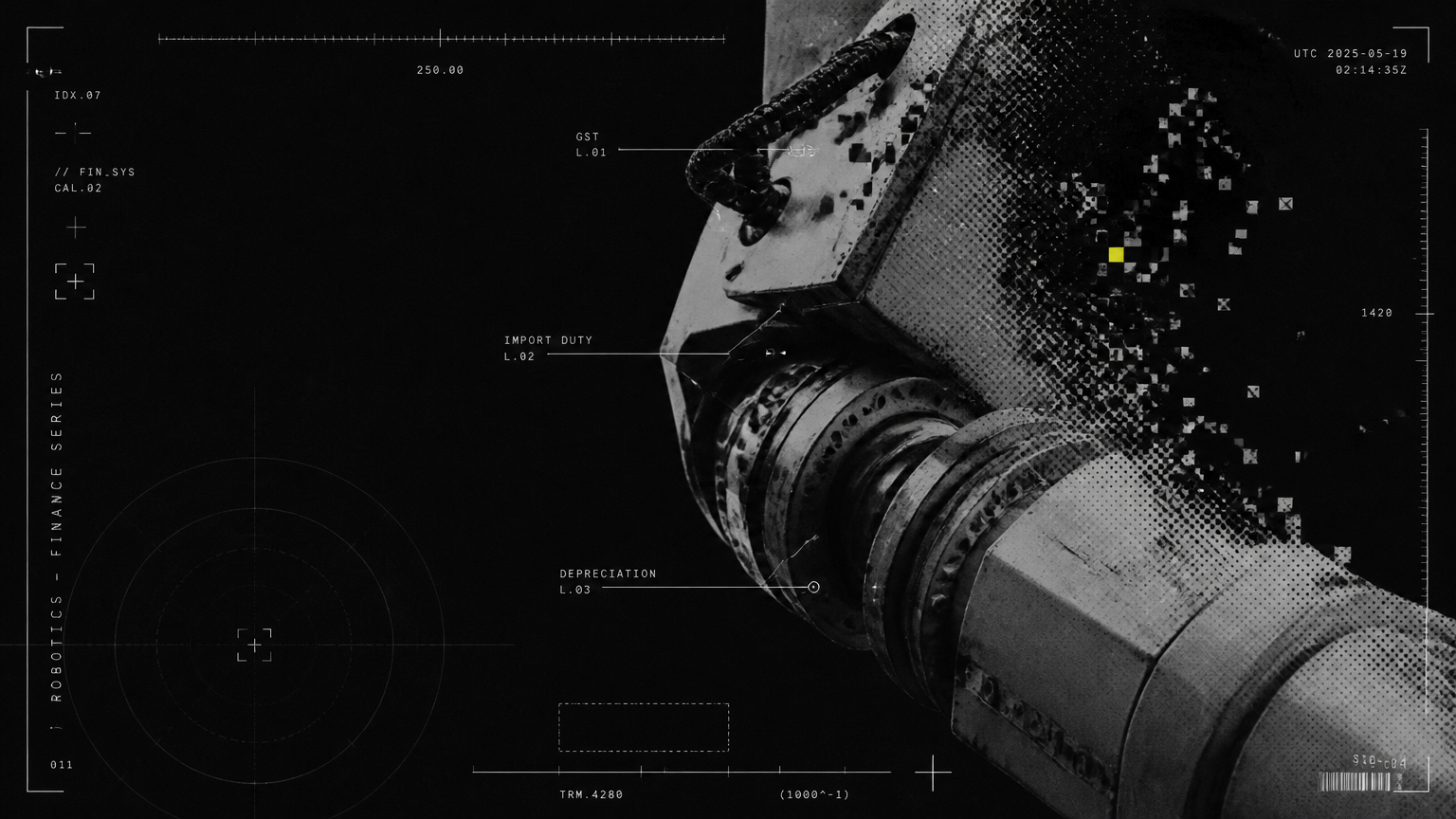
Quick answer: GST applies to the supply and import of robots in India and input tax credit is typically available for business use subject to GST law and invoice/documentation compliance. Import duty depends on customs classification (HS code) and valuation at import, while robots are normally capitalised and depreciated under income-tax rules — the combined GST, customs and depreciation profile materially affects cashflow and ROI, so confirm HS codes, applicable duties and depreciation treatment with your tax/customs advisor.
Introduction (first 100 words) GST on robots is an operational reality for procurement, deployment and lifecycle accounting. For finance, tax and procurement leaders evaluating robot purchases, imports, leases or “robots-as-a-service,” three levers matter most: (1) GST and input tax credit mechanics, (2) customs classification and import duty exposure (HS code robots India), and (3) depreciation and capitalisation under income-tax rules. This guide gives practical, compliance-minded steps to optimise cashflow and ROI for multi-vertical fleets (receptionists, AMRs, cobots, humanoids, cleaning/serving robots) and highlights typical traps to avoid.
H2: GST on robots — how GST, ITC and supply type affect your P&L GST mechanics for robots depend on whether the supply is domestic, imported, leased or a service (maintenance/support). Input tax credit robots teams need to track closely because GST timing and ITC availability materially change working capital and effective cost.
Key rules and practical points
- Taxable event: Supply of robots (sale), supply of services (rental/lease, installation, maintenance), and import of robots (IGST at customs) are all taxable under GST.
- Input tax credit (ITC): ITC is generally available when the robot is used for business purposes, you hold a valid tax invoice (domestic) or Bill of Entry (imports), the supplier has paid GST to the government, and returns are filed as required. Keep documentary proof and reconciliation.
- Capital goods vs inputs: Robots are normally capital goods. ITC on capital goods can usually be claimed subject to normal conditions. If the robot is used for exempt supplies or non-business use, apportionment or reversal rules apply.
- Leasing and rentals: GST applies on lease rentals. For operational leases, the lessee can claim ITC on GST charged on rentals if the lessee is otherwise eligible; for finance leases, accounting/tax treatment may differ.
- Maintenance & spare parts: GST on spare parts and service contracts is generally creditable if used in business; classification can affect GST rate and customs duty for imported spares.
H3: Documentation you must hold to claim ITC reliably
- For domestic purchase: valid GST tax invoice in your company’s name, proof of receipt of goods/services, supplier returns filed (GSTR-1), and payment evidence where applicable.
- For imports: Bill of Entry, commercial invoice, Bill of Lading / AWB, insurance documents, customs duty and IGST payment challans. IGST paid on import is typically available as ITC.
- For leases and service contracts: a proper tax invoice from the lessor/service provider showing GST, and a signed contract specifying service scope and billing cycles.
- Retain commissioning certificates, installation reports and acceptance sign-offs for capitalisation and depreciation support.
H2: GST on robots at import — HS codes, valuation and documentation (GST on robots) Import compliance changes the cashflow profile: basic customs duty + IGST payable at port, with IGST recoverable as ITC (subject to compliance). The most common friction points are HS code classification, customs valuation and insufficient documentation.
HS code robots India and customs valuation — practical guidance
- HS/HSN classification is fact-specific. Robots may be classifiable as “automatic data processing machines,” “industrial robots,” “machines for specialized handling,” or “parts thereof,” depending on function, autonomy, and design. Misclassification can lead to unexpected duties and penalties.
- Customs valuation starts with transaction value (invoice price). Additions may include assists (free tooling, software provided by buyer), royalties, commissions, and certain taxes/charges if required by valuation rules.
- IGST at import: IGST is levied at import and payable along with customs duty. This IGST is usually claimable as ITC in GST returns, improving cashflow over time but not eliminating an initial outflow unless IGST deferment schemes or customs duty deferment are used.
Practical steps to reduce surprises
- Obtain an advance ruling from the Customs/GST authority for high-value or ambiguous classifications.
- Work with a customs broker to validate HS code and compute landed cost scenarios (basic duty, IGST, social welfare/cesses).
- Check for preferential tariff treatment (FTAs / origin certificates) where applicable to lower basic customs duty.
- Plan for working capital: import IGST is payable at clearance; decide whether to factor IGST-funded ITC into ROI or to use IGST deferment/loan options.
H2: Import duty on robots — common duties, exemptions and schemes Import duty on robots varies by classification; beyond basic customs duty, anti-dumping, safeguard duties or additional cess can apply for specific categories or components.
- Typical layers: Basic Customs Duty (BCD) + Social Welfare Surcharge (if applicable) + IGST on import + any anti-dumping/safeguard duties.
- Concessional schemes: EPCG, Advance Authorization, and duty drawback (subject to scheme rules) may reduce effective duty if you are using robots in manufacturing/exporting units. Check RoDTEP/other current export incentives for inputs used in exports.
- Spare parts: Some spare parts attract lower customs duty or different HSN; for critical spare parts consider importing separately to take advantage of lower duty lines if legally permissible.
H2: Depreciation on robots — capitalisation, repair vs replacement and tax planning (depreciation on robots) Robots are typically capital assets — they are capitalised and depreciated. Depreciation on robots under Income Tax rules reduces taxable income and thus improves ROI over the asset life.
Capitalisation and useful life
- Accounting policy: Define a capitalization threshold and consistency rules (componentisation vs single asset). For high-value robots with replaceable major sub-assemblies, component accounting may be warranted.
- Useful life and depreciation method: For income-tax purposes, robots are generally treated as plant and machinery and depreciated under the Income-tax Act. Exact rates and methods (WDV vs straight-line options under specific circumstances) should be confirmed with your tax advisor as they evolve.
- Repair vs capital improvement: Routine servicing and part replacements are typically revenue expenses; works that extend useful life or replace a major component should be capitalised and depreciated. Maintain repair logs, invoices, and engineering assessments to support the treatment.
H3: Documentation checklist to support depreciation and tax claims
- Purchase invoice and Bill of Entry (for imports)
- Proof of payment and commissioning certificate
- Installation and testing reports
- Maintenance/repair invoices, parts replacement records
- Board resolution (where applicable) for capitalization policy and thresholds
H2: CapEx vs OpEx — purchase, lease and “robots-as-a-service” trade-offs When deciding between purchase and lease (or managed services), finance teams must compare tax, GST, depreciation and cashflow implications.
| Criterion | Purchase (CapEx) | Lease / Robot-as-a-Service (OpEx) |
|---|---|---|
| Upfront cash outflow | High (purchase cost + import duties + IGST) | Low to moderate (security deposit + periodic rentals) |
| GST treatment | GST on supply (ITC generally available if used in business) | GST on rentals/services (lessee can claim ITC if eligible) |
| Depreciation on robots | Capitalised and depreciated (tax shield available) | Lessee cannot claim depreciation; lessor may claim depreciation |
| Maintenance responsibility | Buyer (unless under AMC) | Often included in contract (predictable Opex) |
| Balance sheet impact | Assets + debt if financed | Expense; possible off-balance treatment depending on lease type |
| Working capital / ROI | Large initial cash outflow; IGST recoverable as ITC over returns | Predictable cashflow; avoids customs/IGST upfront if provider imports and claims ITC |
| Suitable when | Long-term use, control, tax depreciation important | Fast technology cycles, desire for Opex predictability, bundled services |
H2: Parts, spares and classification — are they capital or revenue? Decision points
- Small routine spares -> revenue expense.
- Major assemblies or parts that extend life or materially improve performance -> capitalise.
- For imported parts, HS code may differ; customs duty and IGST apply differently to parts vs whole robots. Maintain supplier declarations and engineering change records.
H2: Compliance traps and audit risks — what finance teams commonly miss
- Incorrect HS classification leading to retrospective duty fines.
- Missing Bill of Entry or mismatched invoice leading to denial of import IGST ITC.
- Treating major upgrades as repairs (revenue) instead of capitalisation without supporting engineering/financial analysis.
- Failure to reverse ITC for exempt/non-business use or sale of capital goods.
- Not validating supplier GST returns before claiming ITC (reliance on debit/credit reconciliation).
H2: Practical steps to optimise cashflow and ROI
- Pre-procurement stage
- Run a landed-cost model: base price + BCD + IGST (net of ITC timing) + logistics + installation + spare provisioning.
- Seek an Advance Ruling or customs classification confirmation for high-value models.
- Evaluate lease vs purchase using the CapEx vs OpEx table above.
- Procurement & import
- Ensure proforma invoices detail price breakup (goods, software, services) and identify any assists.
- Use a trusted customs broker; obtain Bill of Entry and reconcile with invoices before claiming ITC.
- Where eligible, use preferential origin documentation to claim lower duties.
- Accounting & tax year planning
- Confirm capitalization policy, asset life, and componentisation approach; keep commissioning/acceptance certificates.
- Schedule upgrades and warranties around fiscal years to optimise tax and cashflow.
- Track ITC reversals and apportionment if the robot performs exempt or mixed supplies.
- Maintenance & lifecycle
- Use predictive maintenance and Allbotix’s fleet-management telemetry to minimise downtime and support repair vs capital decisions.
- Retain engineering records for replacements and overhauls to defend depreciation choices in audit.
H2: Allbotix perspective — engineering, fleet software and compliance support Allbotix engineers and deploys a broad, multi-vertical fleet (AI receptionists, cleaning, serving, AMRs, cobots, humanoids) with in-house hardware and proprietary Fleet-management AI — built for precision engineering and scalable uptime. Practical advantages for finance teams:
- Single-vendor lifecycle visibility: Allbotix’s fleet-management software and 99.8% uptime telemetry simplify maintenance records (supporting right accounting treatment for repairs vs capital improvements).
- Made-in-India engineering and IP ownership can simplify customs classification conversations vs multi-origin assemblies.
- Deployment experience across 180+ clients and 525+ robots gives empirical data for ROI modelling and depreciation scenarios.
- 24/7 Premium Support and predictive maintenance reduce unexpected capital replacements and preserve depreciation schedules.
Conclusion + CTA GST on robots, import duty on robots and depreciation on robots are interdependent levers that shape cashflow, ROI and compliance risk. Finance teams should treat HS code confirmation, IGST/ITC documentation, and capitalization policy as procurement controls — not post-facto accounting chores. For procurement, deployment and lifecycle management that reduces downtime and improves audit defensibility, Allbotix combines in-house engineered robots, fleet-management telemetry and premium support to simplify the tax, customs and accounting life-cycle. Contact Allbotix to discuss landed-cost modelling, deployment options (purchase vs lease), and lifecycle-service contracts tailored to your sector and tax planning needs.
Explore this guide in depth
Each of these guides answers one question from this overview in full: