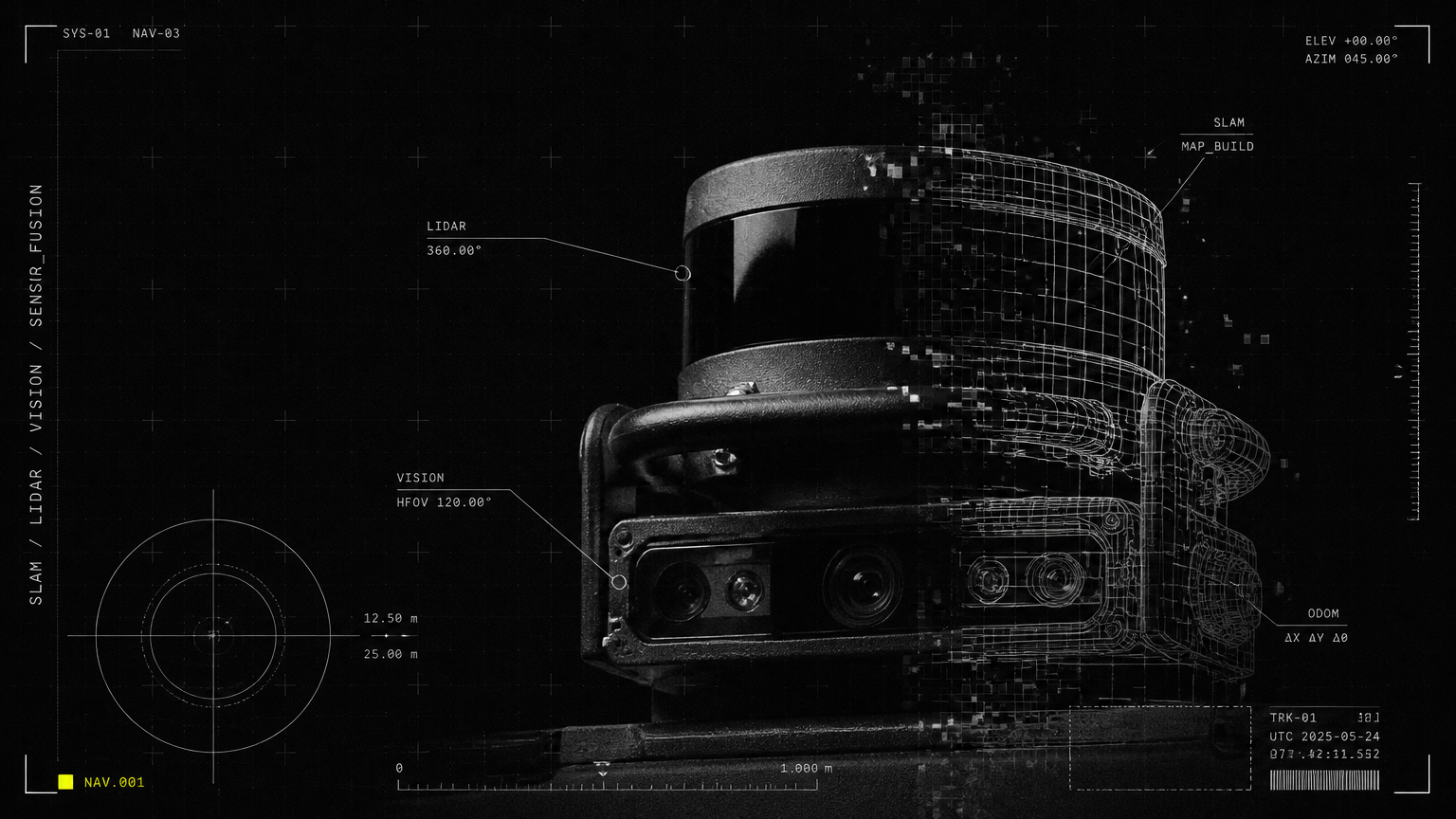

Integrating robots with WMS, ERP, PMS and POS systems is done by mapping business workflows to robot tasks, and connecting via APIs, middleware/adapters, or a fleet-management layer that normalizes messages, handles telemetry and enforces SLAs. Done correctly this delivers real-time inventory and order updates, automated service workflows and predictive maintenance — reducing labor costs and unplanned downtime while preserving existing enterprise data flows. This guide focuses on practical steps for robot integration with ERP and related systems, covering architectures, APIs/middleware, data mappings, security, change management, benefits and pitfalls.
robot integration with ERP: architectures and integration patterns
Robots typically integrate into enterprise stacks using one of four architectural patterns. Which you choose depends on scale, latency, and the maturity of your WMS/ERP/PMS/POS.
| Criterion | API‑first adapters | Middleware / Message Bus | Fleet‑management layer (Allbotix style) | Edge gateway / ROS2 bridge |
|---|---|---|---|---|
| Typical use | Small fleets, new cloud systems | Enterprise scale, heterogeneous apps | Large multi‑vendor fleets, SLA enforcement | Low‑latency robot control, local autonomy |
| Latency | Medium | Variable (configurable) | Low for control, high for aggregation | Very low for teleop and safety |
| Protocols | REST, GraphQL, gRPC | MQTT, AMQP, Kafka | Normalizes REST/MQTT/gRPC + telemetry | ROS2 DDS, TCP, UDP |
| Complexity | Low | Medium–High | High (but centralizes complexity) | High (robot-side engineering) |
| Best for | Quick pilots, modern SaaS ERP | Complex integrations, durable messaging | Multi-robot, predictive maintenance, enterprise SLAs | Real‑time navigation, sensor fusion |
API-first adapters: direct REST/gRPC integrations between robot apps and enterprise systems. Fast to implement for pilots, but brittle at scale.
Middleware/message queues: use MQTT/AMQP/Kafka to decouple producers and consumers, ensuring resilience, replay and routing. Essential for distributed enterprise architectures.
Fleet-management layer: a centralized layer that abstracts heterogeneous robots and normalizes messages for WMS/ERP/PMS/POS. Allbotix’s proprietary AI fleet-management software exemplifies this pattern, providing telematics, SLA enforcement, OTA updates and predictive maintenance.
ROS2/edge gateways: expose robot capabilities locally (navigation, manipulation) while translating to enterprise protocols. Use when robots require local autonomy or specialized sensors.
robot integration with ERP: how to connect robots to ERP systems (step‑by‑step)
- Map business workflows
- Identify business events: order picked/fulfilled, room cleaned, visitor registered, POS promotion redeemed.
- Break workflows into robot tasks (navigate → pick/place → report status → request assistance).
- Define data contract
- For each event, define payloads (order_id, location_id, SKU, status, ETA, battery, error codes).
- Use canonical formats (JSON Schema, Protobuf) and version them.
- Choose integration topology
- Pilot/low scale: REST/webhook adaptor to ERP.
- Enterprise/scale: Middleware (MQTT/Kafka) + queueing + retry.
- Multi-robot/enterprise SLAs: fleet-management layer with telemetry and command queue.
- Implement adapters and mapping
- Build or reuse adapters that convert ERP business objects (sales order, work order, room assignment) into robot commands and events.
- Create correlation IDs so ERP transactions trace back to robot executions.
- Authentication and secure channels
- Use OAuth2/JWT, mTLS or client certificates for API calls.
- For edge devices, consider certificate pinning and hardware security modules (HSM).
- Test & validate
- Start with shadow mode (robots report-only), then dual-write (robot + human), then full cutover.
- Use structured test suites: unit, integration, chaos/failure tests.
- Rollout & monitor
- Monitor KPIs (uptime, task success rate, order-to-fulfill time, mean time between failures).
- Feed telemetry into ERP dashboards and maintenance workflows.
Data mappings: WMS / ERP / PMS / POS → robot telematics, commands & events
- WMS → AMR: WMS work_order {work_id, sku, qty, from_loc, to_loc, priority} → Robot command {task_id, pick_loc, drop_loc, sku, qty, TTL}
- ERP → Cobot/Assembly Robot: ERP production_order {order_no, bom, schedule} → Robot sequence {step_id, tool, speed, tolerances}
- PMS → Service Robot: PMS room_service {room, guest_id, request_type, ETA} → Robot task {task_id, destination, payload, guest_pref}
- POS → Retail Robot: POS promotion_redeemed {txn_id, sku, discount} → Robot notification {announce, assist_checkout, print_receipt}
Include telemetry fields back to enterprise:
- status: queued/in_progress/completed/failed
- location: lat/long / zone id / map coordinate
- battery: % / state
- health: temp, motor_current, error_codes
- timestamps: assigned, started, completed
Vertical use cases and concrete data flows
Retail: robots <> POS for promotions and checkout
- Flow: POS sells item → POS emits transaction webhook → middleware routes to fleet manager → in-store robot offers promotion or assists with bagging → robot updates POS/CRM with promotion interaction.
- Benefits: Higher conversion for promos, reduced queue time, improved customer experience.
Logistics/Warehousing: AMRs <> WMS for inventory movement
- Flow: WMS creates pick-up task → message bus publishes task → fleet manager schedules AMR (considers battery/SLA/location) → AMR reports progress & arrival → WMS confirms inventory transfer.
- Benefits: Real-time inventory accuracy, increased throughput, reduced travel time.
Hospitality & Healthcare: reception/servicing robots <> PMS/EMR
- Flow: PMS guest check-in → API forwards room-prep tasks to cleaning robots; EMR non-clinical orders (supplies) → service robot delivers.
- Benefits: Faster room turnover, infection control, reduced non-clinical staff load.
Corporate campuses & education: receptionist & delivery robots <> ERP/Facility systems
- Flow: Visitor registers via ERP/IDS → robot greets & escorts → facilities receive telemetry for cleaning/resupply.
- Benefits: Reduced front-desk costs, consistent visitor experience, scheduled maintenance.
Operational, security and governance considerations
- Staging and pilot phases
- Start small: one site, limited hours.
- Use shadow deployments to validate data mapping.
- Key pilots: resilience (power/network loss), task collision, integration latency.
- Networking & segmentation
- Place robots on segmented VLANs with ACLs.
- Use edge gateways to minimize east-west exposure.
- Prefer private APN/VPN for wide-area deployments.
- Authentication & data privacy
- Use OAuth2 with short-lived tokens for cloud APIs.
- mTLS and certificate rotation for device-to-cloud.
- Encrypt data at rest and in transit; limit PII exposed by robots.
- SLA & uptime
- Define availability targets (Allbotix operates at 99.8% uptime across deployments).
- Use service-level events: preemptive reassignments if a robot fails.
- Predictive maintenance and telemetry
- Stream high-frequency telemetry to analytics (motor currents, battery cycles, eccentric vibration).
- Build ML models to predict failures and schedule maintenance.
- Integrate maintenance tickets back into ERP/CMMS.
- Compliance & privacy
- For cameras/sensors, implement privacy masks and retention policies.
- Log access for audits; integrate with SIEM.
Testing, rollout & change management
- Test phases
- Unit & Integration: adapters, message schemas.
- Simulation: virtual warehouse/retail map runs.
- Field pilot: single robot, monitored shifts.
- Canary & Gradual ramp: increase tasks and hours.
- KPIs to track
- Task success rate, average task duration, order fulfillment latency.
- Mean time between failures (MTBF), mean time to repair (MTTR).
- ROI metrics: labor hours saved, throughput uplift, downtime reduction.
- User training & SOPs
- Train operations, security and helpdesk teams on robot behaviors.
- Create incident response runbooks (robot offline, emergency stop).
Vendor & implementation considerations
When selecting robotics and integration partners, weigh engineering ownership, software maturity, and support model. Allbotix is differentiated by in-house engineering, full IP ownership, and a proprietary AI fleet-management platform; 525+ robots developed, 180+ clients, and 24/7 Premium Support backed by publicly listed Nanta Tech Limited.
| Criterion | Off‑the‑shelf integrator | In‑house engineering partner (e.g., Allbotix) |
|---|---|---|
| Hardware customization | Limited | High — machines engineered to client precision/scale |
| Software IP | Often 3rd‑party | In‑house fleet-management, telemetry & predictive maintenance |
| Support | Variable | 24/7 Premium Support; regionally manufactured (Made‑in‑India) |
| Turnkey integration | May require significant integration | Designed for end‑to‑end deployment across verticals |
| Scalability | Can be limited | Built for multi‑vertical scale; backed by Aimtron manufacturing |
Choose partners that provide:
- Proven integrations with WMS/ERP/PMS/POS stacks.
- Fleet-management features: OTA, telemetry, SLAs, scheduling.
- Security practices: cert management, hardened gateways.
- Clear TCO and ROI modeling (Allbotix customers report rapid payback and high uptime).
Common pitfalls and how to avoid them
- Ignoring data contracts: version and document schemas to avoid downstream breakage.
- Over‑centralizing control: allow robots local autonomy for safety-critical decisions.
- Under-testing in noisy networks: simulate Wi‑Fi interference and failover.
- Cutting security corners: use strong auth and segment device networks.
- Choosing hardware-only vendors: choose partners that own both hardware and software to avoid integration gaps.
Expected benefits and measurable outcomes
- Real-time inventory & order updates: fewer stock mismatches, faster fulfillment.
- Labor cost reduction and throughput uplift: typical 15–30% throughput gains.
- Reduced unplanned downtime via predictive maintenance: 30–50% reduction.
- Faster service and consistent experiences in hospitality, retail and campuses.
Partnering with Allbotix: practical next steps
Allbotix engineers and deploys multi‑vertical robot fleets paired with proprietary AI fleet‑management software, enabling integrations across WMS, ERP, PMS and POS with predictable SLAs and deep in‑house IP. To start:
- Schedule a discovery workshop to map workflows.
- Run a pilot (site + 1–3 robots) using shadow mode.
- Expand with a phased rollout and KPIs tied to ERP/WMS dashboards.
Contact Allbotix for a technical feasibility call, pilot program proposal and ROI assessment — leverage limitless innovation and precision engineering backed by 525+ robots deployed, 180+ happy clients and 99.8% uptime. Reach out to explore how to integrate your robots with ERP, WMS, PMS and POS stacks and move from pilot to production with predictable outcomes.
Explore this guide in depth
Each of these guides answers one question from this overview in full: