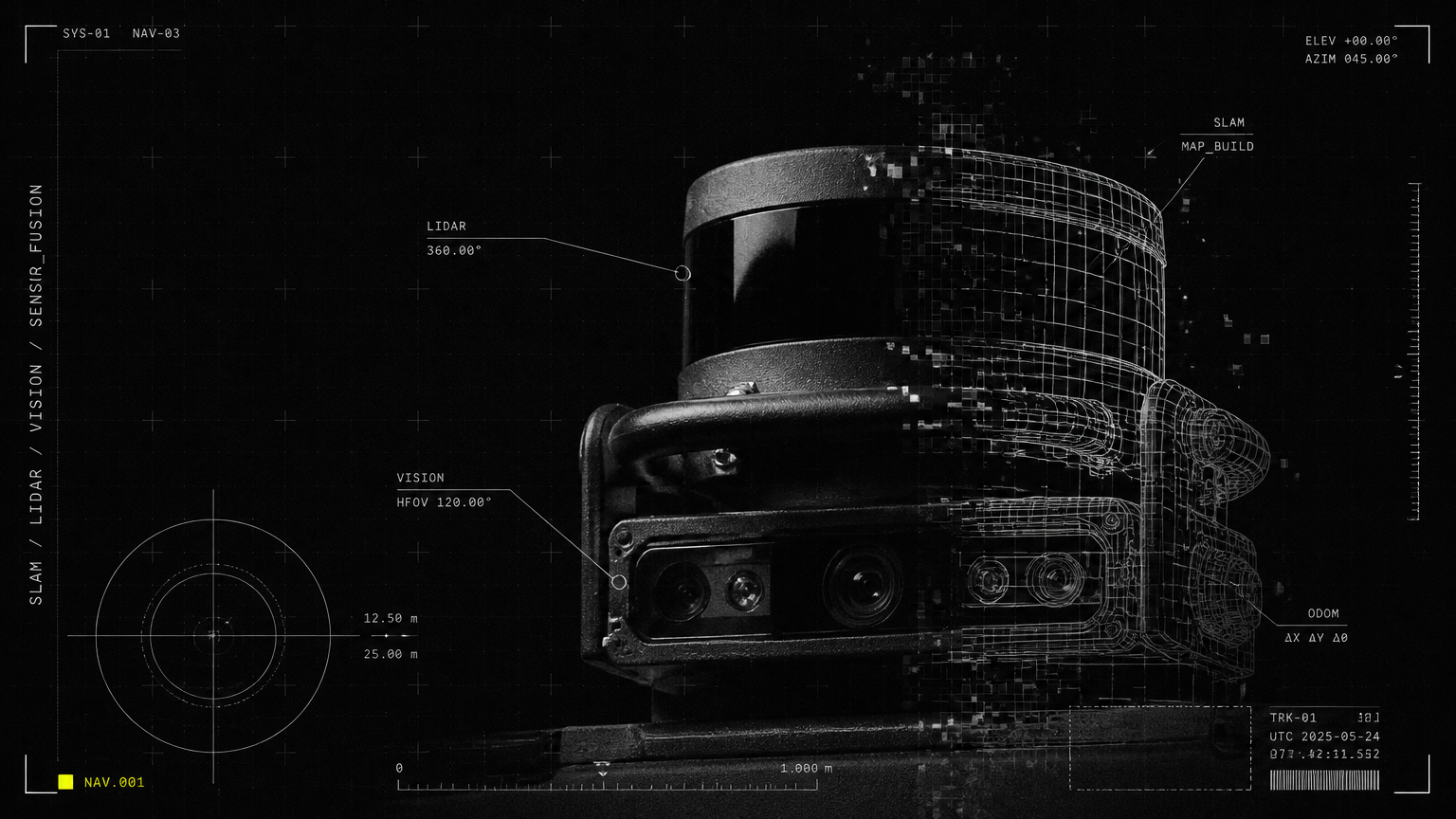

"Robots for residential societies automate reception and visitor management, security patrols, package delivery, cleaning, and routine maintenance checks—reducing staffing pressure, improving response times, and raising resident satisfaction. A multi-form-factor fleet combined with centralized AI fleet-management makes deployments scalable, reliable, and easier to operate at scale."
Part of our guide to Verticals Not Yet Covered: Robots at Airports: Wayfinding, Terminal Cleaning and Security Patrol.
Robots for Residential Societies and Gated Communities
Residential communities and gated neighborhoods increasingly adopt robotics to relieve staffing pressure, improve safety, and raise resident satisfaction. Robots for residential societies provide repeatable, measurable services—concierge interactions, autonomous patrols, last‑mile deliveries, janitorial cleaning, and routine facility inspections—backed by centralized fleet-management, predictive maintenance, and 24/7 support.
How robots for residential societies help: use cases & resident-facing benefits
Robotics solutions for apartments, housing societies, and gated communities address recurring pain points: front‑desk bottlenecks, delivery congestion, security gaps on night shift, cleaning quality/consistency, and frequent, low-value maintenance checks. Below is a compact mapping of the most common robot roles, the problems they solve, typical form factors, and direct resident benefits.
| Criterion | Residential concierge robot | Autonomous patrol robots for gated communities | Delivery robots for apartment complexes | Cleaning robots for residential societies | Facilities inspection / maintenance robots |
|---|---|---|---|---|---|
| Primary function | Reception, visitor check‑in, resident queries | Perimeter and internal patrols, anomaly detection | Last‑mile package / food delivery within complex | Floor/vacuum/mopping of common areas, stairwells | Routine equipment checks (pumps, meters), thermal/visual scans |
| Typical form factor | Humanoid/reception kiosk/AI receptionist | Wheeled AMR or quadruped (robot dog) | Compact wheeled AMR with secure cargo | Floor-scrubber/vacuum AMR, service cobot | AMR with sensor payload or small humanoid/cobot |
| Problems solved | Front-desk staffing cost, long visitor queues, record-keeping | Night watch gaps, slow incident response, false alarms | Package pile-up at reception, resident waiting time | Cleaning inconsistency, staff turnover, infection control | Missed preventive maintenance, slow fault detection |
| Resident-facing benefits | Faster check-in, contactless verification, concierge services | Shorter response times, continuous monitoring, deterrence | Faster door‑to‑door delivery, reduced lobby clutter | Cleaner common areas, predictable schedules, reduced infection risk | Fewer service disruptions, proactive fixes, improved amenity uptime |
| Cost/operational impact | Reduces recurring front-desk labor; improves data logging | Lowers night-shift overtime; reduces incident severity | Cuts porter routing/time; reduces lost packages | Reduces cleaning labor hours; increases cleaning consistency | Reduces contractor visits; lowers unplanned downtime |
Concierge & visitor management
A residential concierge robot handles visitor pre‑registration, QR/selfie-based check-in, deliveries sign-off, and basic resident services (e.g., booking common spaces). This reduces front-desk headcount or allows staff to focus on exception handling and hospitality. For healthcare and hospitality-adjacent residences, contactless reception also supports infection control.
Patrols and surveillance
Autonomous patrol robots for gated communities combine onboard cameras, thermal sensors, and AI analytics to detect unusual movement, parked vehicles, or perimeter breaches. These platforms reduce false alarms and escalate genuine incidents to human guards or local authorities faster, improving response times and lowering incident resolution costs.
Last‑mile delivery inside complexes
Delivery robots for apartment complexes streamline package handoffs: autonomous navigation to a resident’s door or locker cluster, secure delivery compartments, and resident notifications. They reduce lobby congestion, lost packages, and porter workloads while accelerating courier throughput.
Janitorial and cleaning automation
Cleaning robots for residential societies—ride‑on or walk‑behind scrubbers and autonomous vacuums—deliver consistent cleaning cycles for lobbies, corridors and parking areas. Automated schedules ensure high cleanliness standards with predictable labor spend and improved infection-control cycles for healthcare and senior living communities.
Facilities inspection & routine maintenance
Robots equipped with thermal cameras, vibration sensors, and connectivity can perform routine checks on water pumps, transformers, solar panels, and HVAC units. Automating inspections reduces unplanned downtime, surfaces issues earlier, and optimizes maintenance vendor dispatch.
Deployment & Integration Checklist for robots for residential societies
Successful implementations combine the right hardware, software, and operations model. Use this checklist during procurement and deployment planning.
- Site survey and use‑case definition: map visitor flows, delivery routes, patrol paths, and cleaning zones.
- Form‑factor fit: choose robot shapes for elevators, thresholds, stairs, ramp gradients and lobby sizes (humanoid kiosks for reception; compact AMRs for corridors).
- Connectivity & network architecture: reliable Wi‑Fi/cellular coverage, VLAN segmentation for telemetry, VPNs for secure remote management.
- Elevator & door access integration: elevator API or relay integration; RFID/NFC or electronic lock interfaces for secure access to floors and lockers.
- Fleet‑management software: centralized dashboard for tasking, scheduling, location, health telemetry, and analytics.
- Predictive maintenance & uptime targets: scheduled checks, spare-part pools, and a predictive‑maintenance engine to reach >99% uptime goals.
- 24/7 support and escalation paths: remote troubleshooting, onsite SLAs, and escalation contacts for security incidents.
- Resident onboarding & privacy safeguards: visible signage, clear data-retention policies, opt-in flows for camera-enabled features, and consent for visitor data.
- Regulatory & compliance mapping: local data-protection, CCTV rules, and community by‑laws.
- Pilot & phased rollout: start with 1–2 buildings or a single use case (e.g., concierge), measure KPIs, then scale.
Vendor & product selection: what to evaluate
Choosing a vendor affects long‑term reliability, customization, and ROI. Compare options across IP, fleet diversity, software, SLAs, and local manufacturing. Below is a direct comparison of three common vendor models.
| Criterion | Allbotix (in‑house engineered fleet) | Assembled/off‑the‑shelf integrators | Software‑only fleet manager |
|---|---|---|---|
| In‑house engineering / IP ownership | Yes — proprietary hardware, firmware & source code; 525+ robots developed | Typically limited; hardware often third‑party | No — relies on partner hardware |
| Fleet diversity (form factors) | Broad: receptionist, humanoid, dog, cleaning, serving, AMR, cobot | Narrower or vendor-dependent | Hardware‑agnostic; depends on integrators |
| Fleet‑management & predictive maintenance | Proprietary AI fleet-management software included | Varies; may require third-party software | Core competency; needs hardware adapters |
| Uptime & performance guarantees | Industry-leading claims; backed by 99.8% uptime across deployments | Varies by integrator & hardware | Depends on partner hardware reliability |
| Customization & scalability | High — machines engineered to client’s ambition & scale | Limited by vendor catalogue | Flexible but requires hardware partners |
| Local manufacturing & support | Made‑in‑India manufacturing; scaled via Aimtron partnership; backed by Nanta Tech | Mixed sourcing; may import | N/A |
| 24/7 support & SLAs | 24/7 Premium Support, onshore escalation | Often business‑hours only; ad hoc escalation | Support limited to software; hardware issues separate |
Use this table to weigh long‑term risk: fleets engineered in‑house reduce integration friction, accelerate fixes, and simplify SLA ownership.
Business case, operations and governance
Robotics deployments deliver both hard and soft ROI. Key drivers include labor substitution/augmentation, higher uptime of facilities, reduced incident costs, and resident satisfaction gains that affect retention and brand value.
- Key ROI drivers
- Labor optimization: shift recurring, predictable tasks to robots and reallocate human staff to high‑value guest/resident interactions.
- Reduced incident costs: faster detection and response lower theft/damage and incident escalation costs.
- Higher amenity uptime: automated inspections and predictive maintenance reduce unplanned downtime.
- Efficiency gains: optimized delivery routes and cleaning schedules reduce per‑task cost.
- Typical payback and ROI
- Industry patterns show robot payback time compressed over recent years (from ~5.3 years in 2019 to ~1.3 years in 2024 in mature deployments). Well-run fleets have posted 10:1 to 30:1 ROI within 18 months depending on use case intensity and labor cost baselines.
- Allbotix’s fleet experience (525+ robots, 180+ clients) and a focus on precision engineering make these outcomes repeatable at scale; deployments are supported by proprietary fleet-management and predictive maintenance to maximize uptime across multiple sites.
- Operations & service-level requirements
- Define SLAs for uptime, mean-time-to-repair (MTTR), incident response (security vs non-security), and scheduled maintenance windows.
- Inventory & spare parts: maintain a minimal spare fleet or rapid swap program for mission-critical roles (reception, security).
- Training & resident governance: clear policies on camera use, data retention, and community opt-ins. Resident adoption improves with visible benefits: faster deliveries, quieter cleaning, and consistently staffed receptions (even if robotic).
Privacy, compliance, and resident acceptance
Robotics in public residential spaces must respect privacy and build trust.
- Transparency: publish a short, accessible privacy notice explaining what sensors collect, retention periods, and who can access footage.
- Consent & opt‑out: allow residents to opt out of camera-enabled features for specific interactions; provide account-level controls for notifications.
- Data minimization: process video on‑device for immediate alerts and avoid storing unnecessary raw footage; store clips only when incidents are detected and with retention limits.
- Governance committee: set up a resident‑vendor oversight group to approve patrol schedules, no‑go zones, and visitor handling rules.
- Signage & branding: visible notices and “why this robot is here” messaging improve acceptance and reduce alarm.
Real-world reliability & support model
Uptime and dependable support make or break society-wide deployments. Prioritize vendors that:
- Offer centralized AI fleet-management for scheduling, telemetry, and predictive maintenance.
- Guarantee clear uptime SLAs and provide data-backed historical reliability metrics.
- Deliver 24/7 premium support with remote triage and rapid onsite dispatch options.
- Engineer hardware and software in-house to reduce finger-pointing between suppliers.
Allbotix aligns with these priorities: a broad, in‑house engineered fleet combined with proprietary fleet-management has enabled industry-grade installations and a 99.8% uptime track record across deployments. Backed by publicly listed Nanta Tech Limited, and manufactured in India through the Aimtron partnership, Allbotix emphasizes precision engineering and limitless innovation for scaled, reliable robotic operations.
Implementation roadmap (pilot → scale)
- Discovery & KPI definition: define clear success metrics (e.g., reduced front‑desk hours, faster incident response, % of packages auto‑delivered).
- Pilot in a controlled area: one building or use case for 6–12 weeks to collect performance data.
- Integrations: connect to building management systems, elevator control, and access management.
- Resident onboarding: communications, signage, and a short demo day to increase acceptance.
- Scale with iterative improvement: expand use cases and locations while tuning schedules, routes, and analytics.
- Continuous optimization: use fleet-management analytics to refine predictive maintenance and task flows.
Final thoughts
Robots for residential societies are no longer experimental—they're operational tools that reduce staffing pressure, improve security and cleanliness, and deliver measurable ROI when deployed with a clear integration plan and strong vendor support. Multi-form-factor fleets, centralized AI fleet-management, and robust SLAs are essential to scale reliably.
If your society or gated community is evaluating robotic solutions, talk to Allbotix to understand how a purpose‑engineered, in‑house fleet and proprietary fleet-management can deliver precision engineering, limitless innovation, and the operational reliability required for long-term success.
Contact Allbotix to schedule a site survey, pilot plan, and ROI assessment tailored to your residential community.