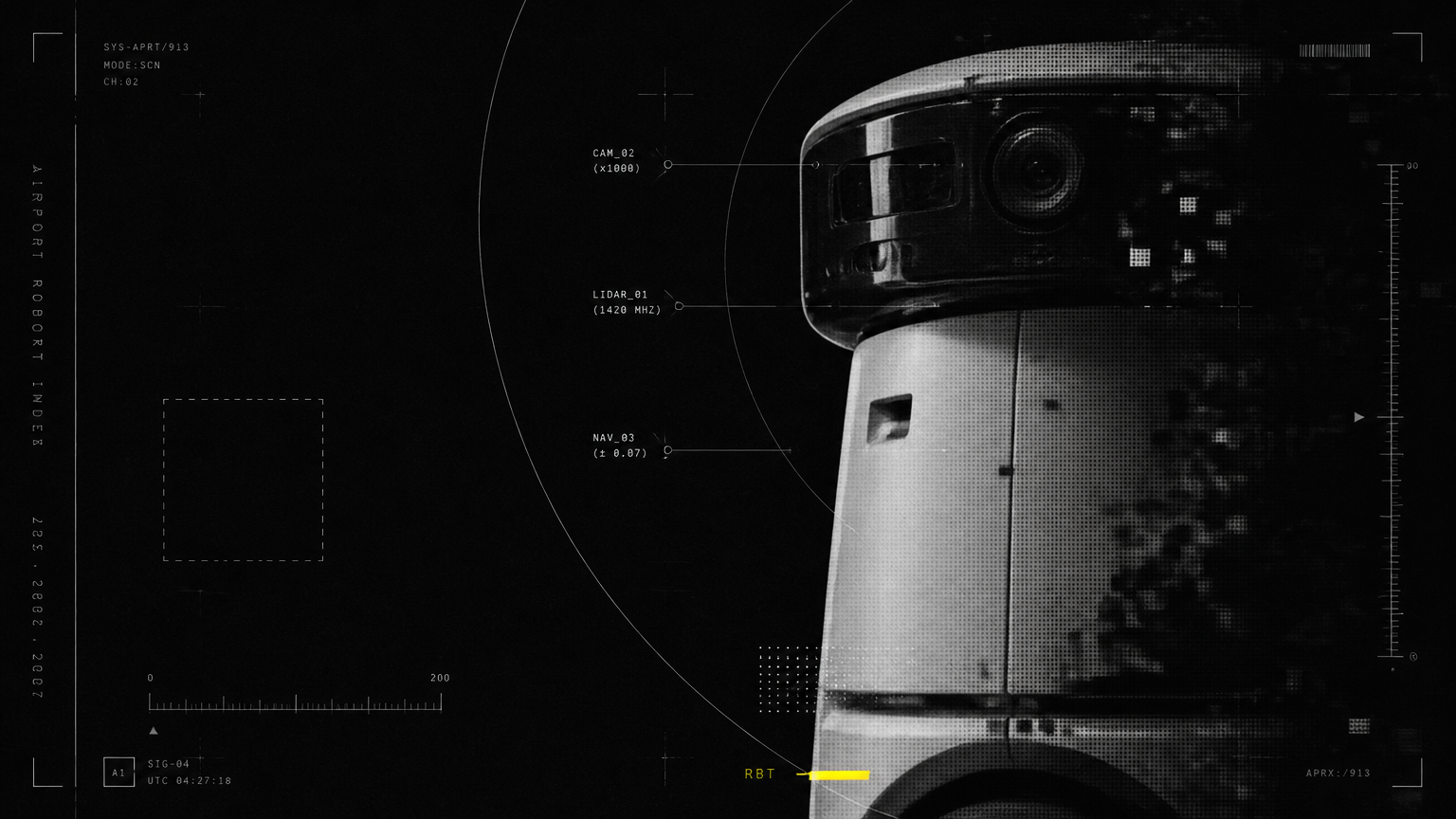
Airport robots streamline passenger wayfinding, deliver continuous terminal cleaning, and augment security patrols—reducing labor strain, improving hygiene and passenger flow, and increasing situational awareness. Allbotix’s in‑house engineered, multi‑form‑factor fleet paired with proprietary AI fleet‑management and predictive maintenance enables scalable, high‑uptime deployments across these three airport use cases.
Quick overview: What airport robots do and why they matter
Airport robots (from robotic wayfinding for terminals to autonomous cleaning robots airports and security patrol units) act as persistent, measurable assets that reduce repetitive labor, raise hygiene standards, shorten passenger dwell and transfer times, and extend the reach of security teams without proportional headcount increases. For large terminals, transit hubs and connected airport campuses, these systems translate into clearer passenger flows, predictable cleaning cycles, and continuous situational awareness.
How airport robots deliver operational value and ROI
Three primary airport robot use cases produce measurable ROI: airport wayfinding robots, airport cleaning robots (including autonomous cleaning robots airports), and security patrol robots for airports. Each impacts different KPIs that combined drive margins, passenger satisfaction and operational resilience.
Key KPIs and concrete benefits
- Passenger flow & throughput: reduced average time-to-gate, reduction in wayfinding inquiries at desks and kiosks, faster transfer times during peak waves.
- Cleaning performance: cleaning cycles per sqm, mean time between cleanings (MTBC), pathogen-reduction metrics, and chemical/consumable usage per sqm.
- Security & situational awareness: response time to incidents, perimeter sweep frequency, false-positive reduction through sensor fusion, and decreased guard overtime.
- Availability & uptime: Allbotix deployments deliver 99.8% uptime through fleet-management and predictive maintenance, keeping service-level objectives intact.
- Cost & labor: automated tasks shift headcount from routine work to exception handling—typical robotics payback windows have compressed (average payback time from ~5.3 years in 2019 to ~1.3 years in 2024), with well-run programs reporting 10:1 to 30:1 ROI within 18 months.
Example impact scenarios
- Wayfinding robots can reduce staffing at information desks by 40–60% during non-peak hours while cutting average passenger routing time by 20–35% (measurable in queue reduction and kiosk abandonment rates).
- Autonomous cleaning robots airports can run continuous floor maintenance overnight and during off-peak hours, reducing outsourced cleaning costs and extending manual cleaner productivity for deep or focused tasks—often cutting total floor maintenance cost per sqm by 20–40% over a 12–24 month window.
- Security patrol robots for airports increase sweep frequency without linear staffing growth; integrated with CCTV and command centers they can reduce mean time-to-detection for unattended objects or perimeter breaches by 30–50%.
airport robots: technology & integration requirements
Deploying airport robots requires a layered technology approach: robust navigation & sensor stacks, fleet orchestration, integration with airport systems, and cyber-physical safety.
Core navigation and sensor stack
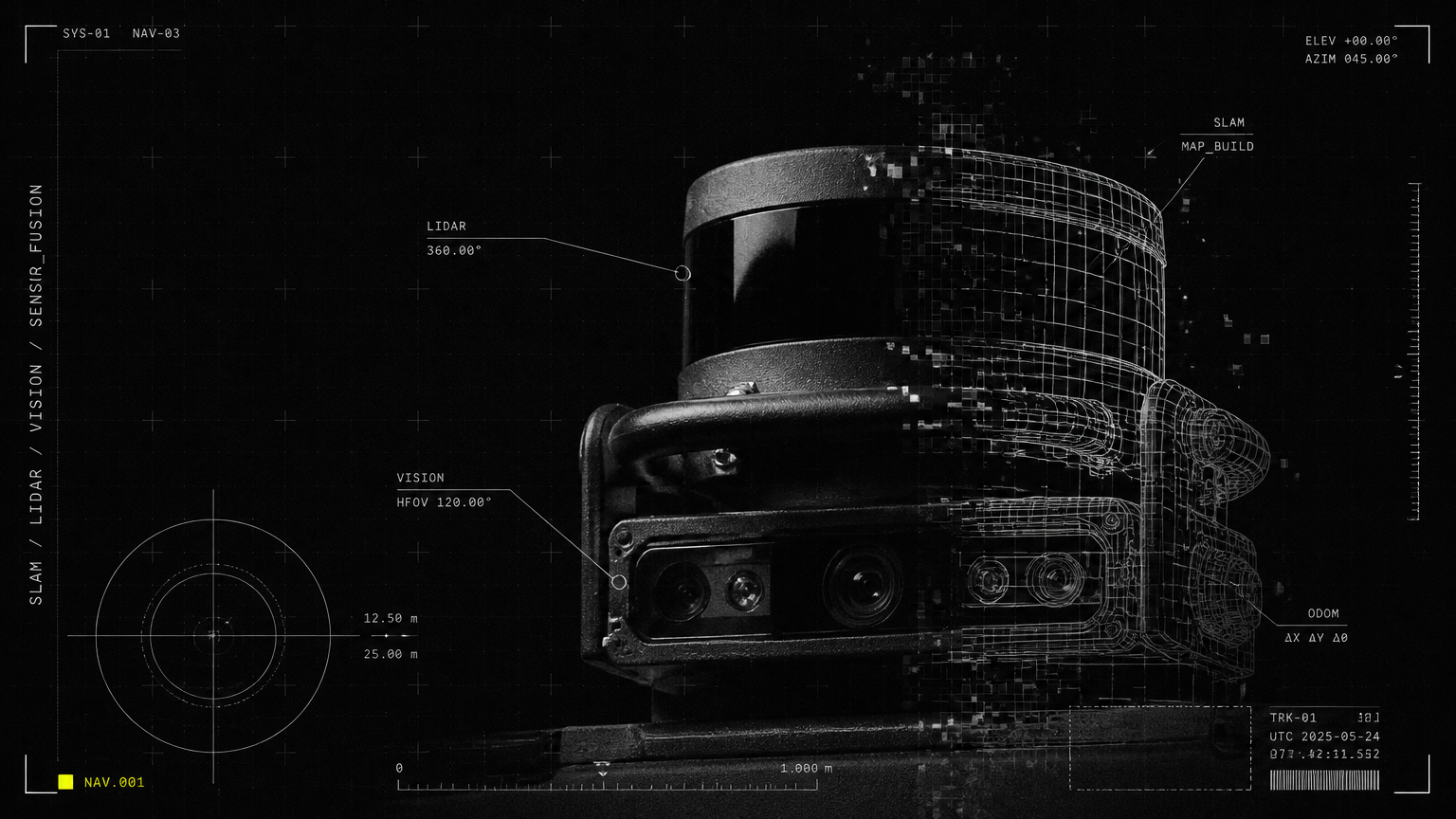
- Localization & navigation: LiDAR-based SLAM + sensor fusion (IMU, wheel odometry), vSLAM for dynamic visual cues, RTK/RTLS where centimetre-level positioning is required.
- Perception: RGB/RGB-D cameras, thermal sensors for human detection and febrile screening options, ultrasonic/IR proximity sensors for close-range avoidance.
- Communications: dual-band Wi‑Fi, 4G/5G fallback, and private LTE options for mission-critical connectivity.
- Edge compute: onboard CPUs/GPUs for local inference with cloud-tier model training and fleet-wide updates.
AI fleet-management & predictive maintenance
- Central orchestration: dynamic route planning, traffic deconfliction, time-window scheduling (cleaning cycles between flights), and coordinated multi-robot missions.
- Predictive maintenance: telemetry-driven health scoring to preempt failures and maintain Allbotix‑class 99.8% uptime guarantees; condition-based servicing reduces unplanned downtime by 30–50%.
- APIs/Interoperability: native connectors for airport BMS (Building Management Systems), PMS (Passenger Management Systems), security OSS, and third-party dashboards for operations teams.
Integration & reliability considerations
- Geofencing & airside/landside separation: strict virtual barriers and supervised zones to meet regulatory constraints.
- Redundancy & fail-safe: redundant sensor modalities, dual-communication paths, emergency stop (E‑stop) integration with ground staff, and autonomous safe-hold routines.
- Scalability: a fleet-management platform that supports mixed form factors (wayfinding kiosks, wheeled cleaners, quadrupeds, humanoids) and multi-terminal deployments without per-robot manual orchestration.
airport robots: safety, compliance and passenger experience
Human factors and regulatory compliance govern successful rollouts. Robots should augment staff, preserve privacy, and be predictable and reassuring in public spaces.
Human-robot interaction & accessibility
- Natural language support and multilingual voice prompts for diverse passenger cohorts.
- Touchpoints designed for accessibility (height, tactile controls, screen-readers) and safe, non-threatening motion profiles in crowded gates.
- Clear signage and staff training to ensure passengers understand robot tasks and limitations.
Privacy, data and regulatory compliance
- Onboard processing and edge anonymization for video feeds where possible; strict data-retention policies to comply with privacy laws and airport regulations.
- Integration with airport security policy; robots should not replace human decision-making for security escalations but feed verified sensor data into operator workflows.
- Certification readiness: EMI/EMC, safety standards and any national aviation authority requirements for operations in public terminals.
Emergency procedures & staff augmentation
- Fail-safe modes: robots should autonomously move to safe positions or “park” and notify operators if communications or sensors fail.
- Staff augmentation model: redeploy human teams from repetitive tasks to passenger service, exception handling and emergency response. This fosters higher job quality and better passenger satisfaction compared with pure replacement.
Rollout and scale strategy for busy terminals
- Pilot focused on a single terminal zone (e.g., international transfer corridor) with measurable KPIs.
- Phased fleet scale-up by form factor—start with wayfinding + one cleaning robot type, then add security patrol units once traversal and HRI behavior are validated.
- Continuous measurement: dwell times, cleaning coverage heatmaps, security incident logs, and passenger sentiment surveys.
Comparing options: wayfinding, cleaning and security choices
Wayfinding: robotic wayfinding for terminals vs static signage vs manned desks
| Criterion | Robotic wayfinding for terminals | Static signage & kiosks | Manned information desks |
|---|---|---|---|
| Real-time adaptability | High — dynamic rerouting, live flight/gate updates | Low — static content | Medium — human can adapt but limited scale |
| Multilingual support | Yes — voice and touch, programmable | Limited | Yes but staffing-dependent |
| Labor cost impact | Reduces repetitive staffing; shifts to exceptions | No | Ongoing staffing cost |
| Data & analytics | Rich — heatmaps, interaction logs | Minimal | Manual logging needed |
| Availability (24/7) | High with fleet management | High physically, low adaptability | Limited (costly) |
Cleaning: autonomous cleaning robots airports vs manual cleaning vs outsourced cleaning
| Criterion | Autonomous cleaning robots airports | Manual in-house cleaning | Outsourced cleaning services |
|---|---|---|---|
| Consistency & repeatability | Very high | Variable | Medium |
| Coverage & scheduling flexibility | Continuous, programmable | Restricted by shifts | Scheduled, may miss off-hours |
| Consumables efficiency | Optimized by route | Variable | Variable |
| Cost predictability | High (CapEx + predictable O&M) | Labor-driven variability | Contract-dependent savings |
| Infection control metrics | High with validated protocols | Depends on staff training | Depends on SLA rigor |
Security: security patrol robots for airports vs human patrols vs CCTV-only surveillance
| Criterion | Security patrol robots for airports | Human patrols | CCTV-only surveillance |
|---|---|---|---|
| Persistent presence | High — continuous patrols | Limited by shifts | Passive recording only |
| Real-time autonomous detection | Yes (sensor fusion) | Human perception | Requires operator monitoring |
| Response scaling | Scales without linear headcount | Needs more guards for coverage | Requires human in loop for action |
| Integration with command center | Yes — alerts + live feeds | Manual reporting | Feeds only, needs analytics layer |
| Cost over time | Predictable after deployment | Rising labor costs | Lower CapEx but higher staffing/monitoring ops |
How to evaluate airport robot vendors (including Allbotix)
Selecting a vendor is as much about engineering capability and long-term service as it is about initial price. Use the following comparison when shortlisting vendors.
| Evaluation criterion | Allbotix | Typical hardware-only vendor | Large industrial integrator |
|---|---|---|---|
| In-house engineering & IP ownership | Yes — full IP, 525+ robots developed | Often assembles third-party hardware | Varies; often system integrators |
| Fleet variety (wayfinding, cleaning, security, humanoid, quadruped) | Broad — multi‑form‑factor | Narrow (single category) | Medium — strong in industrial segments |
| Proprietary AI fleet-management & predictive maintenance | Yes — built in-house; drives 99.8% uptime | Rare or third-party | Possible, but may be less service-focused |
| Customization & precision engineering | High — client‑specific engineering | Limited | Medium to high, but longer lead times |
| Support & SLA | 24/7 Premium Support; high uptime | Variable | Enterprise-grade but may be bureaucratic |
| Manufacturing & scaling | Made-in-India + Aimtron partnership; public-market backing (Nanta Tech) | Dependent on suppliers | Large scale but different focus |
| Client references & deployments | 180+ clients; cross-industry | Limited case studies | Many industrial case studies |
Practical vendor checklist
- Ask for uptime and MTTR SLAs and verify telemetry access.
- Request mixed‑form‑factor pilot references (wayfinding + cleaning + security).
- Validate API and integration capabilities with your BMS/PMS/security console.
- Evaluate predictive-maintenance flows and spare-parts logistics.
- Confirm manufacturing & IP ownership, which affects long-term costs and roadmap flexibility.
Implementation best practices
- Define clear KPIs and baselines before pilot (passenger queries/hour, sqm cleaned/day, patrol cycles/hour).
- Start with well-bounded zones and extend with data-driven confidence.
- Integrate robots into existing ops playbooks—robots should feed, not replace, command decisions.
- Train staff and run joint exercises for incident scenarios (lost child, medical emergency, escalations).
- Maintain transparent passenger communication (signage that robots are in use, opt-out or human-assist options).
Why Allbotix for airport deployments
Allbotix combines "limitless innovation" and "precision engineering" to deliver a multi‑form‑factor robotics strategy tailored for high-density public spaces like airports. With 525+ robots engineered, 180+ satisfied clients, 99.8% uptime across deployments, and in‑house AI fleet-management and predictive-maintenance software, Allbotix provides both the hardware variety (wayfinding, cleaning, security, humanoids and more) and the software orchestration needed to run reliable, scalable airport robot programs. Backed by publicly listed Nanta Tech Limited and manufactured in India via an Aimtron Technologies partnership, Allbotix offers a tested path from pilot to terminal-wide scale, with 24/7 Premium Support and full IP ownership for long-term roadmap alignment.
Ready to explore robotic wayfinding for terminals, autonomous cleaning robots airports, or security patrol robots for airports? Contact Allbotix to discuss a tailored pilot, measurable KPIs and a phased rollout strategy that balances safety, compliance and passenger experience.
Explore this guide in depth
Each of these guides answers one question from this overview in full:
- Metro Stations and Transit Hubs: Where Robotics Fits in Public Transport
- Robots in Bank Branches: Queue Management, KYC Assistance and Security
- Cold Storage Robotics: Can AMRs Operate Below Freezing?
- Pharma Cleanroom Robotics: Automation Inside GMP Environments
- Robots for Residential Societies and Gated Communities
- Automating Textile and Auto-Component Plants in Gujarat's Industrial Belt