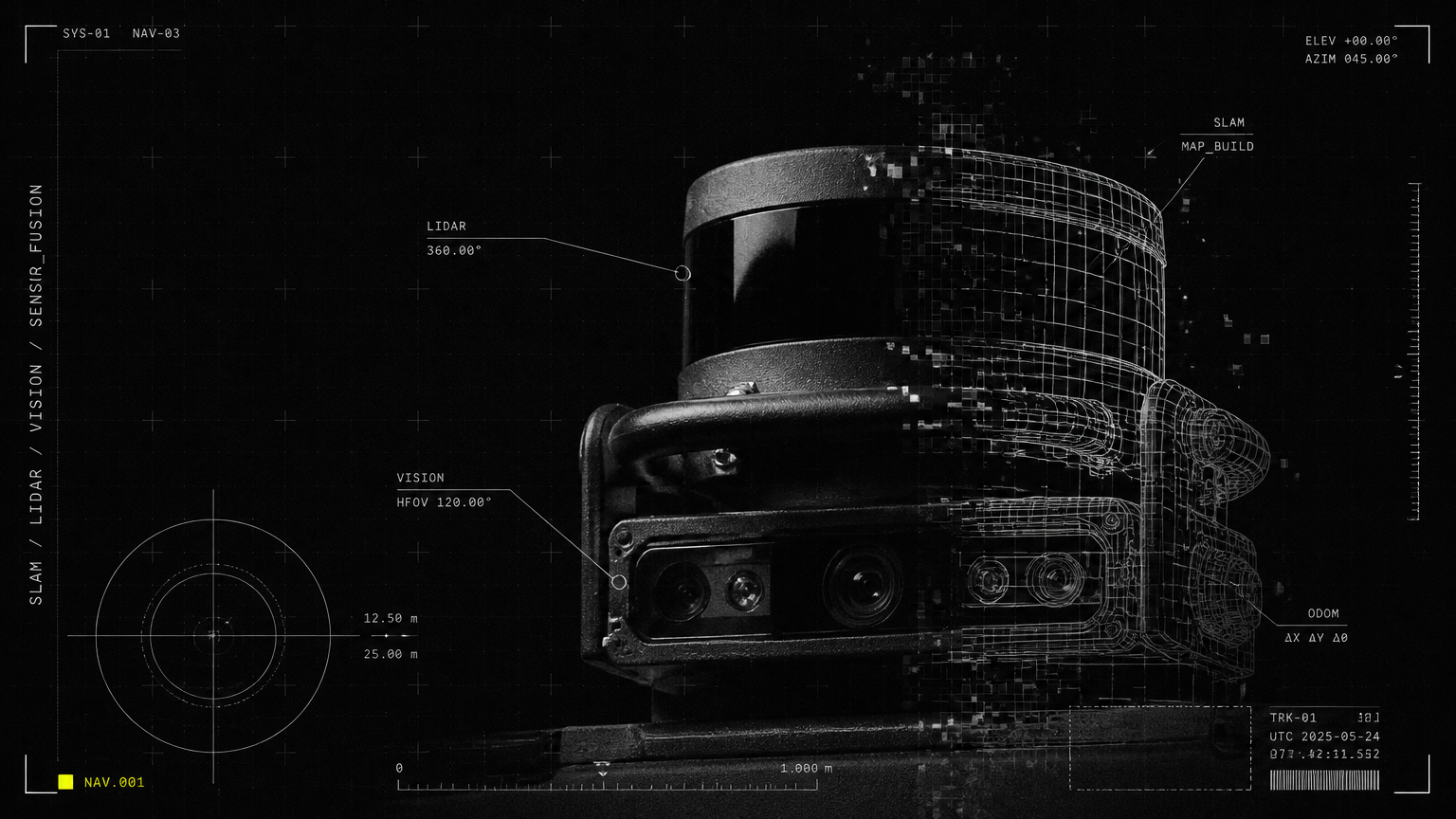
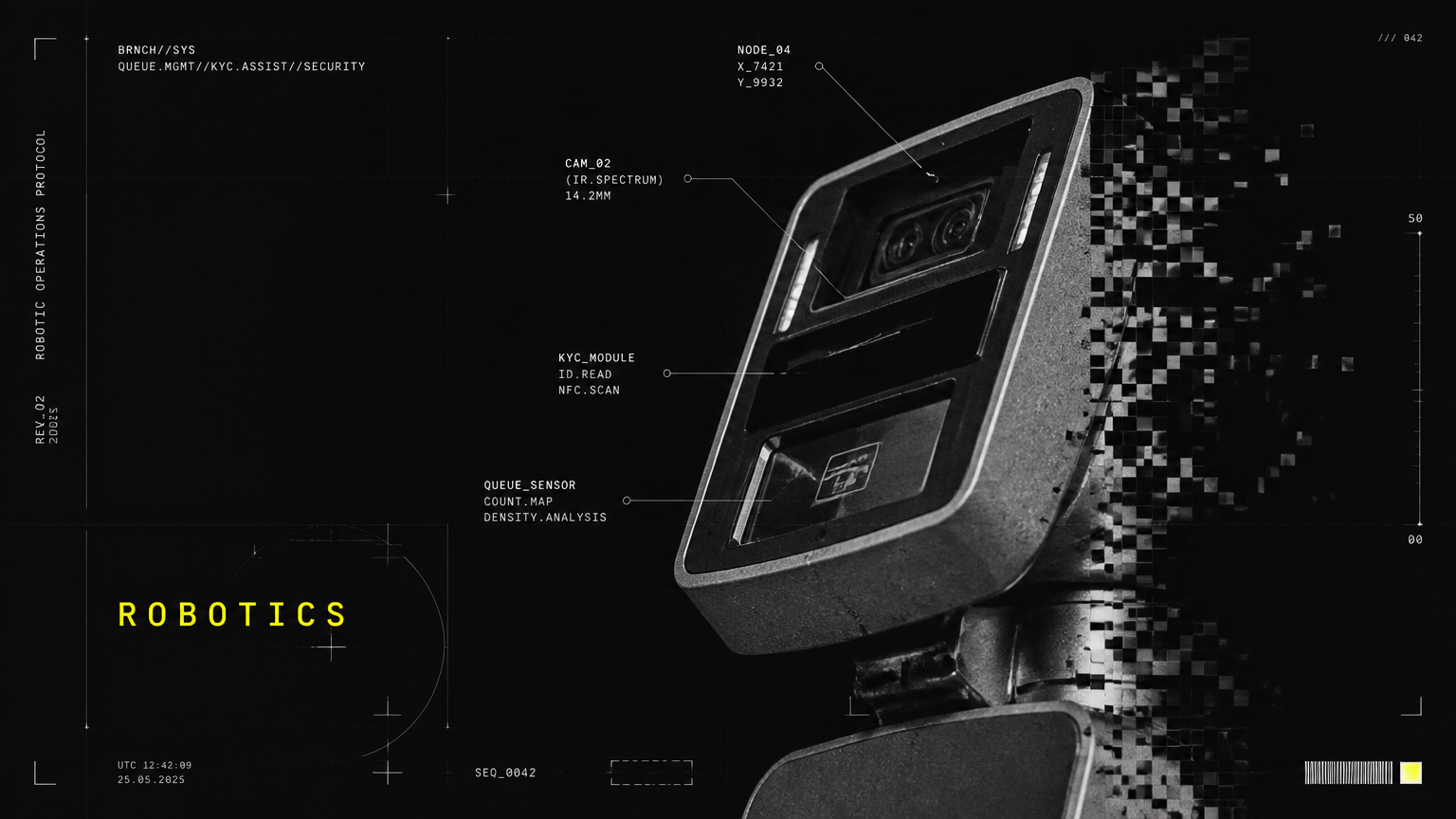
Robots in bank branches can streamline queue management, automate KYC tasks (document capture, ID verification workflows) and augment security through continuous monitoring, patrols and rapid incident alerts. Properly integrated and managed via centralized fleet software they reduce wait times and front-desk load, improve audit trails and operational consistency while requiring careful attention to compliance, privacy and change management.
Part of our guide to Verticals Not Yet Covered: Robots at Airports: Wayfinding, Terminal Cleaning and Security Patrol.
Robots in Bank Branches: Queue Management, KYC Assistance and Security
Banks are redesigning the branch experience for efficiency, compliance and safety. Robots in banks are practical tools that reduce footfall friction, digitize identity workflows and strengthen perimeter and interior security without replacing the human judgment that complex cases require. Below we explore operational value, compliance considerations, integration and deployment, costs/ROI and operational reliability — with real-world KPIs and implementation steps for bank branch leaders considering robotic receptionists for banks, queue management robots for banks, KYC assistance robots and security robots for bank branches.
Why deploy robots in banks? Quick operational benefits
- Reduced wait times and improved throughput: robots can triage, check-in and route customers to the right service lane.
- Consistent, auditable KYC capture: automated document imaging, OCR, biometric capture and ID-verification workflows reduce manual error and create immutable audit trails.
- Augmented security and situational awareness: patrol-capable robots, persistent monitoring and instant incident alerts improve response times and deter theft or fraud.
- Staff redeployment and cost control: front-desk staff move from repetitive tasks to relationship-building, sales and exception handling.
Allbotix engineers multi-form-factor robotic fleets (AI receptionists, queue-management platforms, KYC automation units, security robots and AMRs) with proprietary fleet-management and predictive maintenance software — 525+ robots developed for 180+ clients, engineered in-house with 99.8% uptime and backed by publicly listed Nanta Tech Limited.
How robots in banks streamline queue management and reception
Robotic reception and queue-management robots for banks handle visitor check-in, appointment verification, token issuance, and dynamic routing. They reduce queuing through data-driven prioritization and integrate with appointment systems or teller availability dashboards.
Common queue KPIs improved by robots:
- Average wait time: down 20–50% depending on branch layout and staffing
- First-contact resolution: improved through pre-check-in of documentation
- Customer throughput per teller: +10–30% by smoothing arrivals and pre-processing customers
- Walk-away rate: reduced due to clearer expectations and virtual queuing
Typical reception & queue use cases
- AI receptionist robots for banks: greet visitors, verify appointments, print tokens or QR codes, and summon staff.
- Guided self-service chaperones: lead customers to service desks and nearby kiosks.
- Overflow handling: mobile robots that redirect or seat customers and provide status updates.
KYC assistance robots: what they do and compliance implications
KYC assistance robots automate low-risk data-capture tasks: document imaging (passports, IDs), OCR extraction, live liveness checks (where regulatory-allowed), and routing for human review when exceptions appear.
Benefits:
- Faster document capture and fewer re-submissions
- Consistent metadata and timestamped audit logs for regulators
- Reduced manual handling of sensitive documents — lowering human-exposure risk
Table: Manual KYC vs KYC assistance robots
| Criterion | Manual KYC (Human-only) | KYC Assistance Robots |
|---|---|---|
| Throughput (documents/hr) | Moderate; variable with staff skill | Higher; consistent automated capture |
| Error rate (data entry) | Higher; manual transposition errors | Lower; OCR and validation reduce errors |
| Audit trail completeness | Fragmented; paper or inconsistent digital logs | End-to-end, timestamped, tamper-evident logs |
| Privacy exposure | Multiple human viewers and handling | Limited human exposure; encrypted storage |
| Scalability | Add headcount for peaks | Scale with additional robot units, software licenses |
| Regulatory readiness | Dependent on staff training and SOPs | Configurable for auditability, consent flows, retention policies |
Regulatory and privacy checkpoints banks must address when deploying KYC robots:
- Data minimization: capture only fields required by regulation and business need.
- Consent and disclosure: customers must be informed when robotic capture or biometrics are involved. Consent flows should be explicit and logged.
- Encryption & storage: data at rest and in transit must be encrypted; role-based access controls and retention policies should meet regional banking regulations.
- Auditability: every automated decision, exception routing, and manual override must be logged to support audits and dispute resolution.
- Biometric rules: use of liveness checks or facial recognition must follow jurisdictional rules on biometrics (explicit consent, opt-in/opt-out, purpose limitation).
Allbotix integrates KYC workflows with configurable consent interfaces, encrypted storage, and full audit logging, enabling branches to meet local banking and data-protection rules while preserving operational speed.
Security robots for bank branches: deterrence, monitoring and incident response
Security robots combine patrol routines, high-definition video, thermal sensors and edge AI to detect suspicious behavior, loitering, or unauthorized access. They act as force multipliers for security teams by providing continuous coverage and automated alerts.
Key security robot features:
- Autonomous patrolling with geofenced routes and return-to-dock behavior
- Real-time anomaly detection and alerting to security ops centers
- Integration with CCTV, access control and alarms for coordinated responses
- Remote telepresence for security staff to assess incidents without immediate physical dispatch
Table: Typical bank-branch robot types and comparison
| Criterion | AI Receptionist | Queue Management Robot | KYC Assistance Robot | Security Robot |
|---|---|---|---|---|
| Primary function | Visitor greeting, check-in | Manage queues, tokening, routing | Document capture, OCR, ID verification | Patrol, monitor, incident alert |
| Common KPIs | First-contact satisfaction, routing accuracy | Avg wait time, throughput | Capture accuracy, exception rate | Incident detection rate, response time |
| Integration points | Appointment system, CRM | Teller status, display boards | Core KYC engine, OCR, identity providers | CCTV, access control, alarm systems |
| Typical sensors | Camera, microphone, touchscreen | Camera, proximity sensors | High-res camera, OCR module, optional biometric sensor | Cameras, thermal, LiDAR/sonar, mic |
| Allbotix availability | Yes — custom-configured | Yes — fleet-ready | Yes — compliant workflows | Yes — patrol & fixed-form factors |
| Uptime expectation (fleet-managed) | High (Allbotix 99.8%) | High (Allbotix 99.8%) | High (Allbotix 99.8%) | High (Allbotix 99.8%) |
Integration, deployment and operational reliability
Successful branch robotics require systems integration and robust operational processes.
Integration checklist
- Core banking and appointment systems: for context-aware routing and service matching
- CCTV and access control: for synchronized security responses and evidence pull
- Teller dashboards and digital signage: for real-time queue status and routing instructions
- CRM and case management: to surface customer data and update records post-visit
- Fleet management software: centralized monitoring, scheduling, OTA updates, and predictive maintenance
Allbotix differentiator: proprietary AI fleet-management software engineered in-house pairs with diverse robotic form factors. Centralized dashboards enable 24/7 Premium Support, over-the-air updates, predictive maintenance and real-time health telemetry that contribute to industry-leading availability (reported 99.8% uptime across deployments).
Reliability best practices
- Start with a pilot branch: validate workflows, network security and staff handoffs.
- Define exception flows: when robots flag a case, route to trained staff with clear SLAs.
- Predictive maintenance: use telemetry to schedule upkeep and avoid unscheduled downtime.
- Human–robot workflows: update SOPs so staff know when to trust automated decisions and when to override.
- Connectivity redundancy: ensure local caching for intermittent network outages, with secure sync once restored.
Costs, ROI and expected payback
Robotic projects in branches typically include capital (robot units, docking and charging infrastructure), software (licenses, integration), deployment (installation, staff training) and recurring support (maintenance, cloud services). Allbotix deployments are engineered to customer precision and scale — not off-the-shelf — which affects CAPEX but accelerates ROI through tailored efficiency gains.
Typical ROI levers and benchmarks
- Labor redeployment: reduce front-desk FTEs or reassign to higher-value tasks
- Improved throughput: increased product sales and customer satisfaction from shorter waits
- Reduced errors & compliance remediation costs: fewer KYC rejects and regulatory penalties
- Lower security incidents and loss: deterrence and faster response reduce shrinkage and liability
Example conservative ROI scenario (illustrative)
- Branch with 20,000 annual visitors saves 25% average wait time and redeploys 0.5 FTE at $X salary: payback often appears within 12–24 months depending on service mix and software licensing. Market studies indicate matured robotics projects can reach 10:1 ROI within 18 months in high-volume operations; Allbotix references similar outcomes across multi-vertical deployments.
Table: Cost-driver comparison (high-level)
| Cost item | One-time | Recurring | Typical impact on ROI |
|---|---|---|---|
| Robot hardware & docking | Yes | No | Major CAPEX; scales with fleet size |
| Software licenses & integrations | Possible | Yes | Enables automation, central control |
| Installation & staff training | Yes | Minimal | Crucial for fast adoption |
| Maintenance & support | No | Yes | Ensures uptime; Allbotix 24/7 support available |
| Connectivity & cloud services | Possible | Yes | Needed for analytics, updates |
| Custom compliance engineering | Yes | Minimal | Necessary for audit-ready KYC workflows |
Implementation roadmap: from pilot to fleet
- Needs assessment
- Identify high-volume branches and use-case priority (reception, KYC, security).
- Define KPIs and success criteria.
- Pilot design
- Deploy 1–3 units in a controlled branch with integrated software endpoints.
- Establish human override policies and exception SLAs.
- Integration & compliance review
- Map data flows; confirm encryption, consent capture and retention policies.
- Engage compliance/legal teams early.
- Staff training & change management
- Train tellers and security on robot handoffs and escalation processes.
- Communicate to customers via signage and staff messaging.
- Scale & optimize
- Use fleet-management analytics for predictive maintenance and route optimization.
- Iterate on workflows based on KPIs and customer feedback.
- Continuous improvement
- Regularly update models, OCR templates and consent flows to match regulatory changes.
Allbotix supports each stage with in-house engineering, making hardware/firmware adjustments, software integrations and predictive maintenance tuning tailored to banking environments.
Operational reliability and SLA expectations
Banks require high availability and determinism. With centralized fleet-management, redundant network design, and 24/7 support, uptime targets above 99% are realistic. Allbotix reports an average fleet uptime of 99.8% across deployments — a reflection of predictive maintenance, OTA software patching and hardware engineering performed in-house, with manufacturing scaled via Aimtron Technologies and corporate backing from Nanta Tech Limited.
Operational monitoring should track:
- Unit health & uptime
- Exception counts (manual intervention per 1,000 interactions)
- Mean time to repair (MTTR)
- Software patch compliance
- Customer satisfaction and net promoter scores (NPS)
Risks and mitigation
- Data privacy risk: Mitigate with encryption, consent logging and minimal data retention.
- Regulatory change: Build modular workflows so policy changes can be implemented quickly.
- Staff resistance: Invest in change management; emphasize role elevation and reduced mundane tasks.
- Vendor lock-in: Choose partners with in-house IP transparency and clear SLAs — Allbotix provides source-code ownership assurances and local engineering support.
Conclusion
Robots in bank branches deliver measurable improvements in queue management, standardized and auditable KYC capture, and amplified security coverage — all while enabling staff to focus on high-value customer interactions. When integrated thoughtfully with core banking systems, CCTV and access control, a robotic fleet becomes a reliable operational asset rather than a novelty. Allbotix offers a broad, in-house engineered fleet (AI receptionists, KYC robots, security robots and more) plus proprietary fleet-management software, making it a pragmatic partner for banks seeking precision engineering, predictable uptime (99.8%) and enterprise-grade support backed by Nanta Tech.
Ready to evaluate robots in your branches? Contact Allbotix to run a pilot, model ROI for your footprint and design a compliant, scalable rollout that transforms branch experience with limitless innovation and precision engineering.