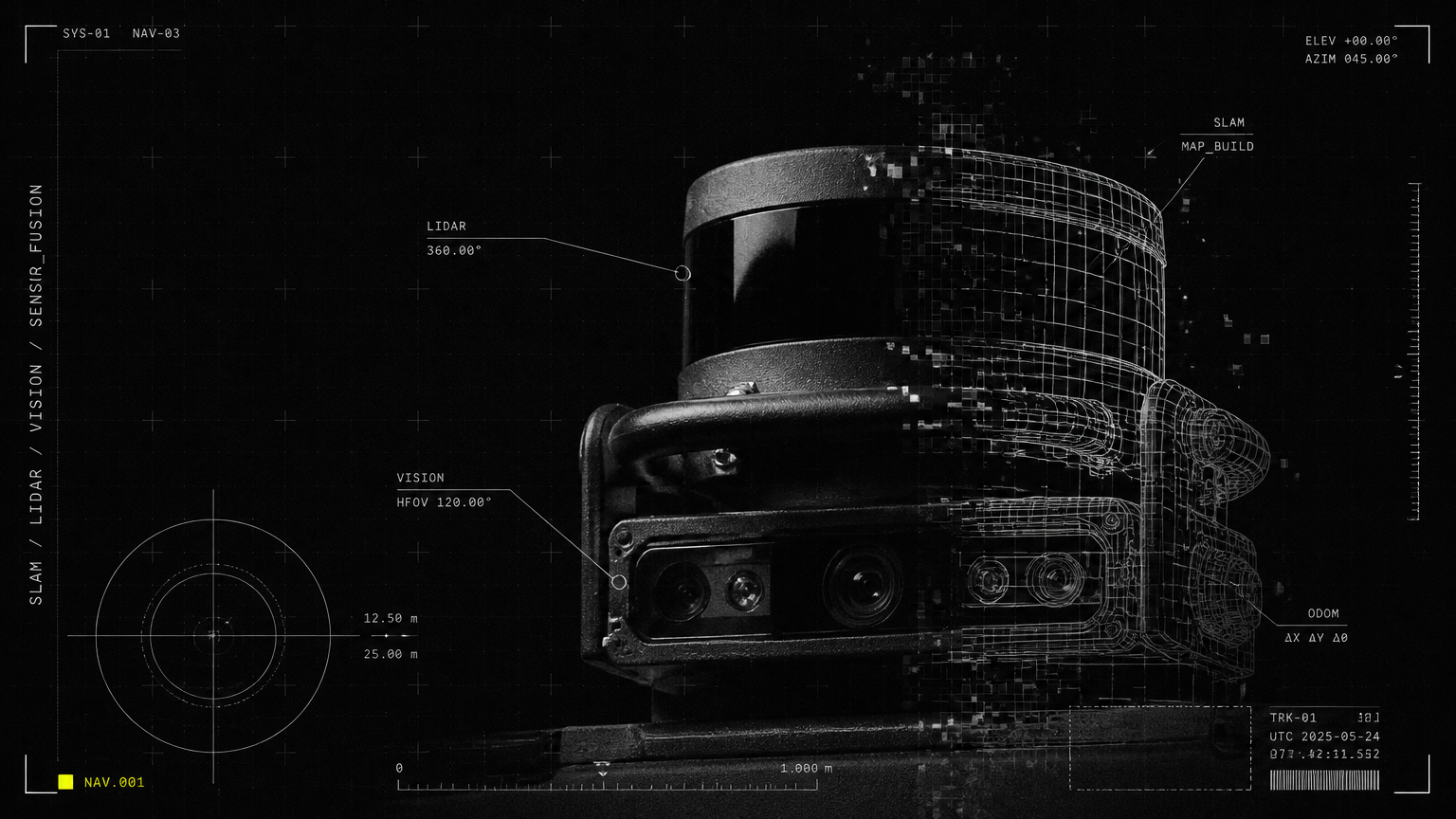

"Camera-equipped robots operating in India must meet the DPDP Act's core principles—lawful purpose, data minimization, transparency, consent where required, data-principal rights, and robust security—so fleet operators should treat robots as active personal-data collectors and build compliance into engineering, deployment and operations. Practically, that means mapping data flows, doing DPIAs, minimizing capture via edge processing/anonymization, applying encryption and access controls, documenting notices/consent or lawful bases, and maintaining audit trails and incident-response processes."
Part of our guide to Safety, Standards & Compliance: Robot Safety Standards Explained: ISO 10218, ISO/TS 15066 and Your Floor.
DPDP Act robots compliance — The DPDP Act and Robotics: Keeping Camera-Equipped Robots Compliant
Camera-equipped robots are powerful tools across corporate campuses, retail, healthcare, airports, education and manufacturing. But under the DPDP Act, robots that capture images, video, or derived biometric/behavioural data must be treated as active personal-data collectors. This post gives a practical, engineer-friendly roadmap — legal mapping, engineering controls, deployment policies, and governance checklists — tailored for multi-vertical robotic fleets.
DPDP Act robots compliance: Legal principles mapped to camera-equipped robots
At a principle level the DPDP Act requires that any processing of personal data satisfy core duties: lawful purpose, purpose limitation, data minimization, transparency, security, and enablement of data-principal rights. How those translate to camera-equipped robots:
- What counts as personal data? Any image/video that can identify a person directly (faces), indirectly (unique gait or clothing), or via derived inferences (age, gender, health indicators). Even anonymized feeds can be personal if re-identification is possible.
- When is consent required? Consent is one lawful basis but not the only one. Public-interest, contractual necessity, or legitimate interest may apply depending on context (e.g., security cameras in airports vs. receptionist robots that collect visitor check-ins). Operators must document the chosen lawful basis and be able to justify proportionality.
- Triggering data-principal rights: Access, correction, erasure, portability and objection rights are triggered when the robot has processed identifiable personal data. Systems must map how a data subject can exercise these rights and how the fleet manager will locate and action relevant captures.
- Accountability: Maintain records of processing activities (ROPA), DPIAs (Data Protection Impact Assessments), vendor/processor contracts, and incident response logs.
DPDP Act robots compliance: Engineering and product controls
Privacy-by-design is not optional for camera-equipped robots — it’s core to compliance. Below are technical controls and how they fit into fleet-scale operations.
Edge vs Cloud vs Hybrid processing — compliance implications
| Criterion | Edge processing | Cloud processing | Hybrid (Edge + Cloud) |
|---|---|---|---|
| Data residency & exposure | Lowest (raw data retained locally) | Higher (raw data flows over network) | Moderate (only selected metadata sent) |
| Latency for anonymization | Very low (real-time masking) | Higher | Low for local masking, higher for analytic tasks |
| Scalability of analytics | Limited by device compute | High (large-scale models) | Balanced: heavy analytics in cloud, sensitive pre-processing at edge |
| Security & encryption | Simpler to enforce for stored data; risk if device physical access | Requires robust transport and cloud protections | Best-practice: edge encrypt before transit |
| Compliance ease (minimization) | Strongest — can avoid sending raw PII | Weaker unless strict filters | Good: anonymize on edge, send only required fields |
Key engineering controls:
- Edge-first architecture: perform face-detection/anonymization, object-classification, and rule-based filtering on-device to avoid transferring raw images unless strictly necessary.
- Selective capture and masking: confine capture zones (fences), use pixelation/blurring of faces or pose-only representations, and redact background details that could identify locations.
- Real-time anonymization: implement irreversible transforms (blurring, k-anonymity, feature-extraction) before storage/transmission.
- Minimal retention & automatic purging: enforce time-based retention at the device and fleet level (configurable per-site rule).
- Strong cryptography: secure boot, full-disk encryption on local storage, TLS 1.2+/mTLS for transport, and key management.
- Role-based access & least privilege: RBAC at fleet-management layer for human access to footage/metadata; granular approvals for de-anonymization (e.g., only for law enforcement under documented processes).
- Tamper and integrity controls: signed firmware, hardware root-of-trust, and secure logging to protect chain of custody.
- Audit logging and immutable trails: capture who accessed what footage, why, and when; retain logs to demonstrate compliance.
- Versioned models & explainability: keep model metadata (version, training data class) to aid DPIAs and audits.
Allbotix advantage: Our in-house AI fleet-management software is designed to enforce many of these controls at scale: from edge-first anonymization policies to centralized retention rules and 24/7 predictive monitoring that supports a privacy-by-design operational model. With 525+ robots developed, 180+ clients, and 99.8% uptime, Allbotix combines limitless innovation with precision engineering to make these controls practical for multi-vertical fleets.
Practical engineering checklist (developer & product teams)
- Map sensors to processing pipelines; mark which nodes touch raw PII.
- Implement irreversible anonymization primitives on-device.
- Establish secure key management and rotate keys routinely.
- Enforce RBAC + MFA on fleet-management portals.
- Log every access with immutable audit records.
- Bake privacy toggles into firmware/config (zone masks, retention periods).
- Include forced-over-the-air (OTA) signed updates and emergency kill-switch for cameras.
DPIA, deployment policies and operational SOPs
A documented DPIA and clear SOPs convert engineering controls into repeatable operational practice.
Data-flow mapping & DPIA steps
- Inventory: list all robots, camera types, resolution, storage locations, and cloud endpoints.
- Data flows: visual diagram of image capture → edge processing → storage → analytics → access.
- Risk analysis: identify re-identification, function creep, unauthorized access, and incidents.
- Mitigations: apply controls (edge anonymization, access restrictions, retention).
- Residual risk and approvals: sign-off by privacy lead and executive sponsor.
- Periodic review: re-run DPIA when new analytics, sensors, or integrations are added.
Notices, signage and consent strategies
- Fixed sites (offices, malls, hospitals): use clear signage that explains robot presence and data uses. For non-public spaces, provide explicit visitor notices during check-in.
- Visitor-facing robots (receptionists): show a short consent screen when collecting identity/phone/email; retain consent logs.
- High-sensitivity contexts (healthcare wards, examination areas): opt for purely non-identifiable data or switch cameras off; avoid continuous recording.
SOPs for monitoring, retention, and breach response
- Access requests: define a ticket process to handle access/correction/erasure within statutory timelines.
- Retention: default short retention (e.g., 24–72 hours) unless justified; configurable per-vertical.
- Breach detection & response: automated alerts for unusual data exports, followed by an incident playbook (contain, assess, notify regulator/data principals as required).
- Vendor management: require data-processor clauses, audit rights, liability caps, and termination transition plans.
Governance roadmap for multi-vertical robotic fleets
A scalable governance model supports different sectors and high-volume fleets.
- Assign responsibilities
- Executive sponsor (accountability)
- Privacy lead / DPO (policy, DPIAs)
- Security lead (technical controls)
- Fleet operations (deployment & SOPs)
- Policy suite
- Data classification policy
- Retention & deletion policy
- Access control & least privilege policy
- Incident response plan & playbooks
- Vendor & contract controls
- Processor agreements with DPDP-compliant clauses
- Right to audit and secure offboarding
- Data localization and subprocessors list
- Training & awareness
- Operator training for consent capture, signage, and incident escalation
- Quarterly tabletop breach exercises
- Continuous auditing
- Automated compliance checks in fleet-management software
- Annual third-party audits and regular internal reviews
Sector-specific mitigations (at-a-glance)
| Sector | High-risk scenarios | Recommended mitigations |
|---|---|---|
| Healthcare | Patient areas, IP-reidentification, infection-control zones | Disable cameras in wards, edge-only processing in corridors, short retention, staff consent flows |
| Airports & Transit | High-density PII, security-sensitive analytics | Edge anonymization, strict access controls, law-enforcement interfaces with audit trails |
| Retail & Malls | Customer behavior tracking, targeted advertising | Use aggregate analytics (heatmaps), explicit signage, opt-out kiosk for loyalty programs |
| Education | Minors present, campus surveillance | Avoid facial recognition for students, parental notification policies, strict retention |
| Hospitality | Guest privacy in lobbies/rooms | Visitor consent at check-in, disable in private areas, hospitality-configured privacy modes |
| Manufacturing & Logistics | Worker safety footage used for training | Use role-based de-identification, limited retention for incident investigations |
Implementation roadmap — from pilot to enterprise rollout
- Pilot (6–12 weeks)
- Choose 1–2 representative sites.
- Run DPIA, deploy edge anonymization, configure retention, and test access workflows.
- Run simulated access/right-to-erasure requests.
- Scale (3–6 months)
- Rollout fleet-management policies via OTA.
- Integrate RBAC with corporate identity (SSO).
- Establish vendor contracts for cloud analytics.
- Operate & improve (ongoing)
- Monitor compliance dashboards; quarterly reviews.
- Evolve policies as DPDP guidance or sector rules change.
- Maintain incident-response readiness and audit cadence.
Allbotix’s proprietary fleet-management stack accelerates this roadmap by centrally enforcing anonymization, retention rules and encrypted telemetry across diverse form factors — from humanoids to AMRs — enabling consistent privacy posture across 525+ robots and 180+ clients. Our Made-in-India engineering and backing from Nanta Tech Limited mean you get predictable uptime (99.8%) and enterprise-grade support (24/7 Premium Support).
Quick operational checklist for immediate compliance actions
- Map data flows and complete a DPIA for each robot class.
- Configure edge anonymization and limit resolutions where possible.
- Set default short retention periods and automated purging.
- Implement RBAC + MFA for footage access and keep immutable logs.
- Publish clear signage and consent mechanisms for visitor-facing units.
- Execute data-processor agreements with all third parties.
- Test incident response and document breach notification pathways.
Conclusion
DPDP Act robots compliance is achievable without sacrificing the operational benefits of camera-equipped robots — but it requires treating privacy as a system-level design goal. By combining privacy-by-design engineering (edge anonymization, encryption, RBAC), robust operational policies (DPIAs, retention rules, vendor contracts), and continuous governance, fleet operators can safely deploy robots across sensitive verticals.
Allbotix builds multi-vertical robot fleets and proprietary fleet-management software with privacy-by-design at the core. If you’re planning a pilot or scaling a fleet and need a compliance-first approach — from DPIAs to engineering controls and operational playbooks — contact Allbotix to assess your DPDP Act readiness and design a tailored roadmap that balances functionality, safety and regulatory compliance.